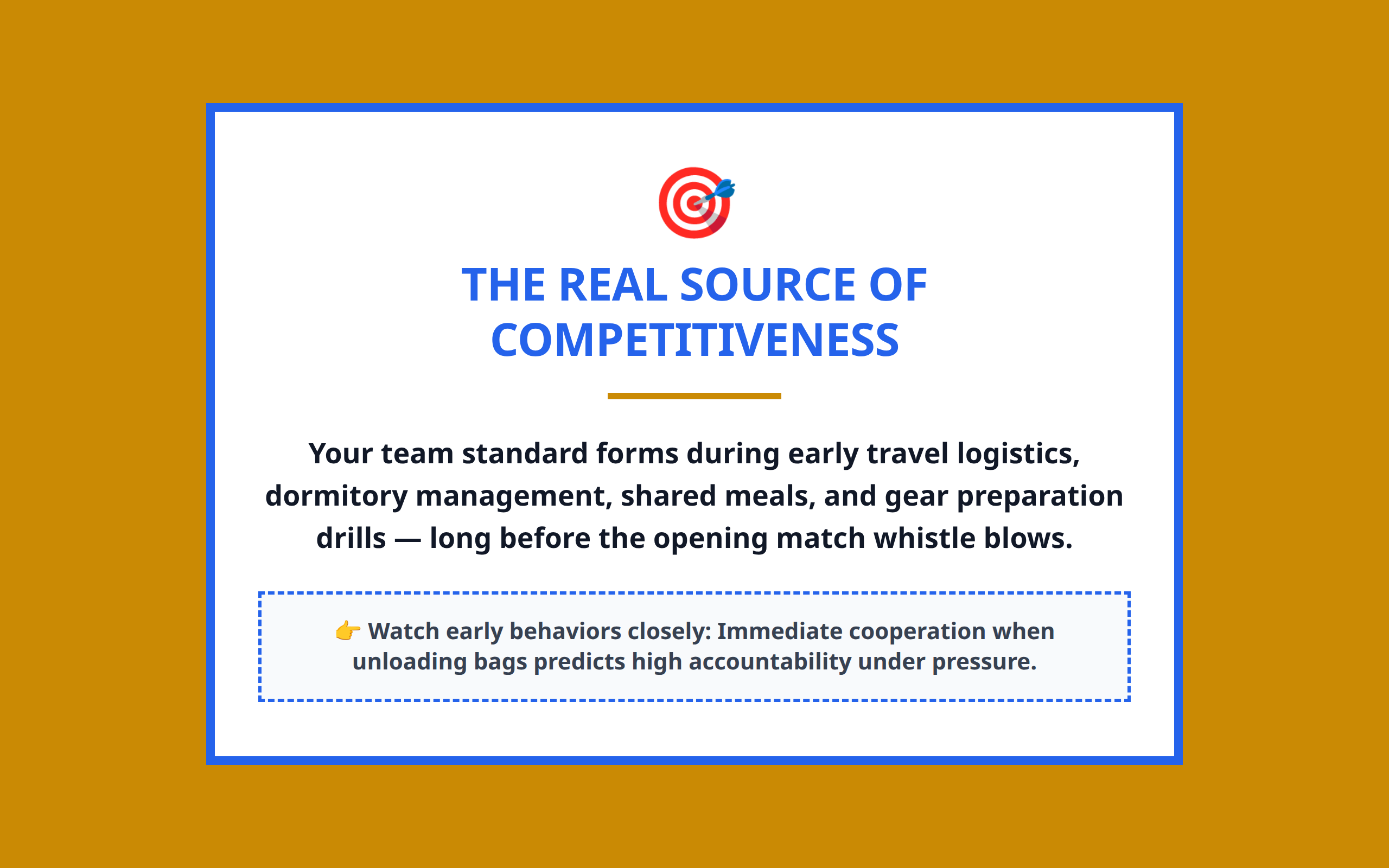
Most people think team culture gets tested during competition. In reality, culture usually forms much earlier through small decisions, emotional tone, routines, discipline, and how leaders handle ordinary moments before pressure officially arrives.
I think this is why some teams look surprisingly organized under stress while others collapse quickly despite having talent. The difference often begins long before the first real challenge appears.
Culture is not created through slogans or motivational speeches alone. It starts forming when people first enter the environment and begin learning what behaviors feel normal, tolerated, rewarded, or ignored.
First Impressions Quietly Establish Behavioral Standards
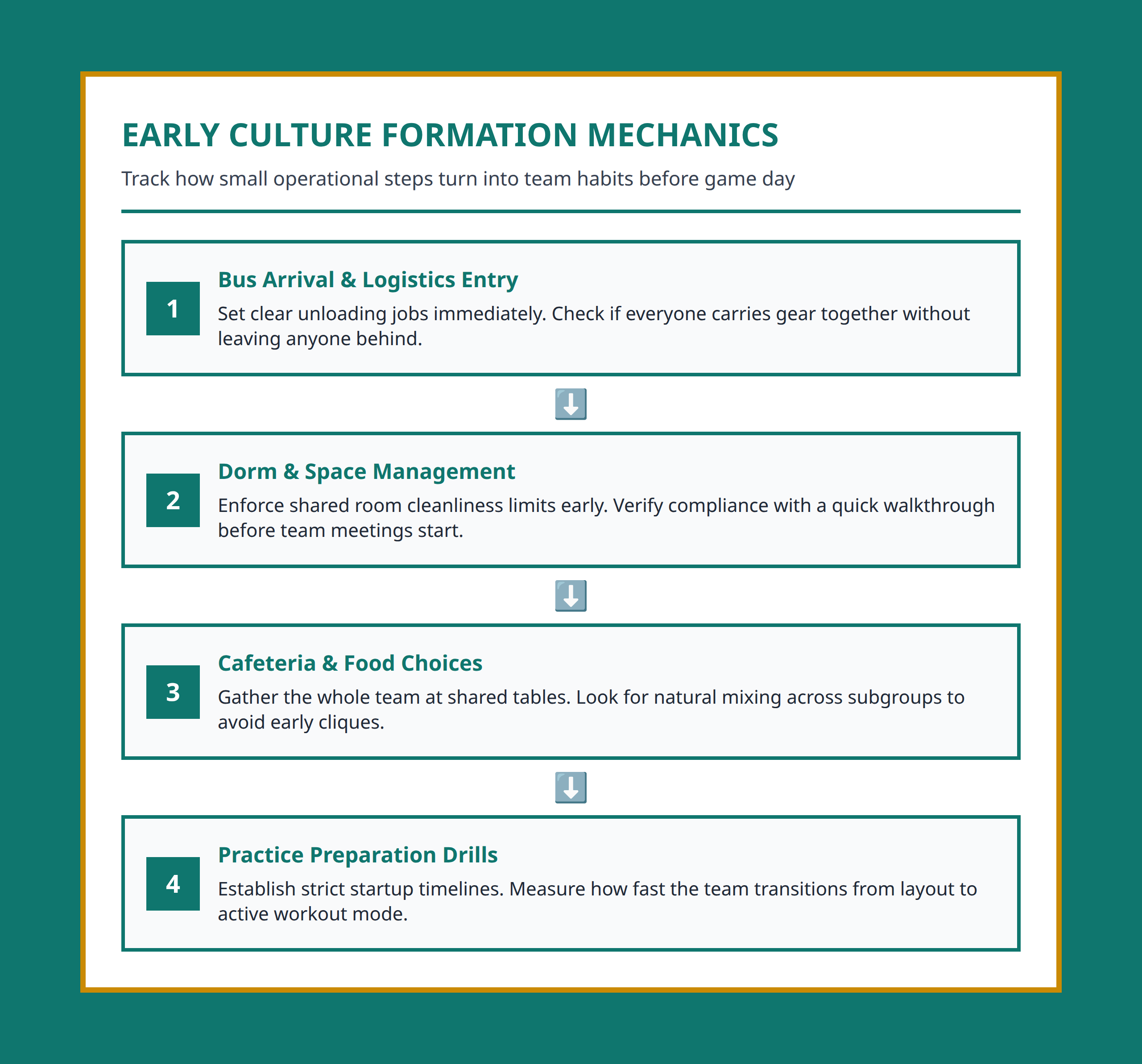
One thing I pay attention to in any group environment is what happens during the first few hours.
The beginning usually looks messy: people arriving late, side conversations everywhere, unclear expectations, nervous energy, and small tests of structure. From the outside, these moments can feel unimportant because “real work” has not started yet.
But psychologically, those moments matter a lot.
People immediately begin studying the environment:
- How organized is leadership?
- What behavior gets corrected?
- How seriously do people take instructions?
- What emotional tone dominates the group?
I think culture often forms fastest during uncertainty because people instinctively search for cues about how the environment operates.
Imagine a team arriving at a preseason training camp. Equipment is scattered, athletes are loud, nobody fully understands the schedule yet, and leadership feels slightly overwhelmed. Even in that chaotic setting, small responses start shaping culture immediately.
Does the coach stay calm?
Are expectations communicated clearly?
Do rules suddenly change emotionally?
The answers teach the team how stability works inside the group.
Small Operational Decisions Carry Emotional Meaning
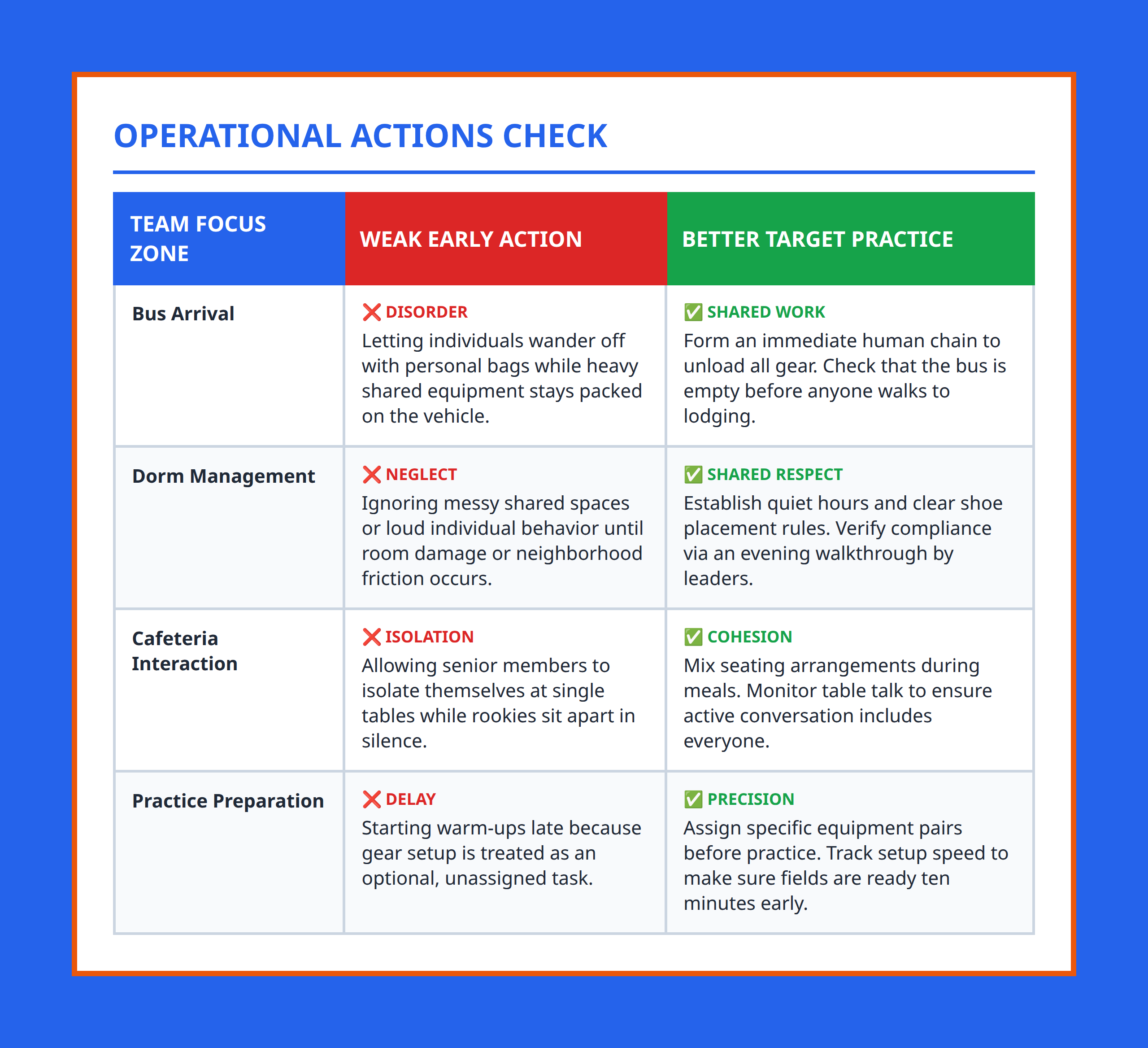
I think many leaders underestimate how much emotional information gets communicated through logistics.
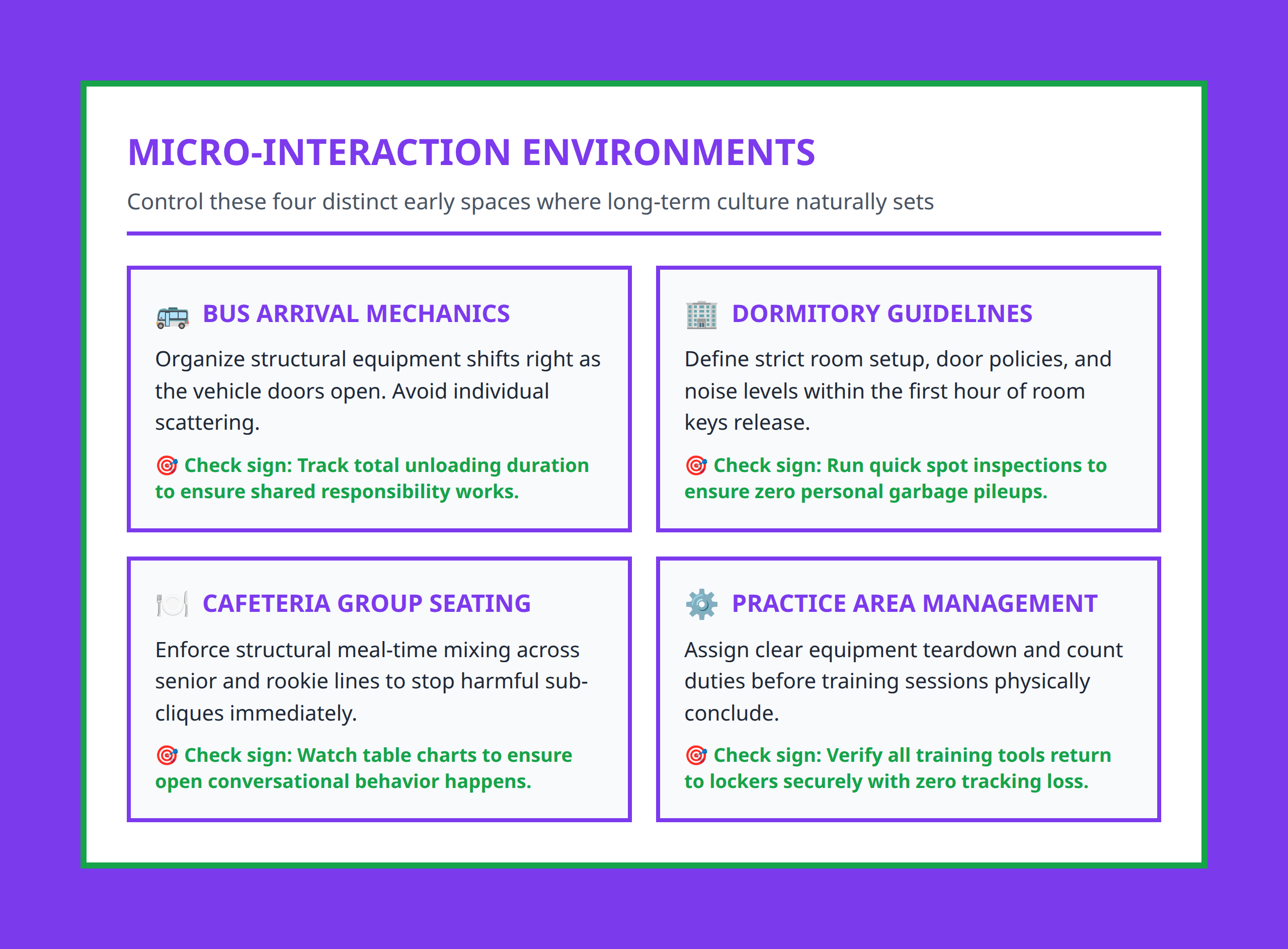
Dorm assignments, meal routines, attendance expectations, transportation behavior, and preparation habits may seem operational on the surface. But people interpret these systems psychologically.
Loose organization can communicate low standards. Consistent structure can communicate seriousness and safety at the same time.
What matters is not perfection. It is repetition.
When expectations stay steady across small situations, trust starts developing naturally because people understand the environment more clearly.
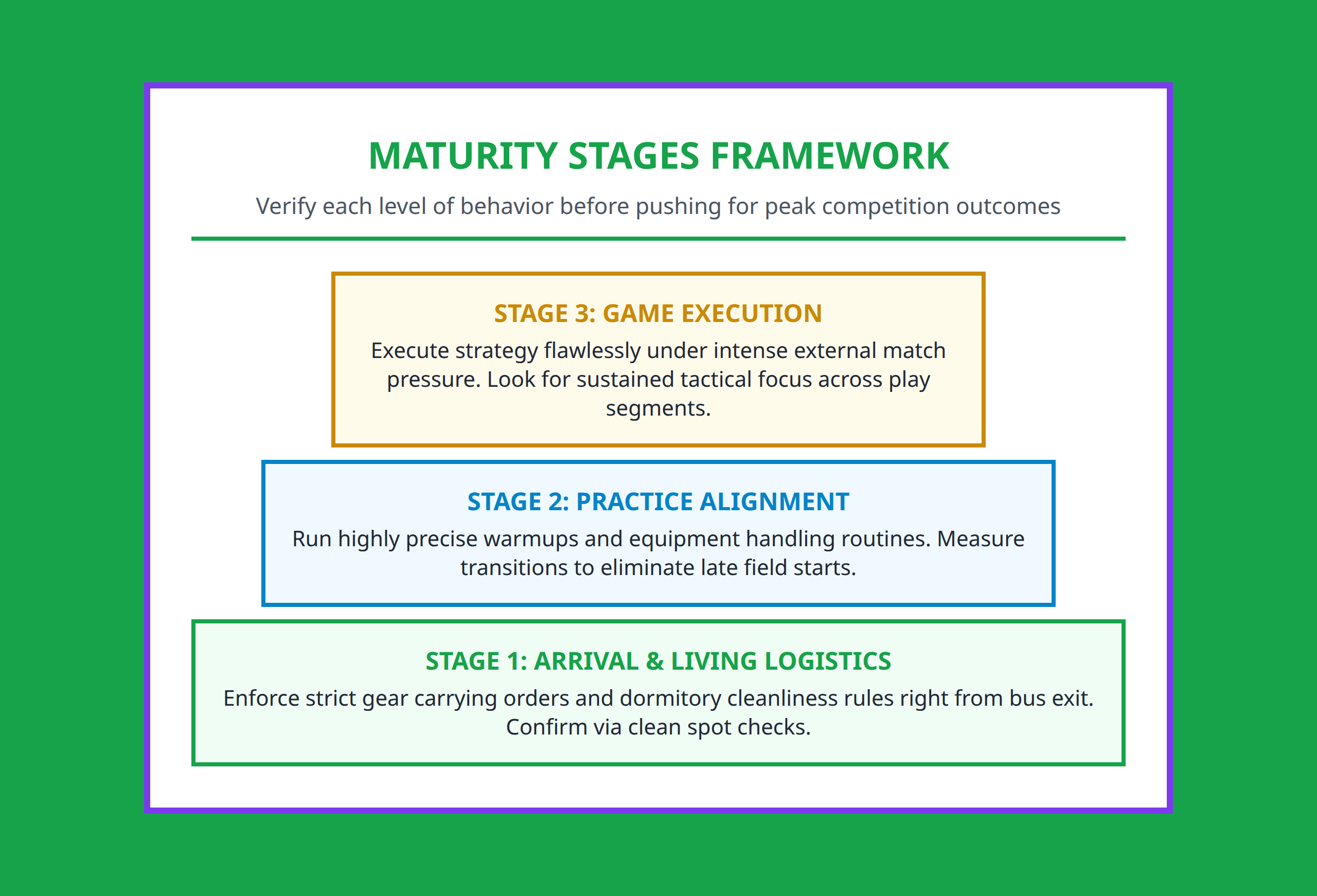
A coach reminding athletes to clean shared spaces, arrive prepared, or stay focused during transitions is not just managing tasks. The coach is teaching what accountability looks like inside the culture.
I think this is one reason strong team environments often feel disciplined before they feel inspirational.
The emotional identity comes later. The operational habits usually arrive first.
Culture Forms Through Repeated Micro-Interactions
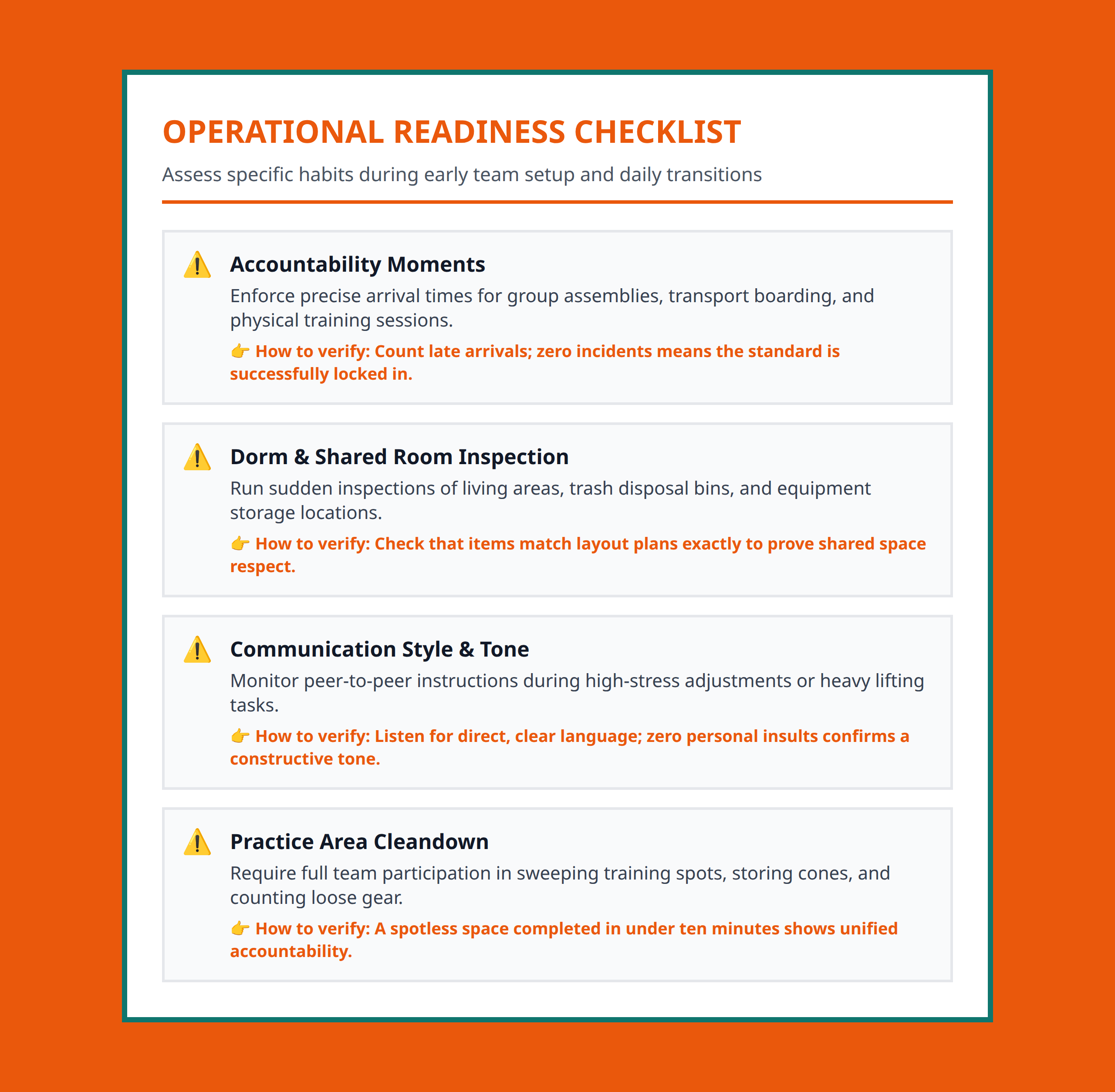
One major mistake leaders make is treating culture like a single dramatic moment.
Most culture-building actually happens through repetition.
A sarcastic comment ignored repeatedly becomes part of the culture.
Consistent punctuality becomes part of the culture.
How leaders respond to frustration becomes part of the culture.
Even meal conversations become part of the culture.
I would pay close attention to emotional tone during ordinary interactions because teams absorb mood faster than most leaders realize.
If anxiety dominates every conversation, the culture eventually becomes tense. If leaders use humor strategically while maintaining standards, the environment may become more resilient under pressure.
These patterns rarely feel dramatic while they are forming. But over time, repeated micro-behaviors become the emotional “normal” for the group.
Accountability Starts Before Performance Problems Appear
One detail I find important is that strong cultures usually establish accountability early, before major conflict exists.
Weak teams often wait until performance collapses before discussing standards seriously.
By then, emotional frustration is already high.
Stronger environments handle accountability in smaller moments first. Someone ignores instructions during setup. A player creates unnecessary distractions in shared spaces. A teammate stops taking routines seriously.
The response to those small moments teaches everyone else what standards actually mean.
I think inconsistency damages culture faster than strictness does.
A leader who enforces expectations one day and ignores them the next creates emotional confusion inside the group. People stop trusting the system and start adapting to mood instead.
That instability spreads quickly.
Teams Learn Emotional Behavior From Leadership First
One thing that stands out in competitive environments is how closely groups mirror emotional leadership.
If the coach becomes reactive under stress, the team usually becomes reactive too. If leadership stays composed during confusion, the group often stabilizes faster.
I do not think culture can stay emotionally healthy when leaders consistently model panic, sarcasm, humiliation, or unpredictability.
People copy emotional patterns more than mission statements.
A practical example is preparation before practice. Imagine athletes moving slowly, distracted by phones, and not fully engaged yet. One leader responds with immediate anger and public embarrassment. Another leader redirects focus firmly but calmly, reinforcing expectations without emotionally escalating the room.
The second environment usually builds stronger long-term trust because emotional control becomes part of the culture itself.
Informal Moments Often Reveal the Real Culture
I think the clearest version of team culture appears when nobody believes they are being evaluated.
Bus rides, cafeteria conversations, downtime between drills, shared cleanup responsibilities, and casual interactions reveal far more than official meetings sometimes do.
Do teammates include isolated people naturally?
Do leaders pay attention when morale shifts?
Do people joke constantly to avoid accountability?
Does frustration become contagious?
Those ordinary moments expose whether the culture is actually cohesive or only looks organized during formal activities.
And once those emotional habits solidify, changing them later becomes much harder.
Strong Culture Makes Pressure Feel More Predictable
The biggest thing I carry away from strong team environments is that good culture reduces uncertainty.
People know how conflict gets handled. They know what preparation looks like. They know how teammates respond under stress. They know what emotional standards exist.
That familiarity becomes extremely valuable once real competition starts.
I think many leaders focus too heavily on performance systems while ignoring the emotional infrastructure underneath them.
But teams rarely build trust instantly during high-pressure moments. They usually build it earlier through dozens of ordinary interactions that teach people whether the environment feels stable, accountable, and emotionally reliable.
By the time the first real competition arrives, the culture is often already there.
The pressure simply reveals what the group has been practicing emotionally the entire time.
References:
- https://medium.com/@jaredrudnick/why-championship-teams-focus-on-culture-first-164172af5aa1
- https://www.tbriankight.com/blog/team-culture-starts-with-personal-choices
- https://www.du.edu/sport-sense/news/what-makes-successful-sport-team-it-starts-culture
- https://theexcellingedge.com/great-teams-focus-culture-first/
- https://www.athleteassessments.com/disc-team-culture-for-sport/
- https://www.drpaulmccarthy.com/post/how-to-build-a-winning-team-culture-sports-psychology-secrets-from-elite-coaches
- https://www.teamspiritsports.com.au/blog/team-culture-in-sports
- https://truesport.org/decision-making/build-team-culture-through-stories/
- https://slamdunksuccess.com/creating-a-team-first-culture/
- https://fieldhockey.ca/safe-sport/rule-of-two/
- https://www.linkedin.com/top-content/leadership/building-trust-in-teams/how-to-build-a-team-first-culture/
- https://knowyourtalents.com/enhancing-team-development-for-peak-performance/