Python offers multiple collection types—lists, tuples, sets, and dictionaries—each designed for specific use cases. Understanding their differences helps avoid confusion, improve efficiency, and write cleaner code for real-world programming tasks.
When I first started learning Python, I often treated lists and tuples interchangeably. It seemed convenient at the time, but as projects grew, the distinctions became crucial for correctness and performance. Learning when to use each collection type is one of the early steps toward writing robust Python code.
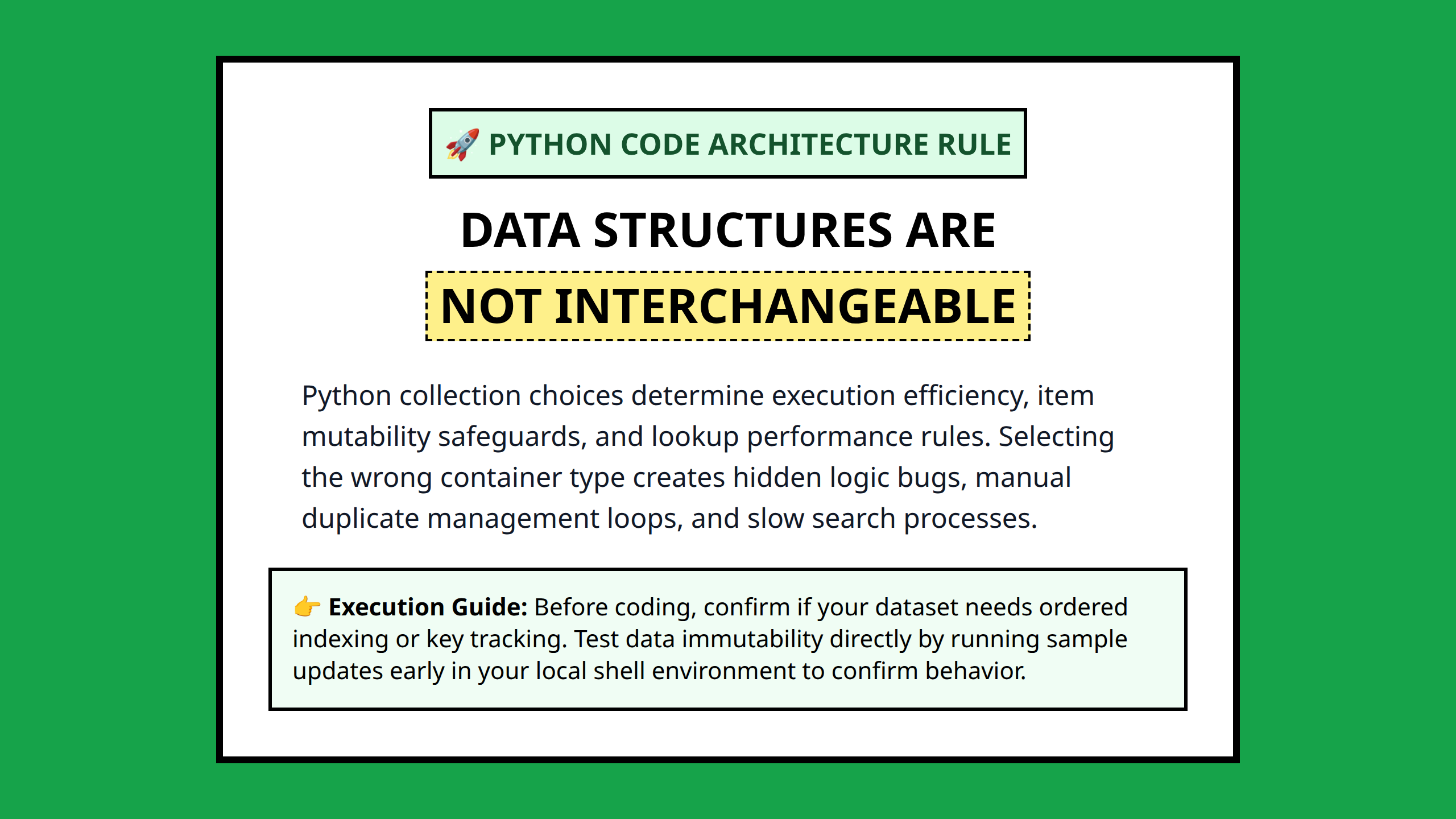
Python’s design encourages selecting the right structure based on operational needs rather than defaulting to the most familiar option.
Lists: Mutable and Ordered
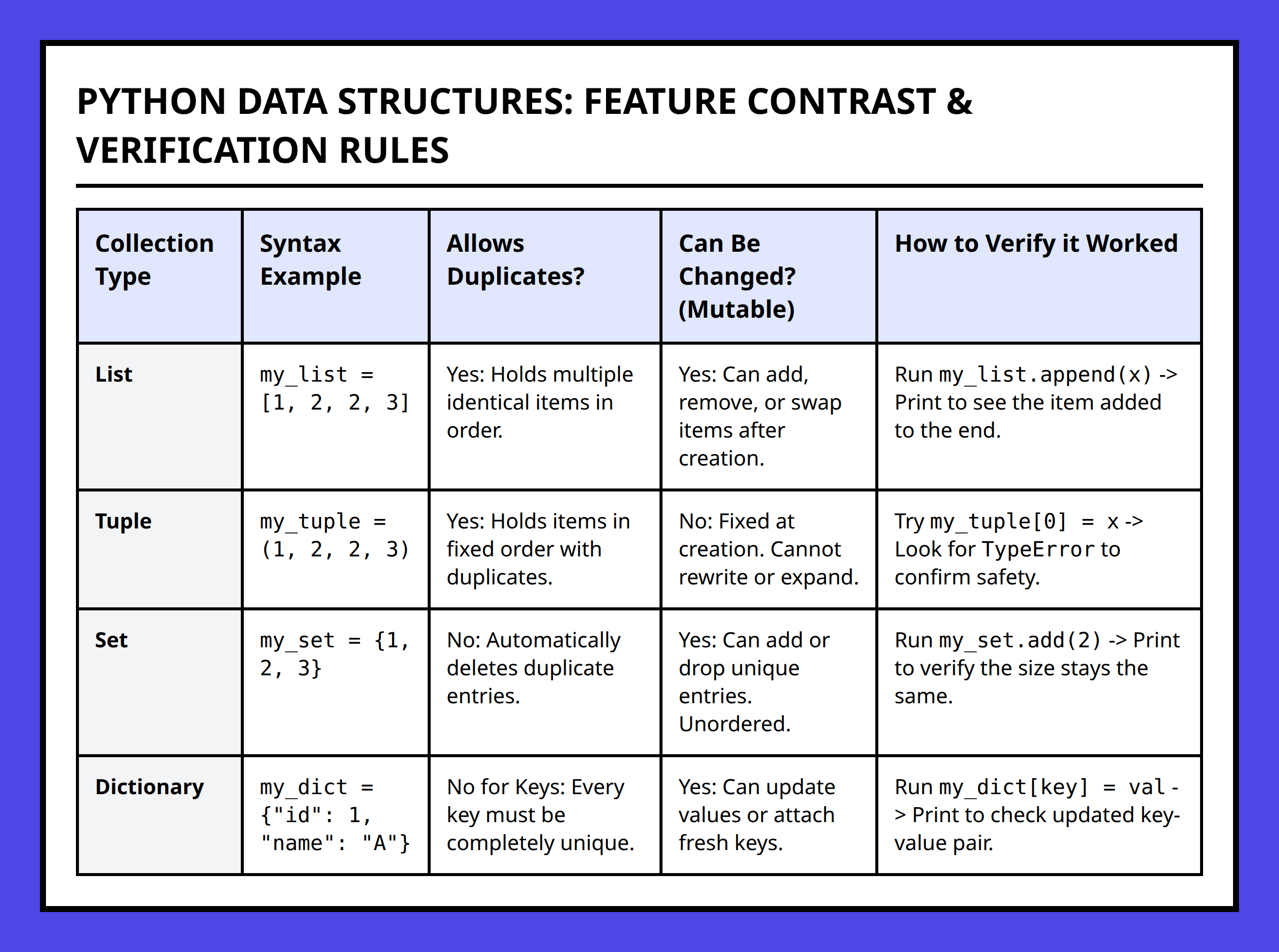
Lists are the most flexible collection type. They maintain order and can be modified after creation, allowing element insertion, deletion, and reassignment.
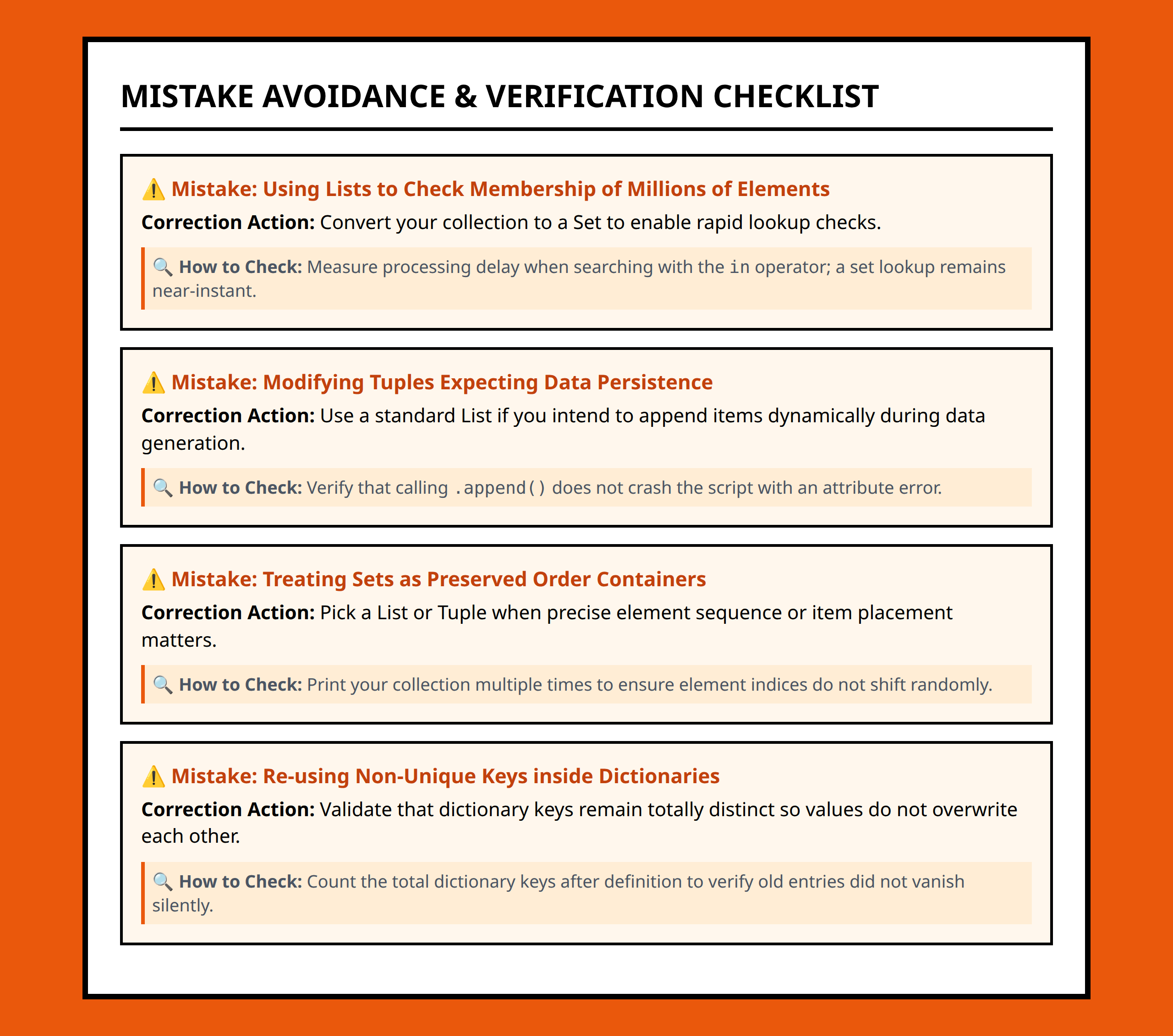
fruits = ["apple", "banana", "cherry"] fruits.append("date") I find lists ideal when you need a sequence that changes over time, like a dynamic collection of user input or processed items. The mutability is powerful, but it also requires caution: changes in place can produce unintended side effects if references are shared across the program.
Tuples: Immutable Sequences
Tuples, unlike lists, are immutable. Once created, their contents cannot be changed. I often use tuples for fixed configurations or as keys in dictionaries where immutability is required.
coordinates = (10, 20) The immutability ensures data integrity and can prevent accidental modification. I usually choose tuples for small, structured data that should remain constant.
Sets: Unordered and Duplicate-Free
Sets are collections that automatically eliminate duplicates and provide fast membership checks. This makes them ideal for tasks where uniqueness matters, like filtering repeated elements or quickly checking for the presence of items.
unique_numbers = {1, 2, 3, 2, 1} # Results in {1, 2, 3} I appreciate sets when comparing collections or removing duplicates efficiently. Their unordered nature means indexing isn’t available, but for membership tests, they outperform lists significantly.
Dictionaries: Key-Value Mapping
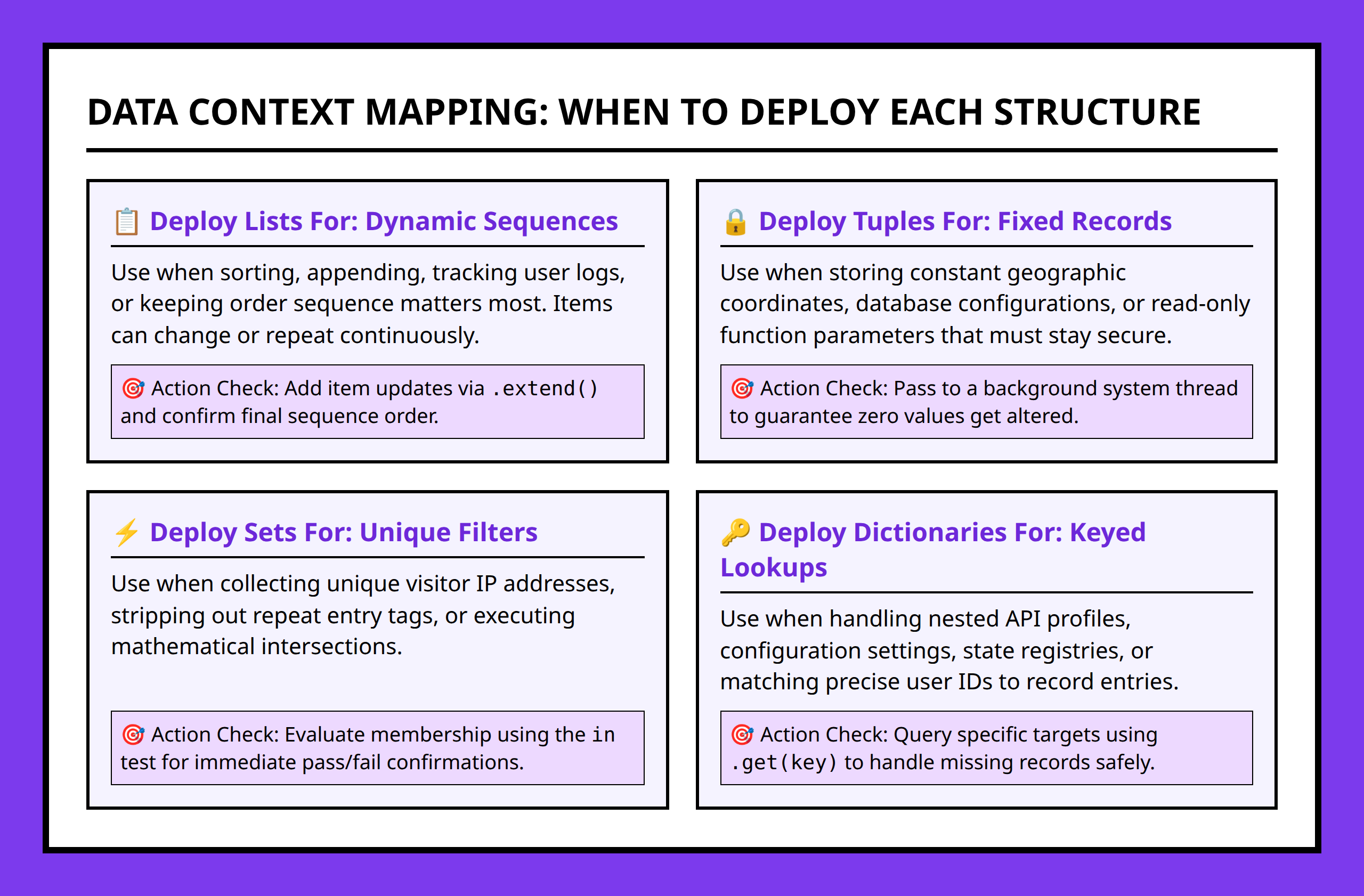
Dictionaries store data as key-value pairs, providing constant-time lookup for keys. I use them whenever I need to map identifiers to values, like storing configuration options, counters, or structured information.
user_ages = {"alice": 25, "bob": 30} age = user_ages["alice"] Beyond fast access, dictionaries make the code more readable by allowing meaningful keys rather than relying on list positions. Using methods like get() can further make retrieval safer by handling missing keys gracefully.
Choosing the Right Collection Type
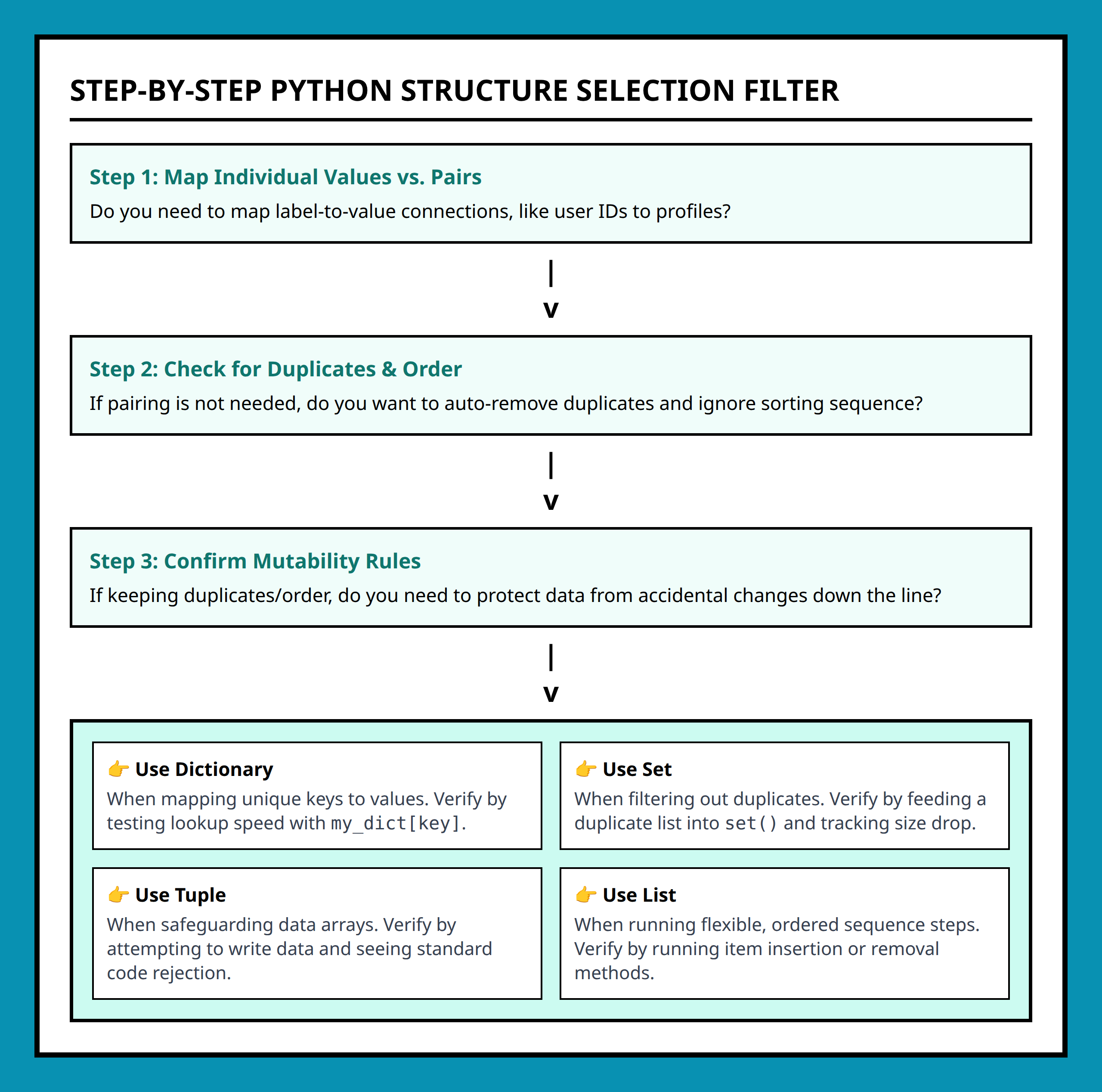
The decision often comes down to a few key questions:
- Do I need to modify the collection after creation? → Use a list or set.
- Should the elements remain constant? → Use a tuple.
- Do I need to ensure uniqueness? → Use a set.
- Do I need fast, key-based access? → Use a dictionary.
Thinking through these questions prevents misuse and clarifies intent. I’ve found that explicitly choosing based on operational needs leads to fewer bugs and easier maintenance as the codebase grows.
Understanding the differences between Python collections is more than a syntactic exercise; it directly affects program readability, performance, and reliability.
References:
- https://www.youtube.com/watch?v=RF26NjCUNvs
- https://www.youtube.com/watch?v=HSFeYk6Eu8A
- https://www.youtube.com/watch?v=KWKWswDfAb0
- https://www.youtube.com/watch?v=h-zcj4DmqHk
- https://www.reddit.com/r/learnpython/comments/1j4ia9n/when_should_i_use_a_list_dictionary_tuple_or_set/
- https://www.reddit.com/r/learnpython/comments/1j4ia9n/when_should_i_use_a_list_dictionary_tuple_or_set/mg9obyz/
- https://www.reddit.com/r/learnpython/comments/1j4ia9n/when_should_i_use_a_list_dictionary_tuple_or_set/mg8x19j/
- https://stackoverflow.com/questions/68298272/when-to-use-lists-sets-dictionaries-or-tuples-in-python
- https://stackoverflow.com/questions/62708806/beginner-to-python-lists-tuples-dictionaries-sets
- https://www.reddit.com/r/learnpython/comments/hkcyi6/in_the_most_basic_terms_please_explain_when_you/
- https://www.reddit.com/r/learnpython/comments/1pyei1/realworld_example_of_using_liststuplesdictionaries/
- https://zlliu.medium.com/python-lists-vs-dicts-vs-sets-vs-tuples-dc784d1e0daf
- https://www.youtube.com/watch?v=R-HLU9Fl5ug
- https://thepythoncodingbook.com/2021/10/31/using-lists-tuples-dictionaries-and-sets-in-python/
- https://levelup.gitconnected.com/the-python-tutorial-you-need-on-lists-tuples-dictionaries-and-sets-435bafb00a34
- https://docs.python.org/3/tutorial/datastructures.html
- https://www.youtube.com/watch?v=W8KRzm-HUcc
- https://sustainabilitymethods.org/index.php/Lists,_Tuples,_Sets,_and_Dictionaries_in_Python
- https://www.reddit.com/r/learnpython/comments/1j4ia9n/when_should_i_use_a_list_dictionary_tuple_or_set/mg8xzh7/
- https://stackoverflow.com/a/68298462
- https://stackoverflow.com/a/62708895
- https://builtin.com/data-science/python-data-structures