Mass production made industrial goods cheaper and faster, but it also weakened the role of craftsmanship in everyday work. New manufacturing models are now revisiting some artisanal principles through customization, flexible automation, and hybrid human-machine production.
When people think about industrial progress, they often picture a straight line from handcraft to automation. I do not think the story is that simple. Industrialization solved real problems of scale and affordability, but it also stripped away parts of production that once depended on judgment, identity, and craft knowledge.
What interests me now is that manufacturing seems to be circling back toward some of those older values. Not by abandoning technology, but by combining digital systems with forms of personalization and skilled human input that mass production pushed aside for decades.
Takeaways
- Guild-based craftsmanship emphasized quality, skill transfer, and worker control over production.
- Industrialization prioritized efficiency, scalability, and standardized output.
- Mass production weakened artisanal identity by fragmenting work into repetitive tasks.
- Industry 5.0 is reintroducing customization and human-centered production into manufacturing systems.
Craftsmanship Was Once the Core of Production
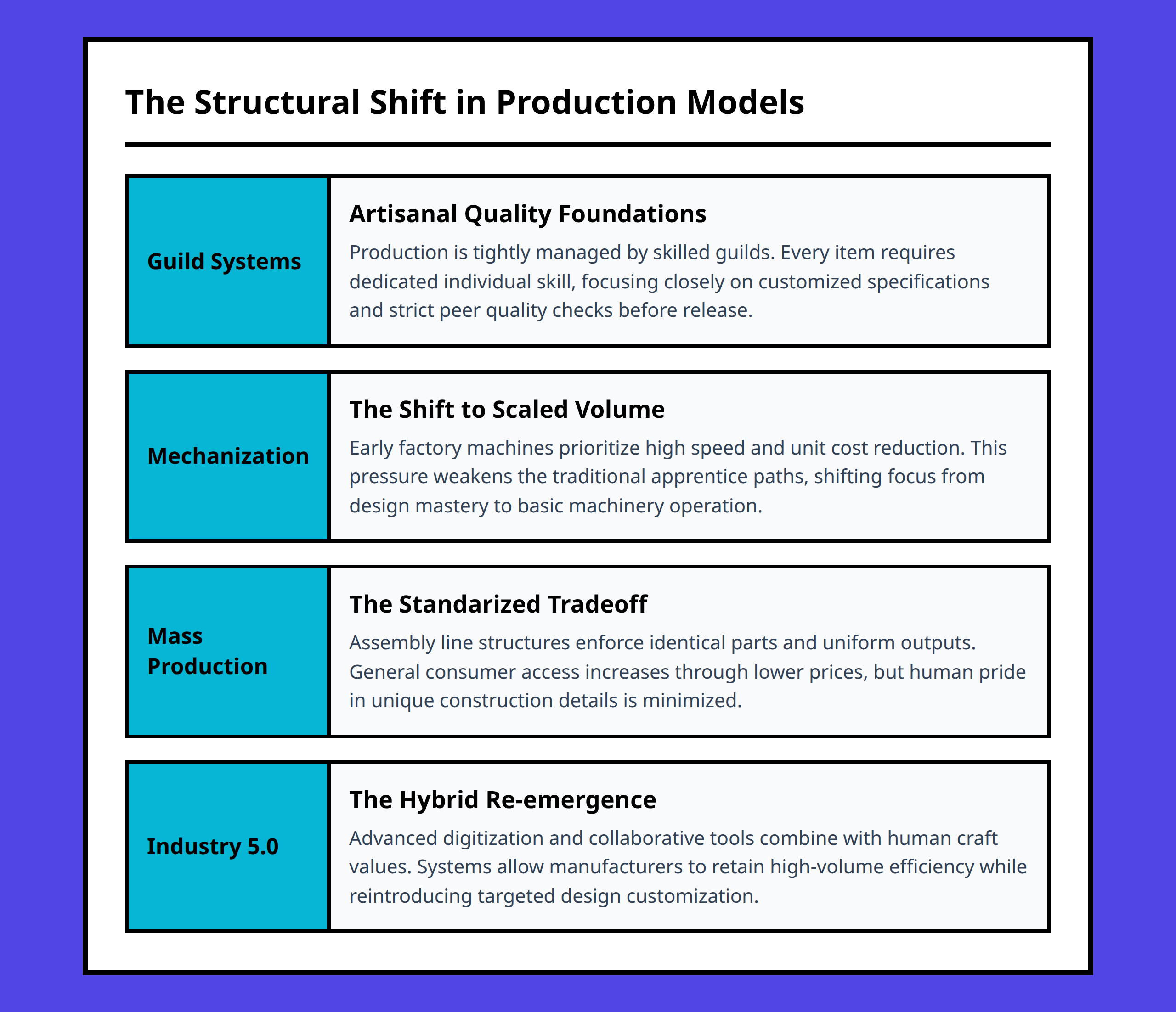
Before industrial factories dominated manufacturing, production depended heavily on artisans and guild systems. Skilled workers controlled how products were made, how quality was maintained, and who could enter a trade.
Guilds regulated everything from apprenticeship standards to acceptable production methods. A craftsperson did not simply operate a tool. They carried accumulated knowledge that often took years to develop.
That structure created slower production, but it also created accountability and identity around the finished product.
I think this difference matters because craftsmanship was not only about aesthetics. It was also a production philosophy. The worker understood the entire process instead of handling one narrow fragment of it.
A furniture maker, for example, might select materials, shape components, assemble the product, and inspect the final quality personally. The knowledge stayed connected to the maker.
Industrialization gradually separated those steps.
Mass Production Rewarded Speed More Than Craft
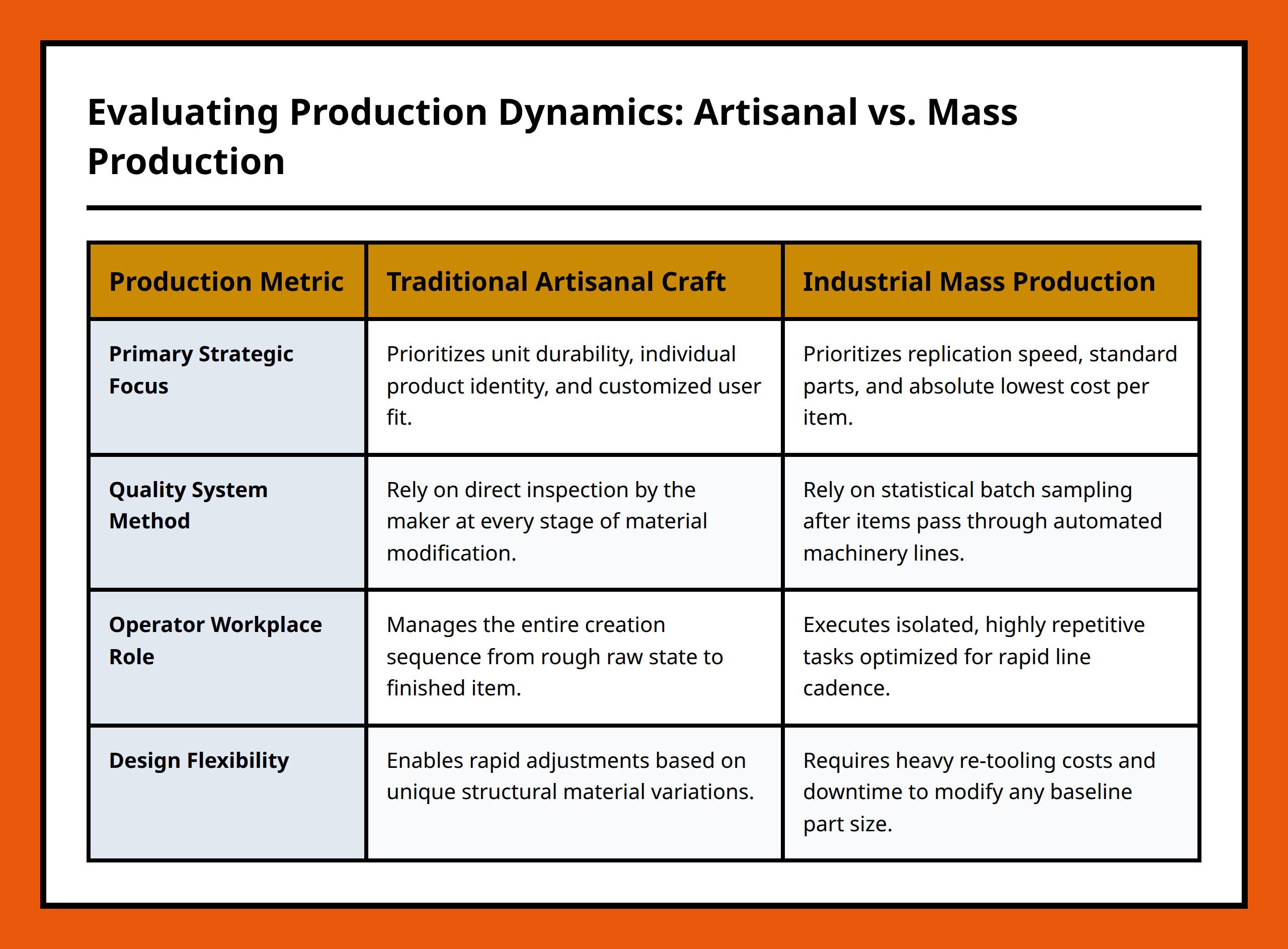
As mechanization spread during the Industrial Revolution, factories began outperforming artisanal workshops in speed, consistency, and scale.
Machines such as the spinning jenny, water frame, and power loom dramatically increased textile production. Standardized factory systems made it possible to produce goods at volumes that handcraft methods could not match economically.
The pressure was not purely technological. It was also commercial.
Growing markets demanded lower prices and faster output. Industrial systems answered that demand by reorganizing labor around efficiency.
That reorganization changed the meaning of skill itself.
Instead of mastering an entire craft, many workers became responsible for one repeated machine-centered task. Factory owners could train workers faster because jobs were simplified into specialized steps.
I would not romanticize pre-industrial labor. Craft work could be exhausting, unstable, and economically limited. But industrial systems often treated skill as a bottleneck to simplify rather than a form of expertise to preserve.
Factories Broke Production Into Smaller Fragments
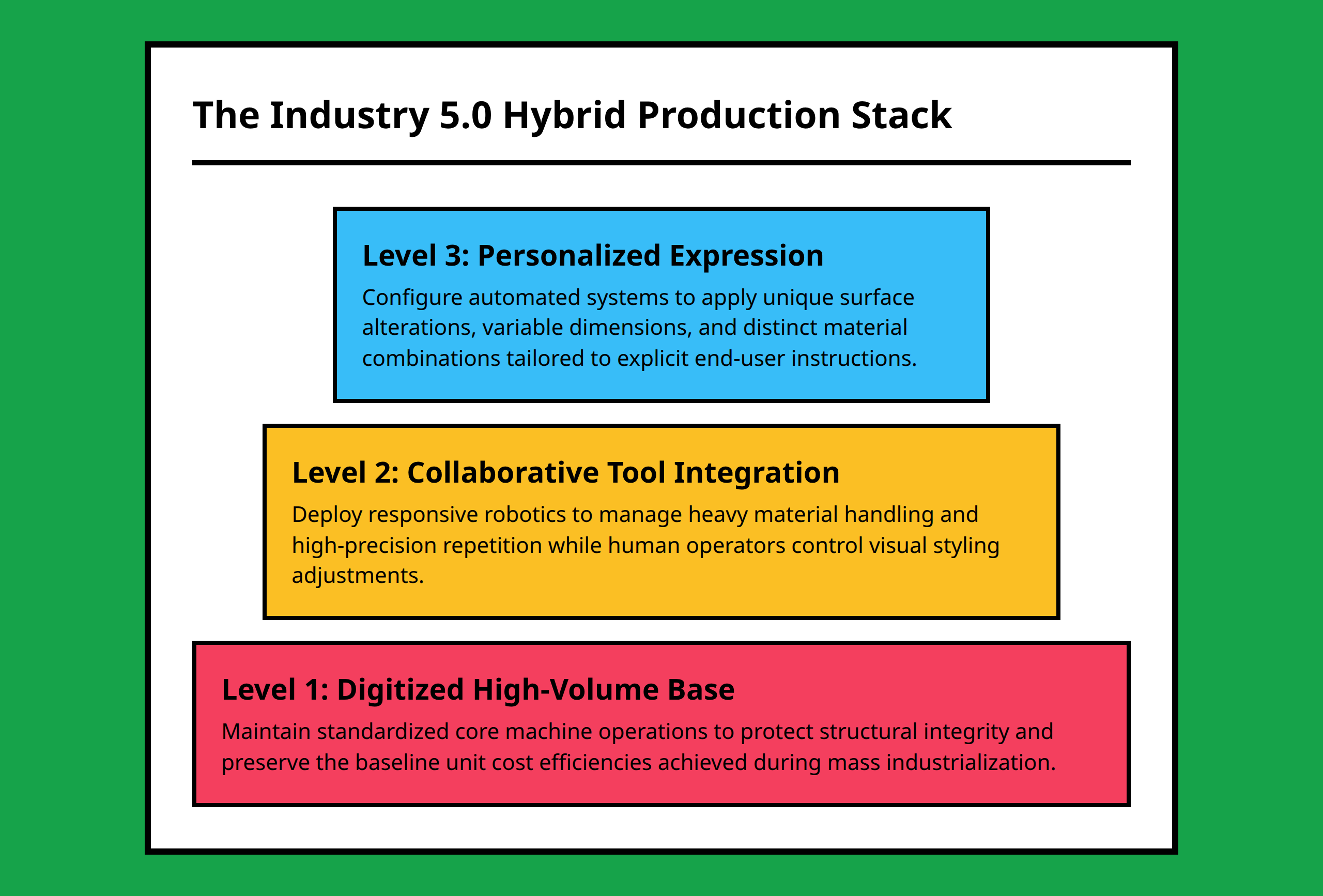
The rise of division-of-labor systems weakened artisanal identity in a practical way.
Workers no longer needed to understand the whole product. Factories divided production into narrow operations that could be repeated continuously.
A textile worker might monitor one loom all day. Another worker repaired machine parts. Another handled packaging.
The system increased output enormously, but it also changed how workers related to their own labor.
I think this shift explains why industrial production often feels emotionally distant compared to handcrafted goods. The worker’s connection to the final object became weaker because the production process itself became fragmented.
You can still see traces of this in modern manufacturing plants where employees supervise isolated stages of highly automated workflows without much visibility into the broader production chain.
Standardization Solved Real Problems
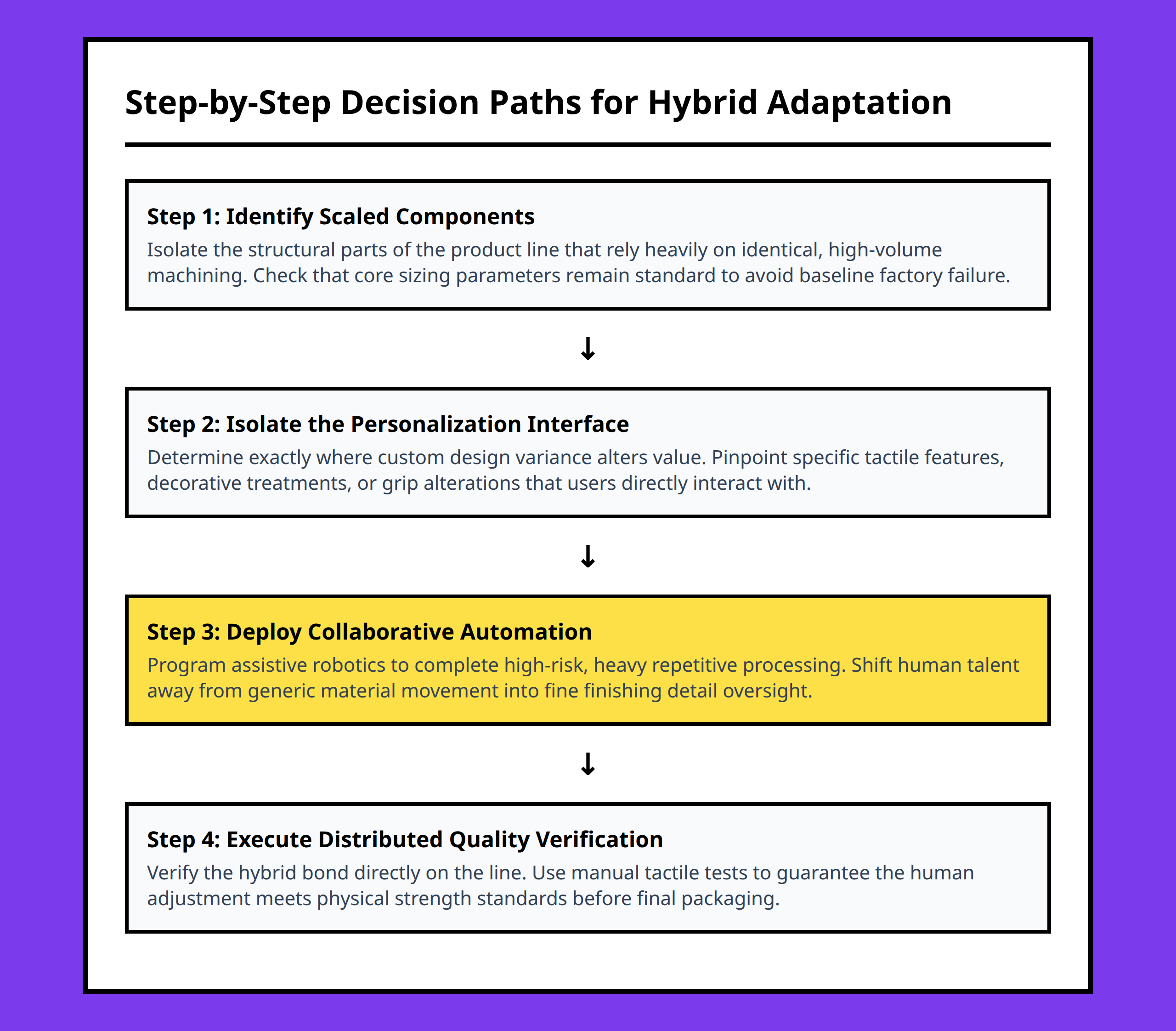
It would be easy to frame craftsmanship as inherently better than industrial production, but that misses why mass production expanded so quickly.
Industrial systems made goods more affordable and widely available. Standardization reduced costs, increased supply, and allowed industries to scale beyond local markets.
That mattered enormously for ordinary consumers.
Clothing, tools, household products, and industrial materials became cheaper because factories could produce identical items rapidly and repeatedly.
The tradeoff was that consistency often replaced individuality.
When I look at this historical shift, I do not see a simple victory of machines over artisans. I see a constant tension between two production goals:
- Efficiency and scale
- Quality, customization, and human judgment
Industrial systems strongly favored the first category for more than a century.
Why Craftsmanship Never Fully Disappeared
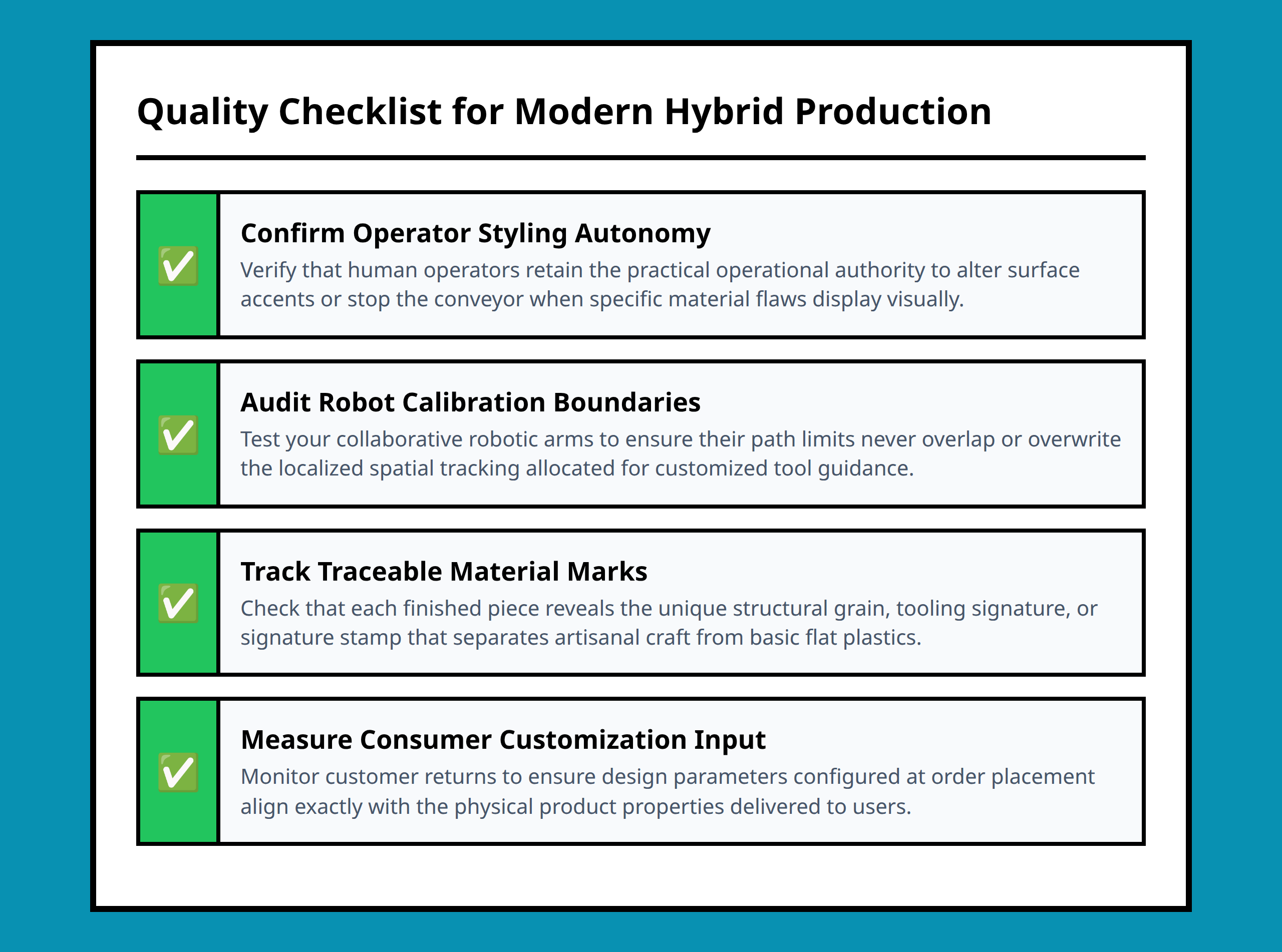
Even during the height of industrial mass production, artisanal values survived in certain industries and consumer behaviors.
Some buyers continued seeking products associated with handmade quality, specialized expertise, or local production traditions. Cooperative craft production and small-scale artisan markets persisted partly because industrial goods often prioritized volume over distinctiveness.
This persistence matters because it shows that efficiency alone does not satisfy every market need.
A small example makes this easier to picture. Someone buying a factory-made dining chair may mainly care about price and convenience. Someone commissioning a handcrafted table may care about material quality, uniqueness, repairability, or the visible signs of human work.
Those are different value systems, even when the products serve similar functions.
Industry 5.0 Is Bringing Human Skill Back Into Manufacturing
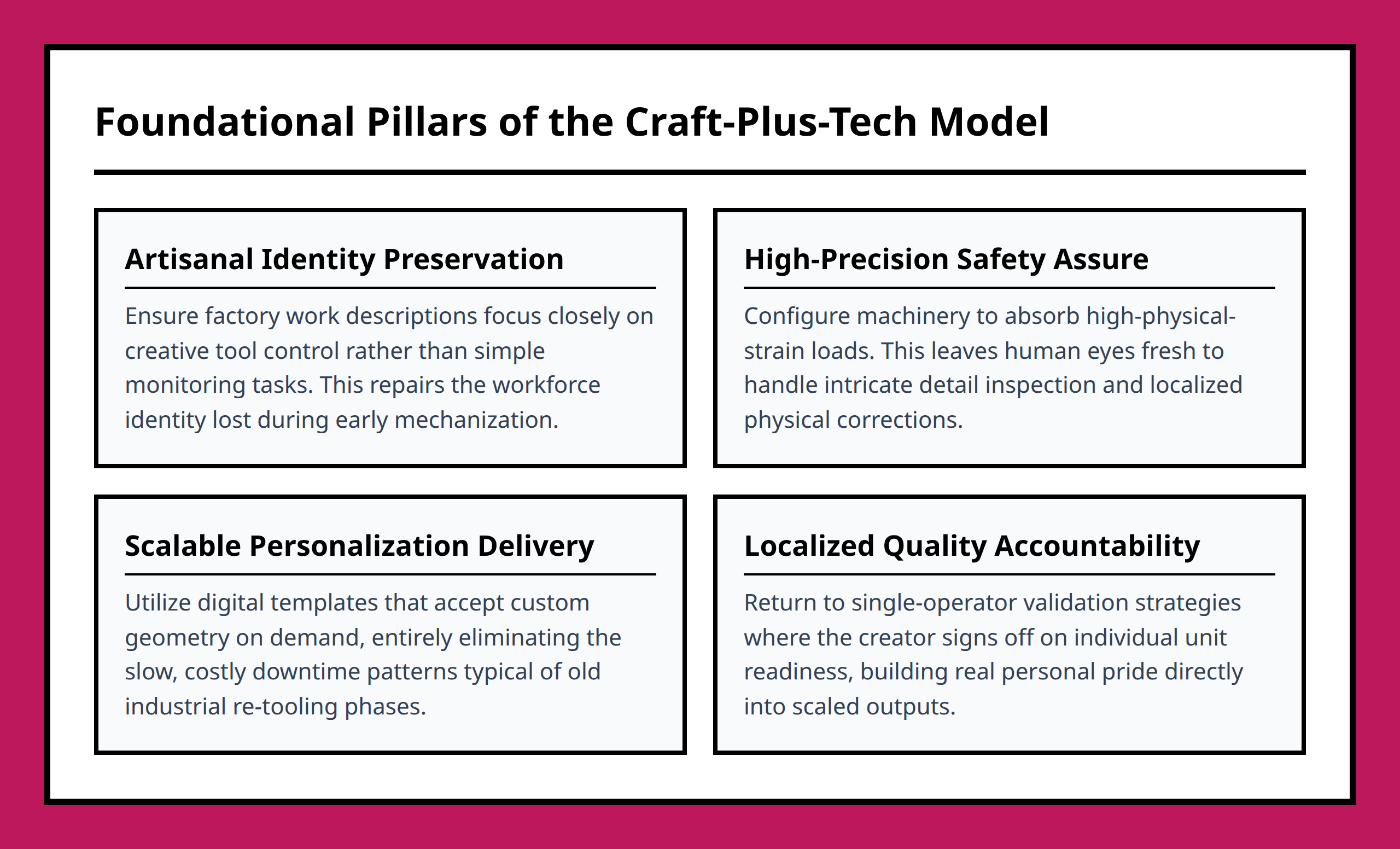
Modern manufacturing discussions increasingly use the term Industry 5.0 to describe systems that combine advanced technology with human-centered production.
That shift is important because it partially reverses the older industrial assumption that efficiency always means reducing human involvement.
Instead of removing people completely, Industry 5.0 often focuses on combining:
- Robotics and automation
- Digital manufacturing systems
- Flexible production
- Customization
- Human creativity and judgment
The goal is not to return to pre-industrial craft workshops. Modern manufacturing still depends heavily on technology and scalable systems.
What is changing is the balance.
Factories are becoming more capable of producing smaller customized runs instead of only massive standardized batches. Digital tools can support personalization without abandoning industrial efficiency entirely.
I think this explains why conversations about modern manufacturing increasingly include words like “craft,” “human-centered,” and “customization” again.
Hybrid Manufacturing Changes the Meaning of Skill Again
One of the more interesting developments in Industry 5.0 is that technology can now support skilled work instead of only simplifying it.
Earlier industrial systems often reduced the need for broad artisanal expertise by narrowing tasks. Hybrid manufacturing systems can move in the opposite direction.
A worker operating advanced digital fabrication systems may need technical knowledge, creative judgment, quality awareness, and adaptability all at once.
The role becomes less repetitive and more interpretive.
I would pay close attention to this shift because it changes how companies think about labor value. Workers are no longer viewed only as machine operators. In some environments, they become collaborators inside flexible production systems.
That does not mean all manufacturing jobs suddenly become creative or autonomous. Large-scale industrial production still depends heavily on standardization.
But modern manufacturing increasingly makes room for areas where customization and human judgment create competitive value again.
The Real Tension Was Never Machines Versus Humans
What I take from this history is that the deeper conflict was never simply about technology replacing people.
The real tension was between two production models:
- Systems optimized for scale, consistency, and low cost
- Systems that preserve flexibility, craftsmanship, and human interpretation
Industrialization strongly favored the first model because expanding economies demanded volume and affordability.
Industry 5.0 does not erase that history. It adjusts the balance by recognizing that people still value products, experiences, and work processes that feel shaped by human judgment rather than pure industrial uniformity.
That shift may end up being one of the most important manufacturing changes of the next decade: not abandoning automation, but deciding where automation should stop and craftsmanship should return.
- Guild: An organization that regulated skilled trades, apprenticeships, and quality standards before industrial factories became dominant.
- Artisanal production: A manufacturing approach where skilled workers control most or all stages of creating a product.
- Mass production: Large-scale manufacturing designed to produce standardized goods quickly and cheaply.
- Division of labor: Breaking production into smaller specialized tasks handled by different workers.
- Industry 5.0: A manufacturing concept focused on combining advanced technology with human creativity, customization, and collaboration.
- Mechanization: Replacing manual production methods with machines to increase efficiency and output.
- Customization: Adjusting products or production processes to meet specific user preferences instead of producing identical standardized goods.
- Hybrid manufacturing: A production model that combines automation with skilled human input and flexible workflows.
References:
- https://www.prosemedia.com/blog/the-death-of-craftsmanship-why-mass-production-is-killing-your-brand-identity
- https://www.platforme.com/post/industry-5-0-and-mass-customisation-the-future-of-production
- https://www.researchgate.net/publication/374921635_The_Evolution_of_Smart_Factories_How_Industry_50_is_Revolutionizing_Manufacturing
- https://www.linkedin.com/posts/pdmason_76-industry-60-dark-factories-and-the-activity-7429261725696237568-TYI4
- https://pmc.ncbi.nlm.nih.gov/articles/PMC9899508/
- https://www.forbes.com/sites/jeroenkraaijenbrink/2022/05/24/what-is-industry-50-and-how-it-will-radically-change-your-business-strategy/
- https://intellias.com/industry-5-0-announcing-the-era-of-intelligent-automation/
- https://skillaibility.eu/2026/02/05/industry-5-0-in-practice-lessons-next/
- https://www.sciencedirect.com/science/article/pii/S004016252500280X
- https://www.l2l.com/blog/industry-50-shaping-future-manufacturing
- https://www.credlix.com/blogs/10-huge-problems-faced-by-manufacturers-in-india-and-how-to-tackle-them
- https://www.ibm.com/think/topics/industry-4-0
- https://www.linkedin.com/pulse/industry-50-vs-40-key-differences-what-changes-manufacturing-gfa0e