In competitive professional environments, charisma can feel like proof of competence, confidence, or trustworthiness. The problem is that attraction and social ease often make people overlook attitudes and behaviors they would normally question more carefully.
I think most people assume poor judgment happens because someone ignores obvious warning signs. In reality, the warning signs often do not feel obvious at first because charisma changes how behavior gets interpreted.
A confident person sounds persuasive longer. A charming person receives more benefit of the doubt. Someone socially magnetic can make questionable comments feel temporary, playful, or unimportant until a larger pattern finally becomes impossible to ignore.
Attraction Changes How We Interpret Behavior
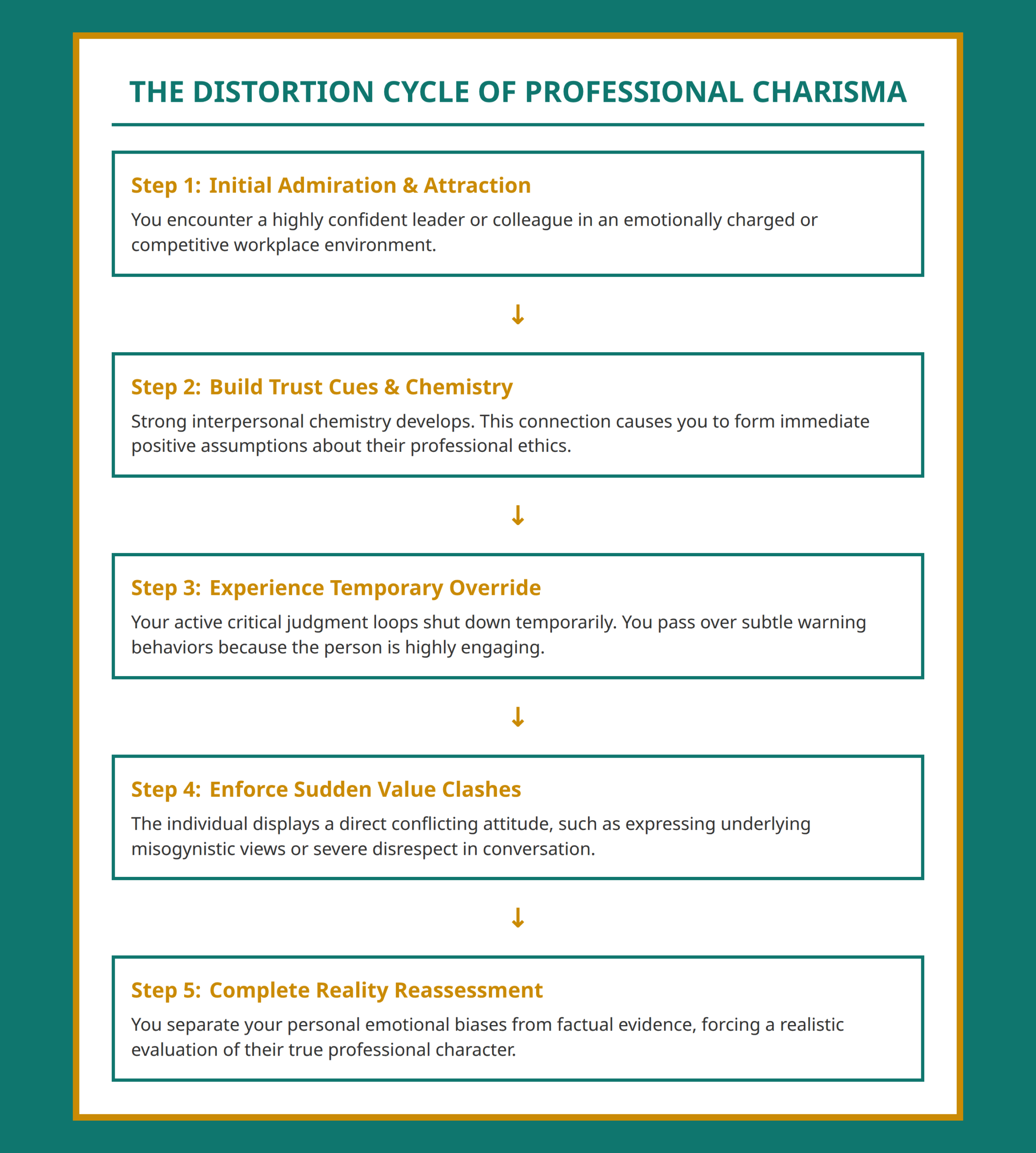
One thing I find fascinating about charismatic people is how quickly they shape emotional atmosphere.
A room feels easier around them. Conversations flow faster. Tension drops. They seem socially confident, emotionally controlled, and naturally influential.
That emotional comfort matters more than people realize.
Once someone creates admiration or attraction, the brain often starts interpreting future behavior through a softer lens. Confidence becomes intelligence. Assertiveness becomes leadership. Ambiguity becomes mystery instead of concern.
I think this is especially common in high-pressure professional environments where confidence already carries social value. A charismatic leader or colleague can feel emotionally reassuring simply because they appear certain of themselves.
That emotional reaction can quietly weaken critical judgment.
Charm Often Creates Premature Trust
One of the biggest risks around charisma is speed.
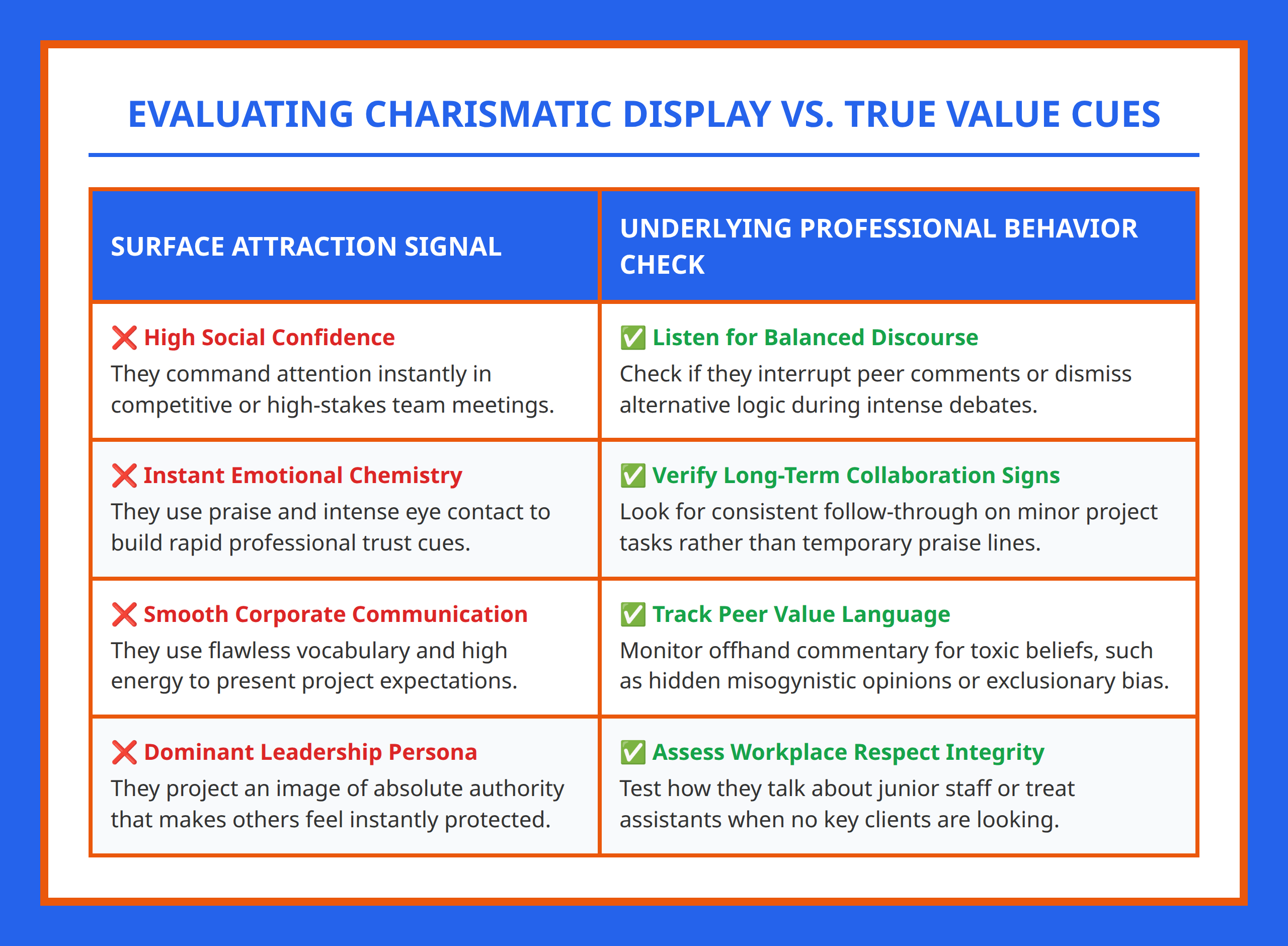
Charismatic people frequently create familiarity faster than trust actually deserves.
The interaction feels unusually easy, so the relationship starts feeling emotionally validated before much meaningful information has appeared.
I think many professionals mistake emotional fluency for character evidence.
A colleague who jokes comfortably, maintains eye contact, speaks confidently, and creates chemistry in conversation can start feeling trustworthy almost immediately. Meanwhile, someone quieter or socially awkward may get judged more cautiously despite showing better long-term behavior.
That imbalance matters because charm can temporarily distract attention away from deeper value systems.
A person may seem progressive, emotionally intelligent, or respectful socially while quietly holding dismissive attitudes underneath.
The contradiction does not fully register at first because the emotional experience still feels positive.
Red Flags Often Arrive Gradually, Not Dramatically
I think one reason charismatic people are difficult to evaluate clearly is that problematic behavior rarely appears all at once.
Instead, small moments accumulate slowly.
A dismissive comment gets framed as humor.
A condescending remark sounds playful.
An uncomfortable opinion appears briefly, then disappears behind confidence and charm again.
The person does not seem openly hostile, so the mind keeps searching for interpretations that preserve the original positive impression.
This becomes even stronger when attraction is involved.
Imagine a young professional who admires a confident colleague at a leadership event. The person seems intelligent, ambitious, socially smooth, and emotionally engaging. Then during a casual conversation, the colleague makes a subtly degrading comment about women in leadership.
The reaction is rarely immediate clarity.
More often, the mind hesitates:
- Maybe I misunderstood.
- Maybe they were joking.
- Maybe it sounded worse than intended.
Charisma creates emotional friction against negative interpretation.
Professional Environments Reward Confidence Aggressively
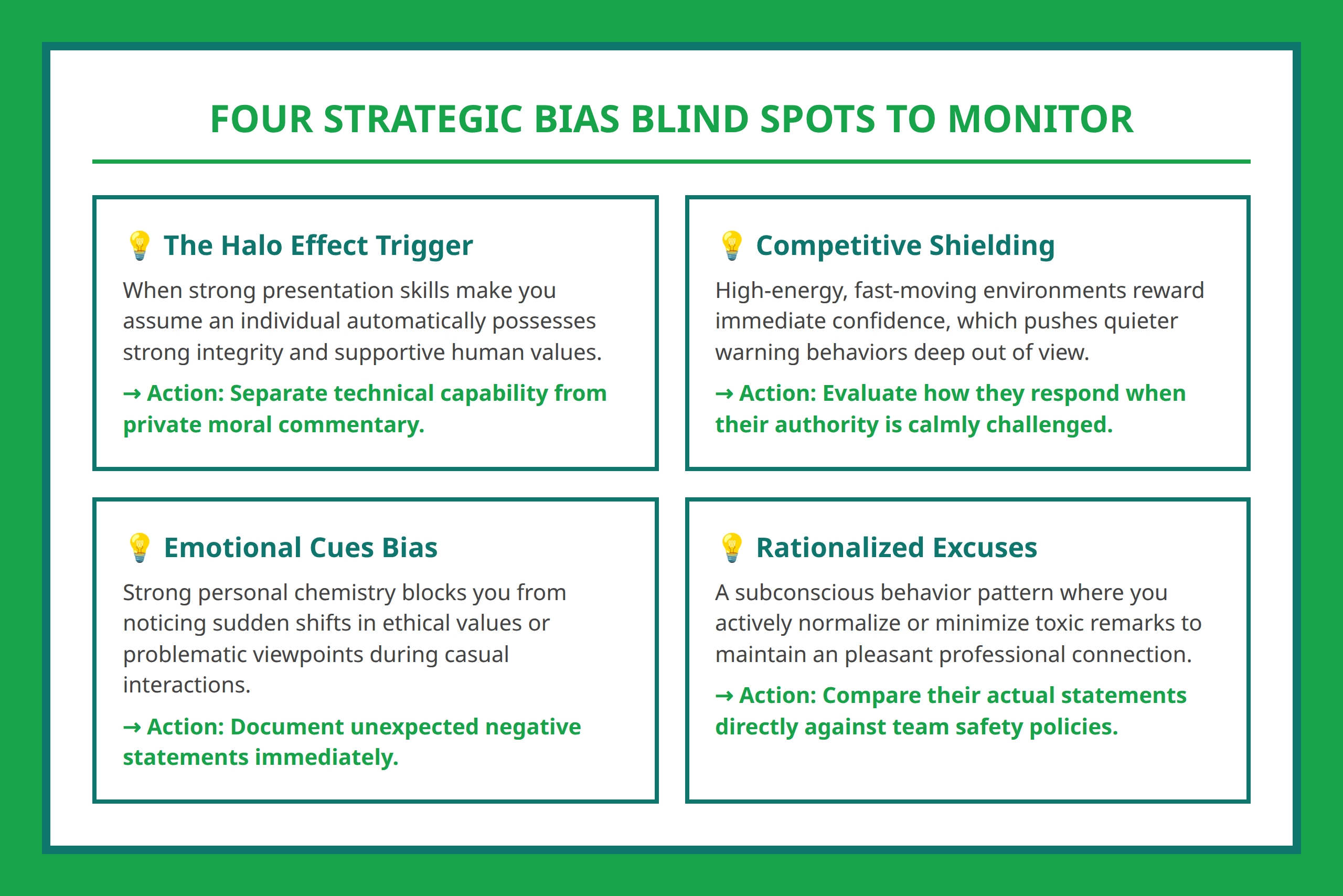
One reason this dynamic becomes dangerous at work is that many professional environments already reward charismatic behavior heavily.
Confident speakers often receive more attention. Social ease gets interpreted as leadership potential. Attractive communication styles can create credibility before actual competence becomes visible.
I would be careful not to confuse presentation quality with value alignment.
Those are different things entirely.
A person can communicate beautifully while still carrying manipulative tendencies, dismissive attitudes, or unhealthy relationship patterns underneath.
I think competitive environments make this harder because people naturally gravitate toward socially dominant personalities during uncertainty.
Confidence feels stabilizing under pressure.
That emotional pull can override slower, more analytical judgment.
The Most Important Information Often Appears After Comfort Develops
One pattern I notice repeatedly is that people reveal deeper attitudes only after social comfort forms.
At first, interactions stay polished and controlled. The charismatic person manages impressions carefully. Conversations remain emotionally appealing.
Then eventually, the filtering weakens.
A casual remark appears.
A dismissive opinion slips out.
A controlling tendency becomes visible.
A deeper belief system suddenly conflicts with the image that created the initial attraction.
I think this moment creates psychological discomfort because it forces reassessment. The mind now has two competing impressions:
- the emotionally appealing version
- the emerging behavioral evidence
Many people delay responding because abandoning the first impression feels emotionally costly.
Especially when admiration already exists.
Critical Thinking Gets Harder When Ego Is Emotionally Involved
One detail I would not ignore is how ego becomes part of the equation.
Once someone charismatic pays attention to us, compliments us, or creates emotional chemistry, objectivity becomes harder. Rejecting the person’s behavior may also mean admitting our earlier judgment was incomplete.
That realization can feel uncomfortable professionally and emotionally.
I think this explains why intelligent people still overlook obvious incompatibilities sometimes. The issue is rarely lack of intelligence. It is emotional investment interfering with perception.
The stronger the admiration becomes, the more motivated the mind becomes to preserve it.
That is a very human response.
The Best Protection Is Slower Interpretation, Not Cynicism
I do not think the solution is becoming suspicious of every charismatic person.
Some people genuinely are confident, socially skilled, and emotionally healthy.
The more useful adjustment is slowing interpretation down.
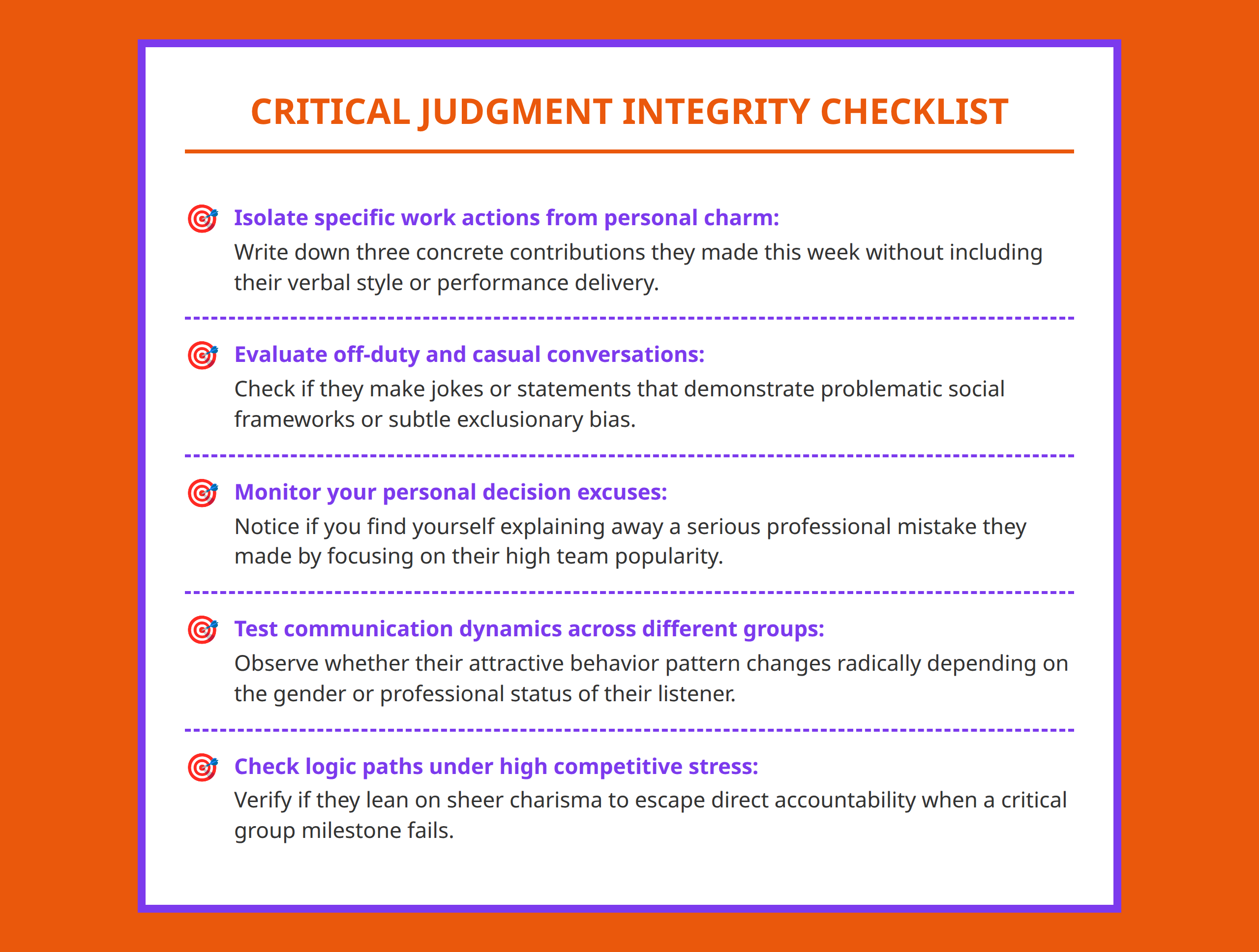
I would pay closer attention to consistency than emotional intensity.
How does the person talk about people with less power?
What attitudes appear once the conversation becomes informal?
Does the confidence stay respectful under disagreement?
Does charm disappear when admiration is no longer guaranteed?
The strongest lesson, at least for me, is that attraction and judgment are never fully separate in professional relationships. Charisma can absolutely create real connection and trust. But it can also temporarily distort perception just long enough for important warning signs to feel smaller than they really are.
References:
- https://keith929.substack.com/p/spotting-the-red-flags-recognising
- https://whyeveryonematters.com/the-dark-side-of-charisma-when-leadership-turns-toxic/
- https://nscg.com/insight/the-dark-side-of-charisma-in-leadership/
- https://www.pon.harvard.edu/daily/leadership-skills-daily/charismatic-leadership-weighing-the-pros-and-cons/
- https://www.linkedin.com/pulse/dont-let-yourself-blinded-charisma-santiago-iniguez
- https://theundercoverrecruiter.com/turning-down-your-charisma/
- https://uk.finance.yahoo.com/news/why-charismatic-leaders-can-be-so-dangerous-at-work-060046874.html
- https://www.psychologytoday.com/us/blog/ulterior-motives/201803/too-much-charisma-is-bad-leadership
- https://karlamclaren.com/the-toxic-effects-of-toxic-charisma/
- https://www.youtube.com/watch?v=UgY49TOj_38
- https://www.reddit.com/r/dune/comments/1kmlr2w/frank_herbert_said_charismatic_leaders_shouldnt/
- https://www.psychologytoday.com/us/basics/charisma