
Many competitive women enter leadership roles expecting pressure. What often surprises them is how quickly ordinary mistakes begin to feel tied to legitimacy, credibility, and whether they “belong” in the role at all.
I think this pressure becomes psychologically exhausting because it changes how leadership gets experienced internally. The job stops feeling like a process of learning and starts feeling like a constant evaluation of worthiness.
Instead of asking, “How do I improve over time?” the internal question quietly becomes, “How quickly can I prove I deserve to be here?”
Excitement and Anxiety Often Arrive Together
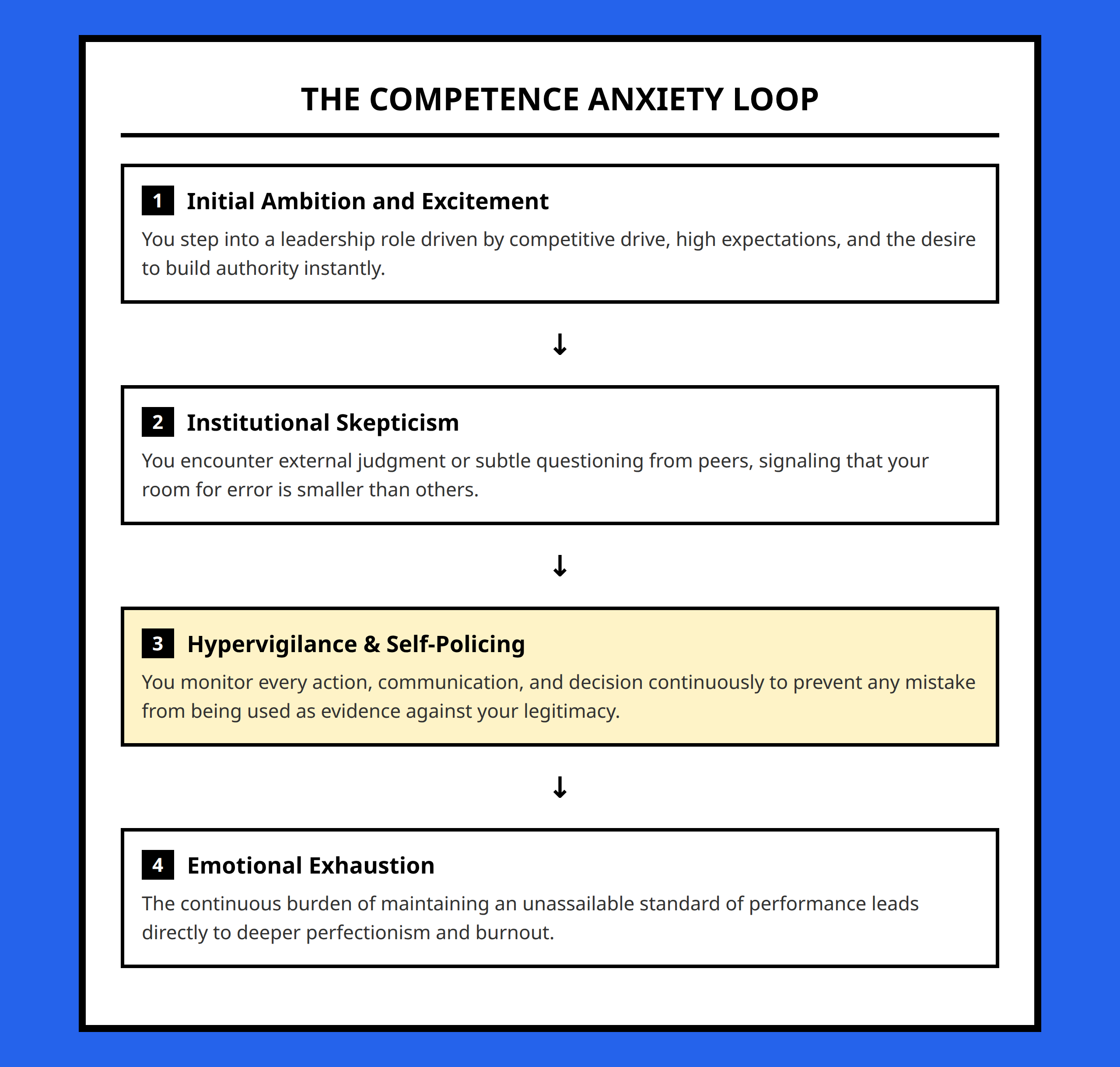
One thing I notice in high-performance environments is that ambition and anxiety frequently appear at the same time.
A woman stepping into a visible leadership role may genuinely feel excited, capable, and motivated. But underneath that excitement, another emotional layer often develops quickly: awareness of scrutiny.
That scrutiny changes the emotional atmosphere around normal leadership mistakes.
Being unprepared once no longer feels like a normal learning experience. Losing control of a room no longer feels temporary. A tactical error no longer feels isolated.
Instead, every mistake starts carrying symbolic weight.
I think this is where perfection pressure begins. The leader starts feeling responsible not only for performance, but for protecting the perception of competence itself.
Competence Feels Fragile When Legitimacy Feels Conditional
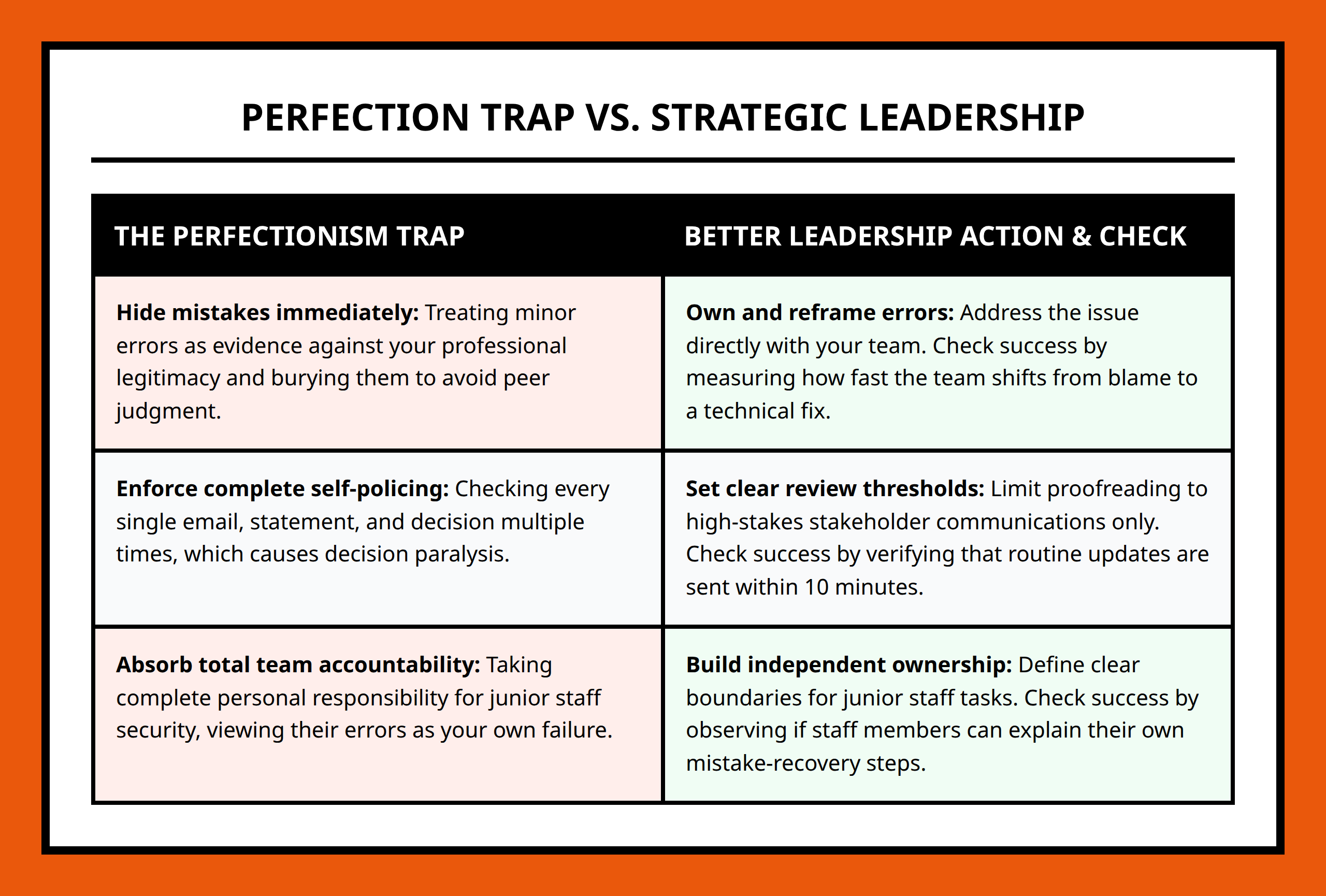
One of the hardest psychological dynamics in competitive environments is conditional legitimacy.
Some leaders are allowed to grow publicly. Others feel they must arrive fully polished from the beginning.
That difference changes how pressure gets processed internally.
Imagine two young leaders making the same mistake during a stressful situation. One receives the benefit of the doubt because people already assume competence underneath the error. The other feels immediate pressure to recover perfectly because the mistake risks reinforcing existing skepticism.
The second situation creates a very different emotional experience.
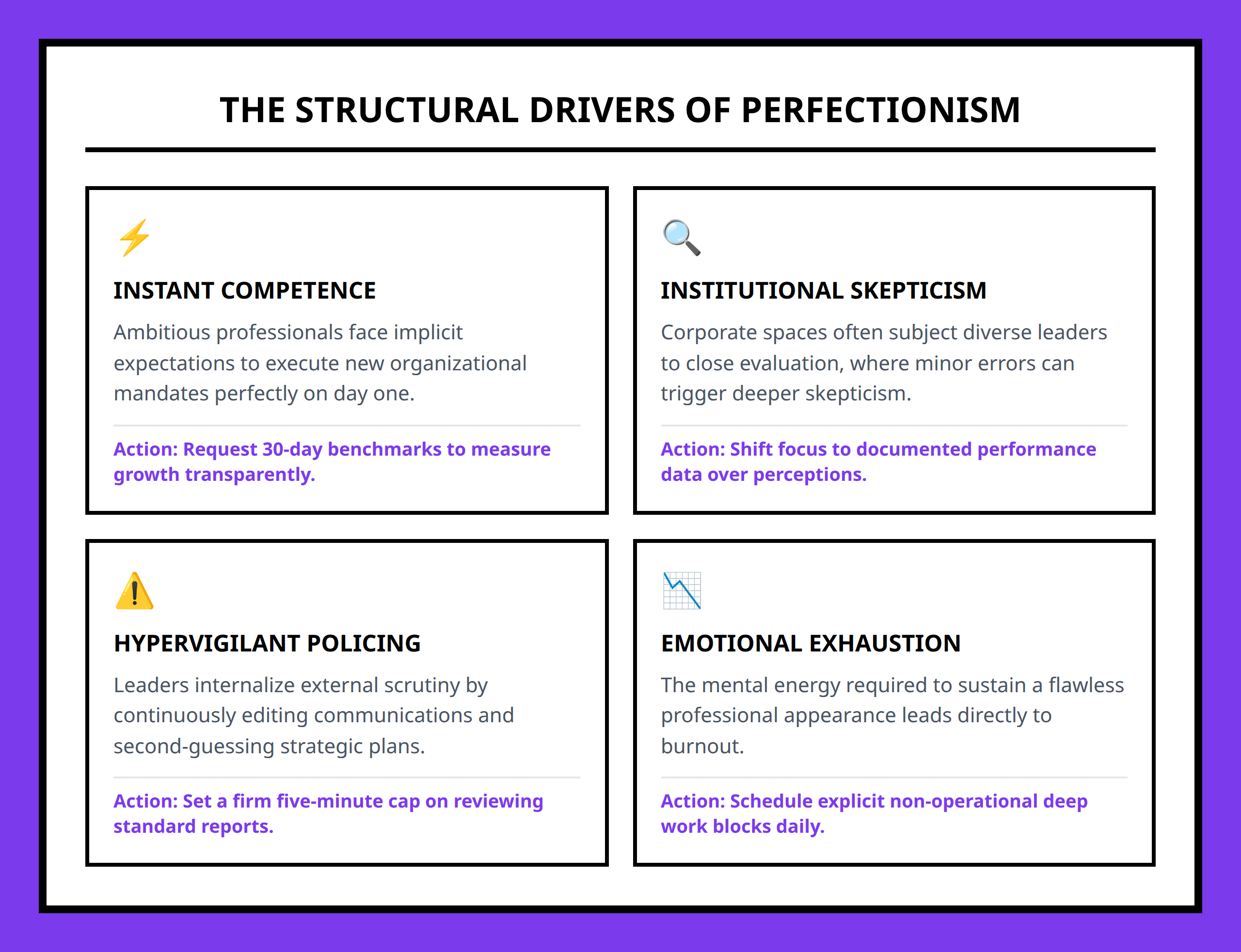
I think this is why some ambitious women become hyper-aware of small details very quickly. Tone of voice, preparation level, emotional reactions, public mistakes, confidence during meetings, and even casual interactions start feeling strategically important.
Not because perfection is realistic, but because competence feels less protected.
Hypervigilance Can Look Like High Performance From the Outside
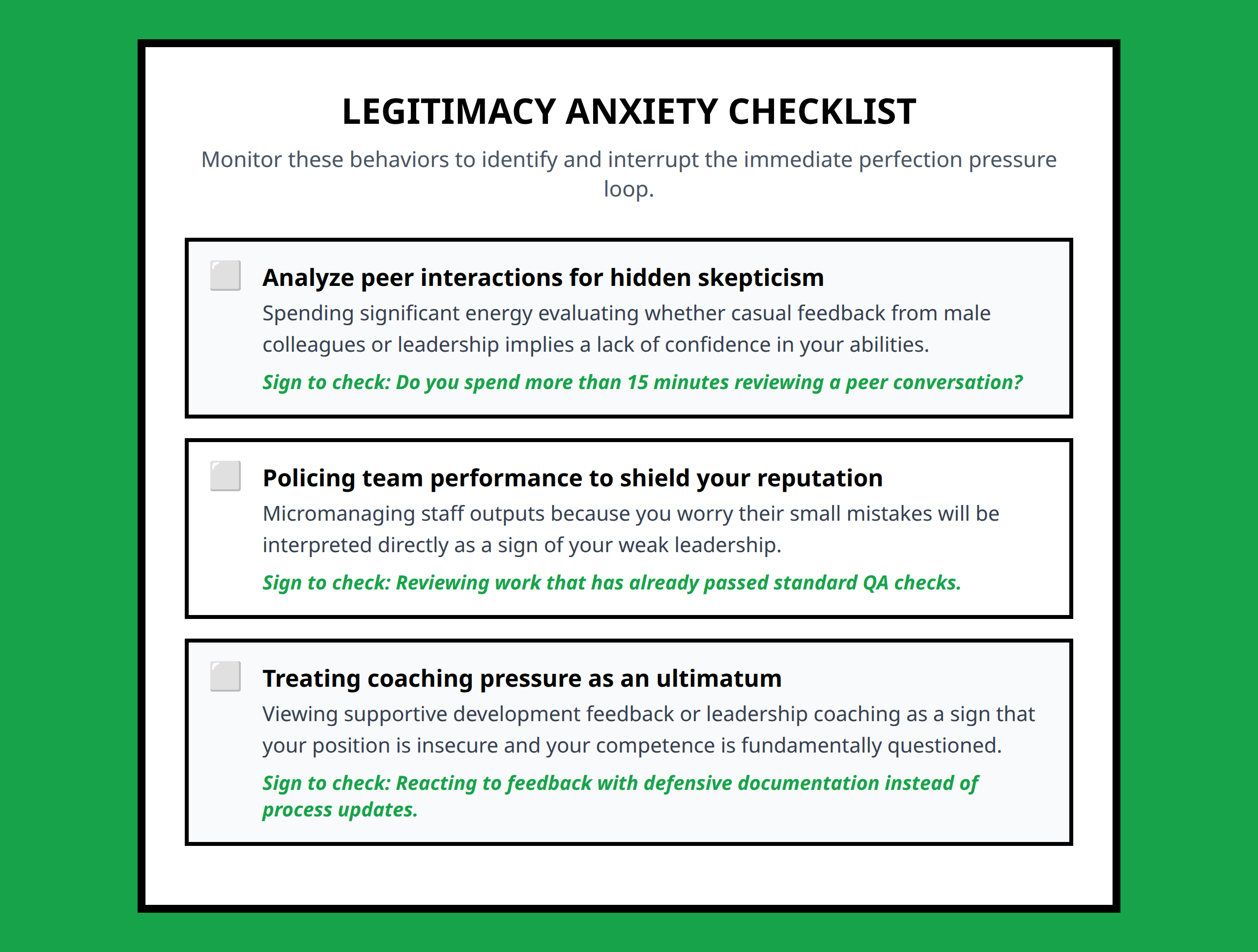
One thing I would be careful about is confusing hypervigilance with healthy confidence.
From the outside, the two can look almost identical.
A highly anxious leader may appear extremely organized, prepared, disciplined, and controlled. Coworkers might even praise the person for being exceptionally composed under pressure.
But internally, the motivation may come less from confidence and more from fear of visible failure.
I think this is why perfection-driven environments can quietly reward unhealthy emotional patterns. The leader who triple-checks everything, over-prepares constantly, and monitors every interaction may appear highly competent while privately operating from chronic anxiety.
A young coach preparing for a major competition might replay conversations repeatedly afterward, searching for moments where authority looked weak. Another leader might overcorrect emotionally after one small mistake because the error feels reputational instead of temporary.
From the outside, both still look “high-performing.”
The emotional cost stays mostly invisible.
Responsibility Pressure Expands Beyond Personal Reputation
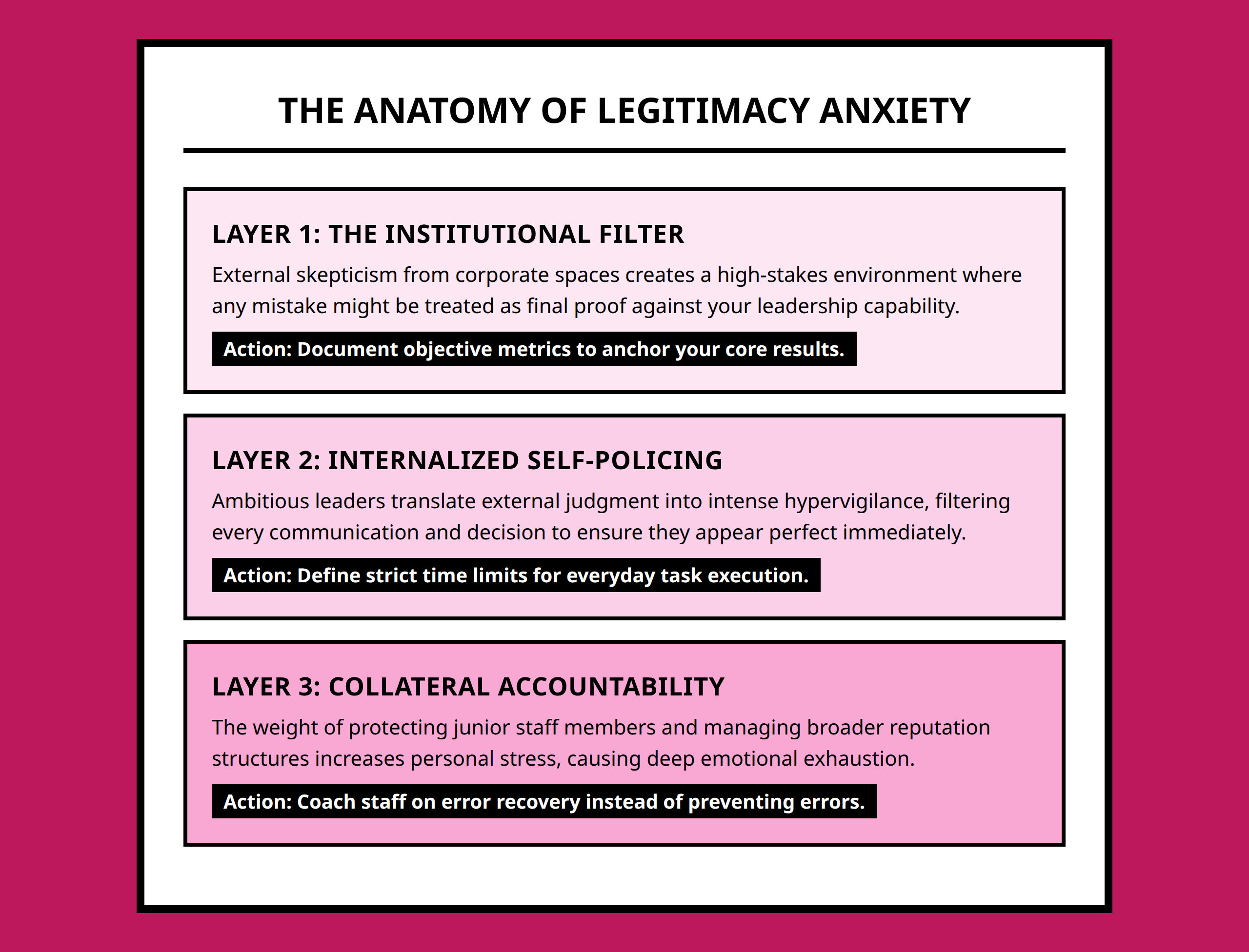
One reason this pressure intensifies is that leadership rarely feels individual.
A woman in a visible role often feels connected to broader judgments about credibility, opportunity, or representation.
That creates emotional weight beyond ordinary job performance.
If failure feels personal, the pressure is already heavy. But if failure also feels like it could damage future trust, opportunities, or support for others connected to you, the emotional burden becomes much larger.
I think this explains why some leaders become intensely self-policing in competitive spaces. The internal logic becomes:
- I cannot afford to look unprepared.
- I cannot afford emotional mistakes.
- I cannot afford visible uncertainty.
- I cannot afford inconsistency.
The problem is that no human being can sustainably operate without uncertainty or mistakes.
Eventually the emotional tension starts leaking into exhaustion.
Perfectionism Often Starts as a Protective Strategy
I think many people misunderstand perfectionism because they treat it purely as a personality trait.
In competitive environments, perfectionism often functions as protection.
The leader becomes extremely careful because the environment feels unforgiving. Emotional control becomes strict because vulnerability feels risky. Preparation becomes obsessive because mistakes feel amplified.
That strategy can absolutely produce short-term success.
But it also creates emotional isolation over time.
A leader operating from constant self-correction rarely feels fully relaxed inside the role. Even praise can feel temporary because confidence becomes dependent on continued flawless performance.
I would pay attention to whether the leader feels allowed to be developing or only allowed to be impressive.
That distinction changes everything psychologically.
The Pressure Gets Worse When Feedback Stays Ambiguous
One especially difficult dynamic in competitive environments is vague evaluation.
Instead of receiving direct criticism, leaders often receive subtle signals:
- extra scrutiny
- hesitation from peers
- surprise at competence
- selective praise
- constant testing
That ambiguity creates emotional instability because the person never feels fully certain where they stand.
I think ambiguous skepticism produces more anxiety than direct conflict in many cases. At least direct criticism gives something concrete to respond to.
But when legitimacy feels uncertain, the mind starts monitoring everything automatically.
Was that respected?
Did I sound inexperienced?
Did I lose credibility just now?
That constant internal monitoring becomes mentally exhausting very quickly.
The Real Cost Is Emotional Exhaustion, Not Just Stress
What stands out to me most in high-pressure leadership environments is how invisible this exhaustion often becomes.
Highly capable women may still appear composed, ambitious, and successful externally while privately carrying constant pressure to avoid visible weakness.
And because the pressure often develops gradually, many people normalize it.
The hyper-preparation becomes “discipline.” The emotional suppression becomes “professionalism.” The anxiety becomes “drive.”
But eventually the emotional system notices the difference between healthy ambition and survival-based perfectionism.
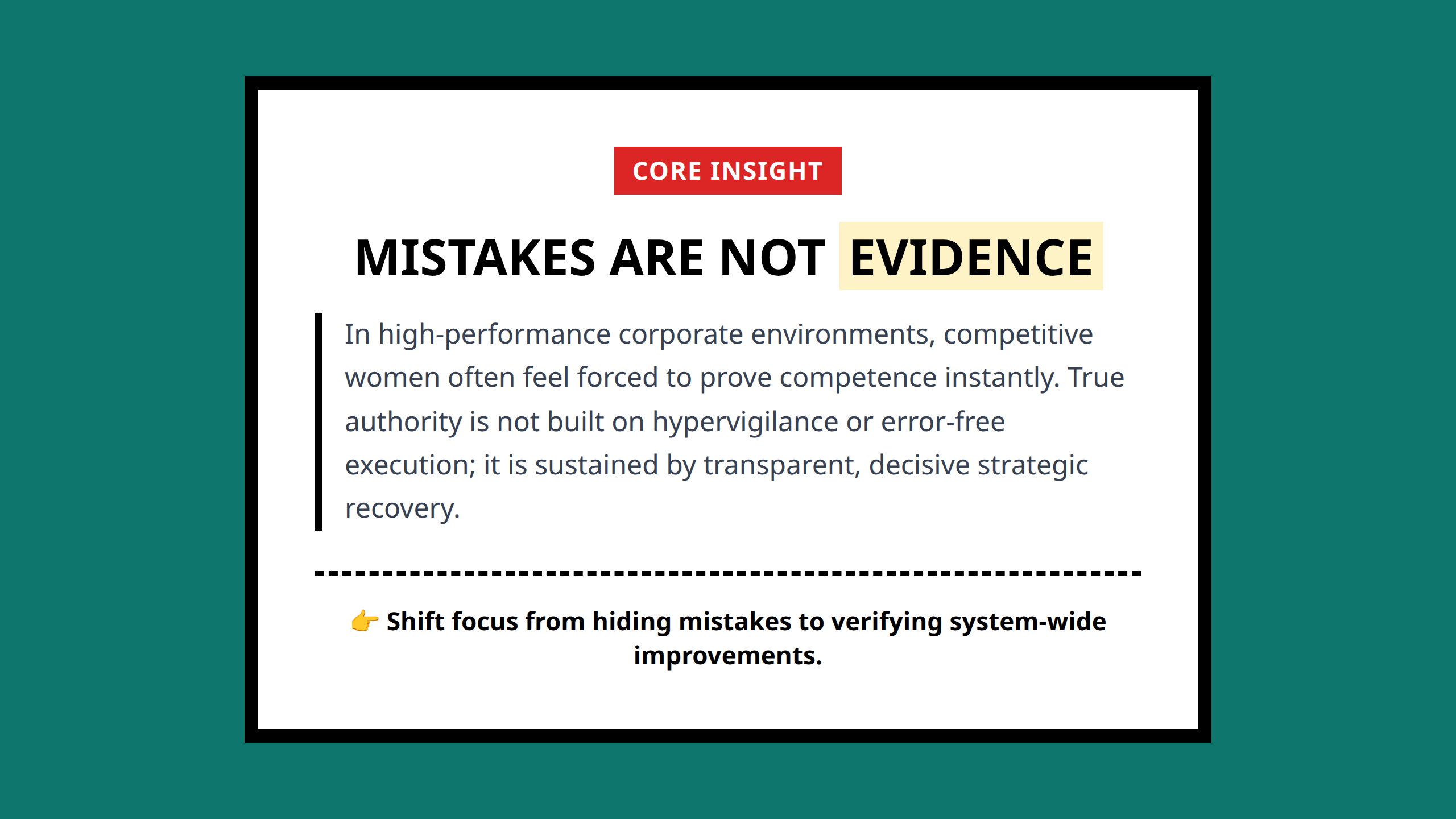
I think the most important shift happens when a leader stops treating every mistake as evidence against legitimacy.
Because real authority usually grows through adaptation, recovery, and resilience — not through pretending to be flawless from the first day onward.
References:
- https://www.psychologytoday.com/au/blog/rethinking-rivalry-competition-and-collaboration/202602/why-competitive-women-are-sometimes
- https://www.bbc.com/worklife/article/20220603-why-women-have-to-sprint-into-leadership-positions
- https://www.mindtools.com/aphk99n/women-leaders-and-the-perfectionism-trap/
- https://www.linkedin.com/posts/kelly-cooper-6b742966_womeninleadership-collaborationovercompetition-activity-7310289895166468097-zsa_
- https://www.tandfonline.com/doi/full/10.1080/02673843.2011.649431
- https://www.sciencedirect.com/science/article/abs/pii/S0148296318305149
- https://www.vandcocoaching.com/the-newsletter/imposter-syndrome-in-high-performing-women
- https://www.forbes.com/sites/bonniemarcus/2016/01/13/the-dark-side-of-female-rivalry-in-the-workplace-and-what-to-do-about-it/
- https://judith-victoria.medium.com/explained-why-female-leaders-suck-a883cd43afa0
- https://coachingfocus.com.au/why-so-many-talented-women-educators-hesitate-to-step-into-leadership/
- https://kapable.club/blog/leadership/women-in-leadership-overcoming-common-challenges/
- https://www.calm.com/blog/competitive-personality
- https://www.catalyst.org/insights/2024/glass-cliff-women-of-color
- https://www.lexology.com/library/detail.aspx