[MetaDescription]Childhood attachment patterns often shape how adults handle trust, conflict, closeness, and emotional safety in relationships.Why Childhood Attachment Still Affects Your Relationships as an Adult
Many adult relationship struggles are not random personality flaws. They are often emotional strategies that started in childhood, especially in homes where connection felt inconsistent, unsafe, or emotionally confusing.
I used to think relationship patterns were mostly about compatibility or communication style. But the more I looked at how people react under emotional pressure, the harder it became to ignore how often those reactions resemble childhood survival strategies.
Someone pulls away when things get close. Someone else panics when a text goes unanswered for three hours. Another person stays loyal to people who repeatedly hurt them. These behaviors can look irrational from the outside, but many of them make perfect sense once you understand the attachment system behind them.
What matters to me is that attachment patterns are not simply labels. They are emotional adaptations. Most people learned them long before they had the language to explain what was happening.
How Secure Attachment Starts in Childhood
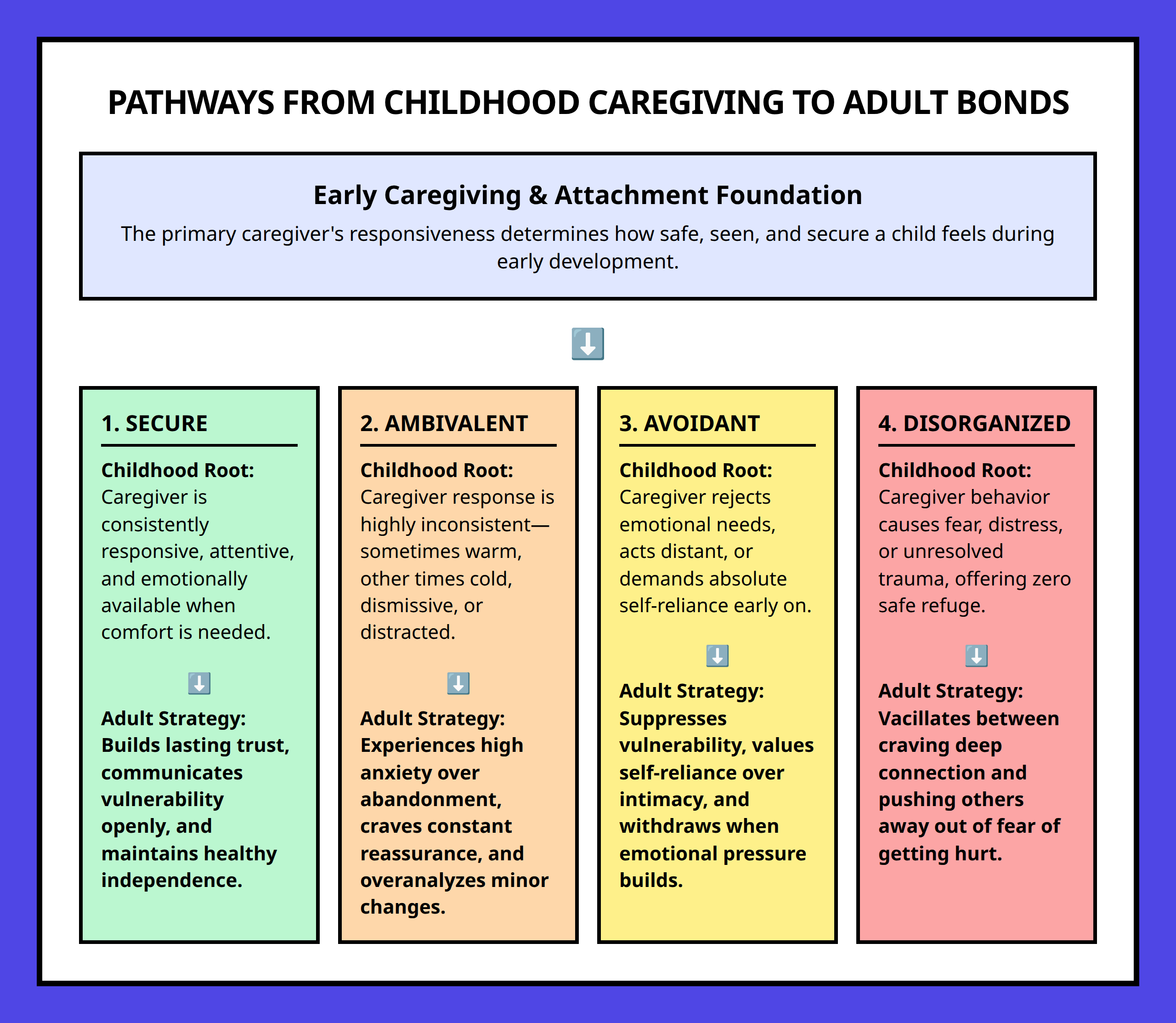
Secure attachment usually develops when a child repeatedly experiences emotional safety. A caregiver responds consistently, offers comfort without punishment, and allows the child to express needs without shame.
A child who cries and gets calm, predictable care learns several things at once:
- People can be trusted.
- Needs are not dangerous.
- Connection is stable.
- Vulnerability does not automatically lead to rejection.
I think this part is easy to underestimate because secure attachment is not dramatic. It is built through ordinary moments repeated over time. A parent listens instead of mocking. A caregiver repairs after conflict instead of pretending nothing happened. A child is allowed to have emotions without being treated like a burden.
That emotional predictability becomes the foundation for adult relationships later on. People with secure attachment are usually more comfortable expressing needs, setting boundaries, apologizing, and trusting others without becoming emotionally consumed by every interaction.
What stands out to me is that secure attachment does not require perfect parenting. It requires enough consistency and enough repair that the child develops a basic expectation of safety.
Why Emotional Disconnection Often Begins as Self-Protection
One of the most useful distinctions here is that emotional disconnection is usually protective before it becomes destructive.
A child adapts to whatever environment they are born into. If emotional closeness repeatedly leads to rejection, criticism, fear, inconsistency, or humiliation, the nervous system starts prioritizing protection over connection.
That adaptation can happen quietly.
A child stops asking for comfort after being ignored too many times. Another learns to constantly monitor other people’s moods because emotional unpredictability feels dangerous. Someone else becomes hyper-independent because relying on others never felt safe.
I would not describe these as personality defects. They are survival responses that stayed active long after the original environment changed.
This explains why many adults logically want healthy relationships while emotionally reacting against closeness at the exact same time. The nervous system may still associate vulnerability with risk.
Ambivalent Attachment: Wanting Connection but Never Feeling Secure in It
People with ambivalent attachment often grew up around inconsistent emotional connection. Love was present sometimes, unavailable other times, or emotionally conditional.
One day a caregiver might feel affectionate and attentive. The next day they may feel emotionally absent, overwhelmed, critical, or withdrawn.
That inconsistency creates a painful emotional equation: connection matters deeply, but it never feels stable.
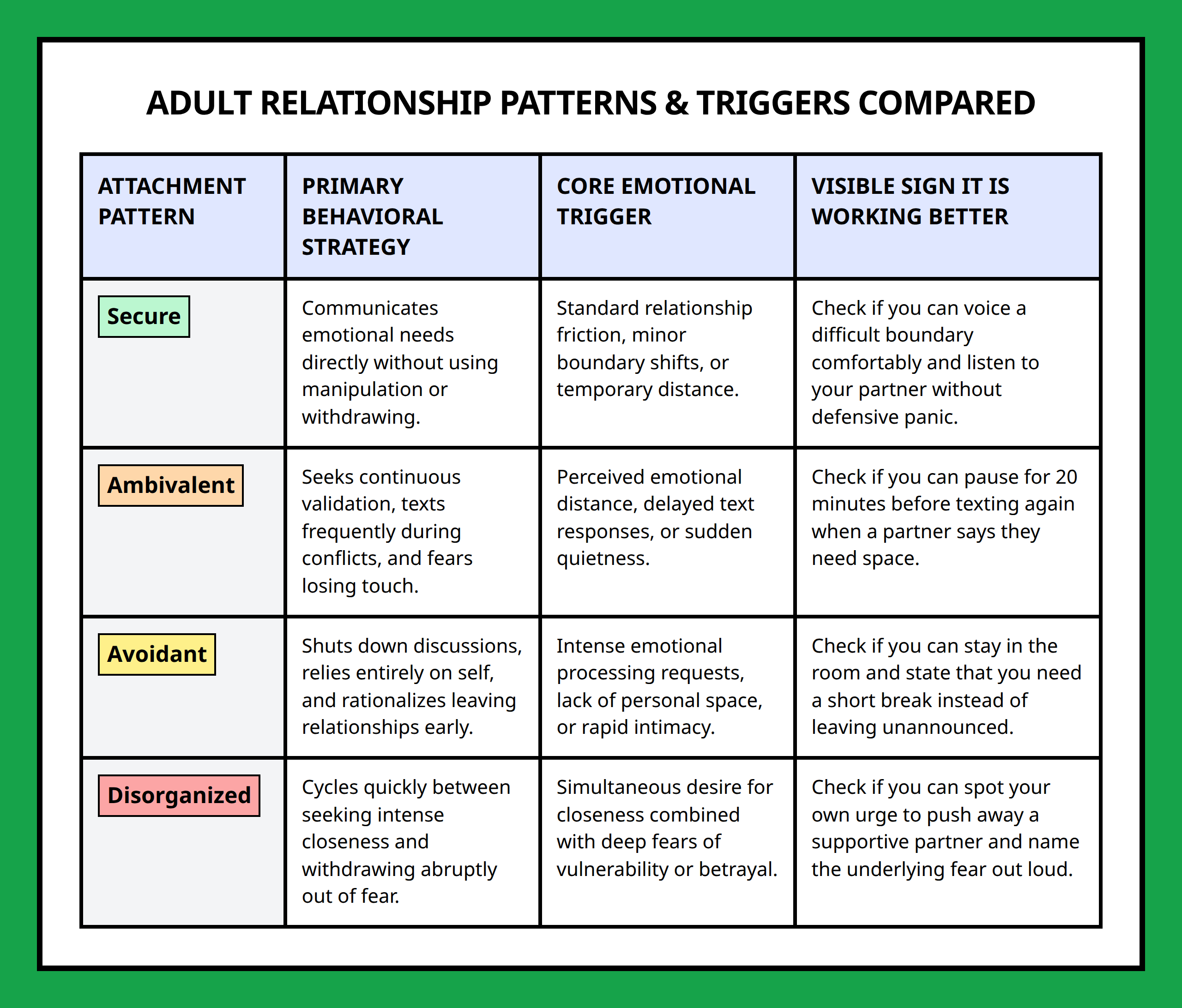
As adults, these people often become highly focused on relationships. They may overanalyze small changes in tone, become anxious about abandonment, or constantly seek reassurance.
I notice that many people misunderstand this pattern because they focus only on the visible behaviors: texting too much, needing reassurance, becoming emotionally reactive during conflict. But underneath those behaviors is usually fear.
The fear is not simply “I might lose this relationship.”
The fear is often closer to: “Love disappears unexpectedly, and I may not survive emotionally if it does.”
A common real-life version of this looks surprisingly ordinary. Someone notices their partner becoming quieter after work for a few days. Instead of interpreting it as stress or exhaustion, they immediately feel emotionally threatened. They may start criticizing, demanding reassurance, or emotionally escalating because uncertainty feels unbearable.
What makes this pattern difficult is that the person genuinely wants closeness, yet their fear of losing connection can create pressure that destabilizes the relationship itself.
Avoidant Attachment Often Looks Like Independence on the Surface
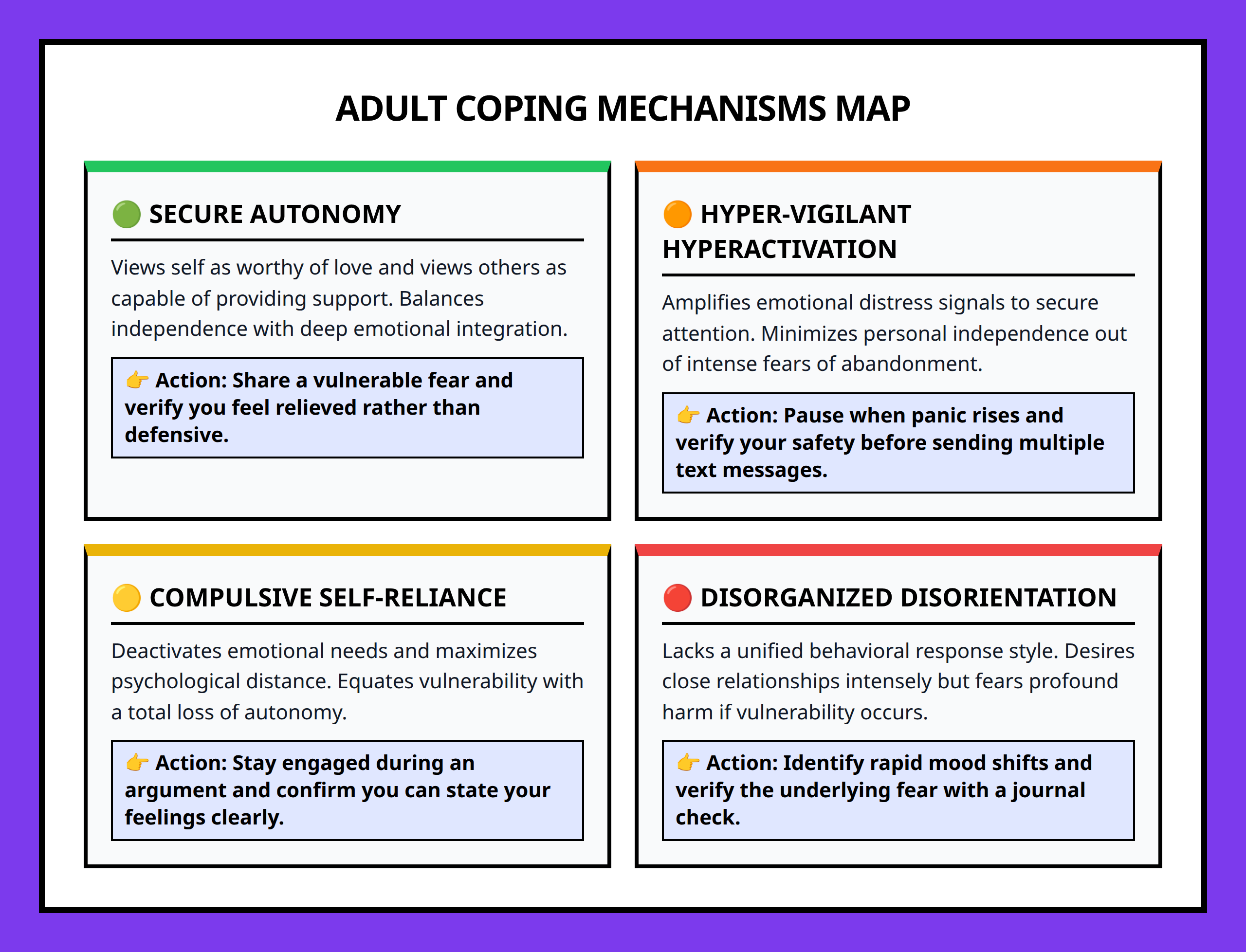
Avoidant attachment develops differently. Instead of inconsistent closeness, the child often learns that emotional needs are unwelcome, ignored, criticized, or emotionally unsafe.
Over time, the nervous system adapts by suppressing dependency needs altogether.
This is why avoidantly attached adults often appear extremely self-sufficient. They may pride themselves on not needing anyone, staying emotionally controlled, or avoiding vulnerability.
But I think it is important to understand that emotional distance is not the same thing as emotional freedom.
Many avoidantly attached people still want love and connection. Their system simply shuts down emotional openness the moment intimacy starts to feel risky.
This creates patterns that can confuse both partners:
- pulling away after emotional closeness
- becoming uncomfortable with affection
- minimizing emotional conversations
- emotionally checking out during conflict
- interpreting vulnerability as weakness or pressure
I have noticed that avoidant patterns are often socially rewarded, especially in cultures that celebrate emotional detachment as strength. Someone who appears calm, independent, and “low maintenance” may actually be deeply disconnected from their own attachment needs.
A practical example might be someone who enjoys dating casually but starts feeling trapped once the relationship becomes emotionally serious. They may suddenly focus on flaws, lose interest quickly, or emotionally withdraw without fully understanding why.
From the outside, it can look cold. Internally, it is often fear disguised as control.
Disorganized Attachment Creates a Push-Pull Relationship With Love
Disorganized attachment is often rooted in environments where love and fear existed together.
The caregiver was both the source of attachment and the source of danger.
This can happen in homes with abuse, extreme criticism, emotional volatility, threats, harsh punishment, or chronic emotional instability. The child learns something deeply confusing: the person they need for safety is also the person who causes fear.
I think this attachment style explains many of the most chaotic adult relationship dynamics.
People with disorganized attachment often want closeness intensely while simultaneously fearing it. They may move rapidly between emotional dependence and emotional shutdown.
Some common patterns include:
- hypervigilance around other people’s moods
- sudden emotional swings
- difficulty trusting safe relationships
- returning to harmful partners repeatedly
- feeling emotionally overwhelmed by intimacy
One detail I find especially important is that many people with disorganized attachment normalize painful relationships because pain and love became emotionally linked early in life.
If affection was mixed with fear during childhood, emotionally calm relationships may later feel unfamiliar or emotionally “flat,” while unstable relationships feel emotionally intense and strangely compelling.
Why Adult Relationship Patterns Often Feel Automatic
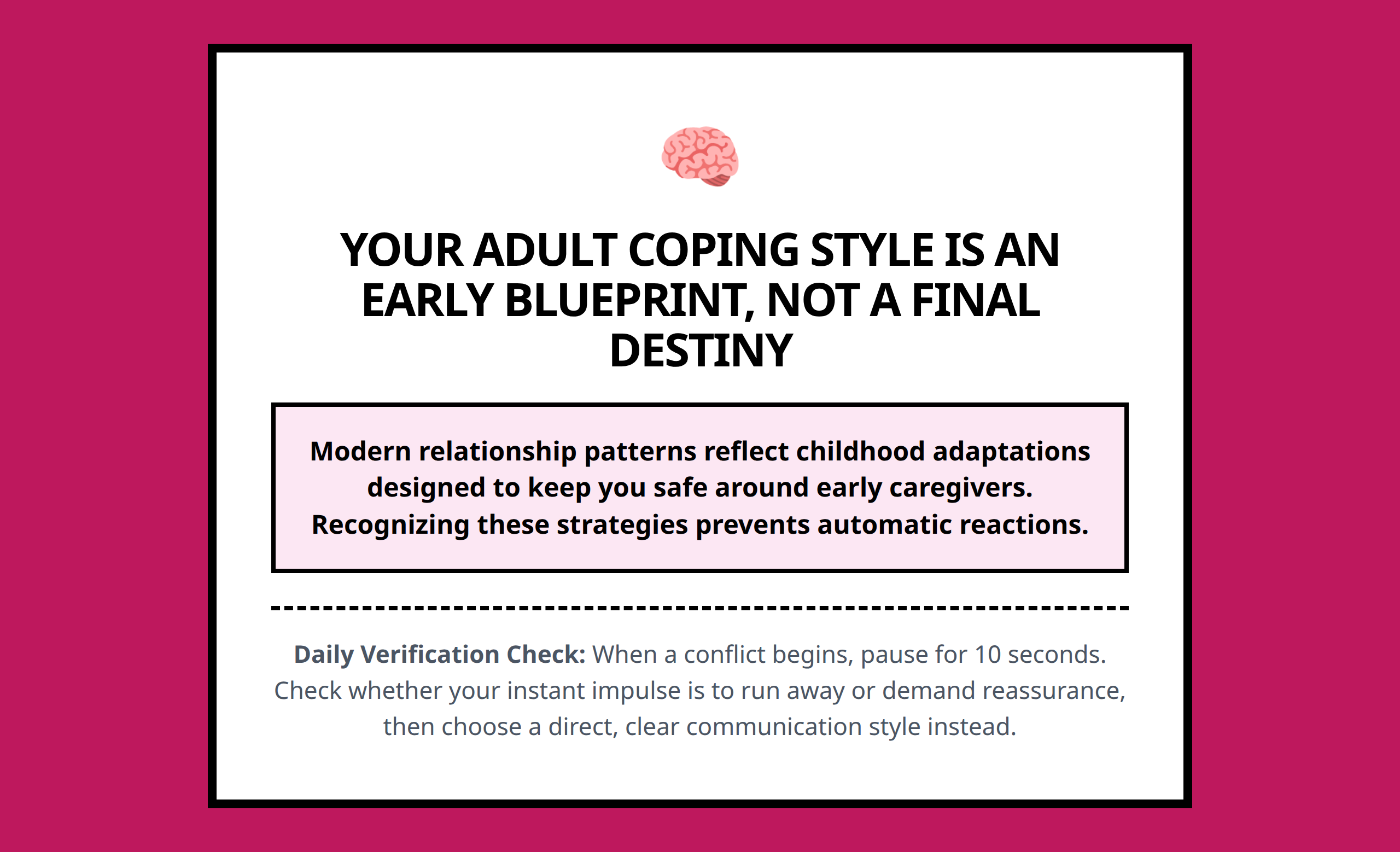
Many people assume their reactions are conscious decisions when they are actually attachment strategies activating automatically.
The nervous system constantly scans for emotional safety. When something resembles earlier emotional pain, the body reacts before logic fully catches up.
That is why someone can intellectually know their partner loves them and still feel emotionally unsafe after a delayed response, criticism, distance, or disagreement.
I think this is one of the hardest truths for people to accept: adult reactions are often shaped by emotional memory, not just current reality.
The attachment system is not asking, “What is objectively happening?”
It is often asking, “What does this situation remind me of?”
That distinction changes how I interpret relationship conflict entirely.
What I Would Pay Attention to Before Labeling Myself
I would be careful about turning attachment styles into identity labels.
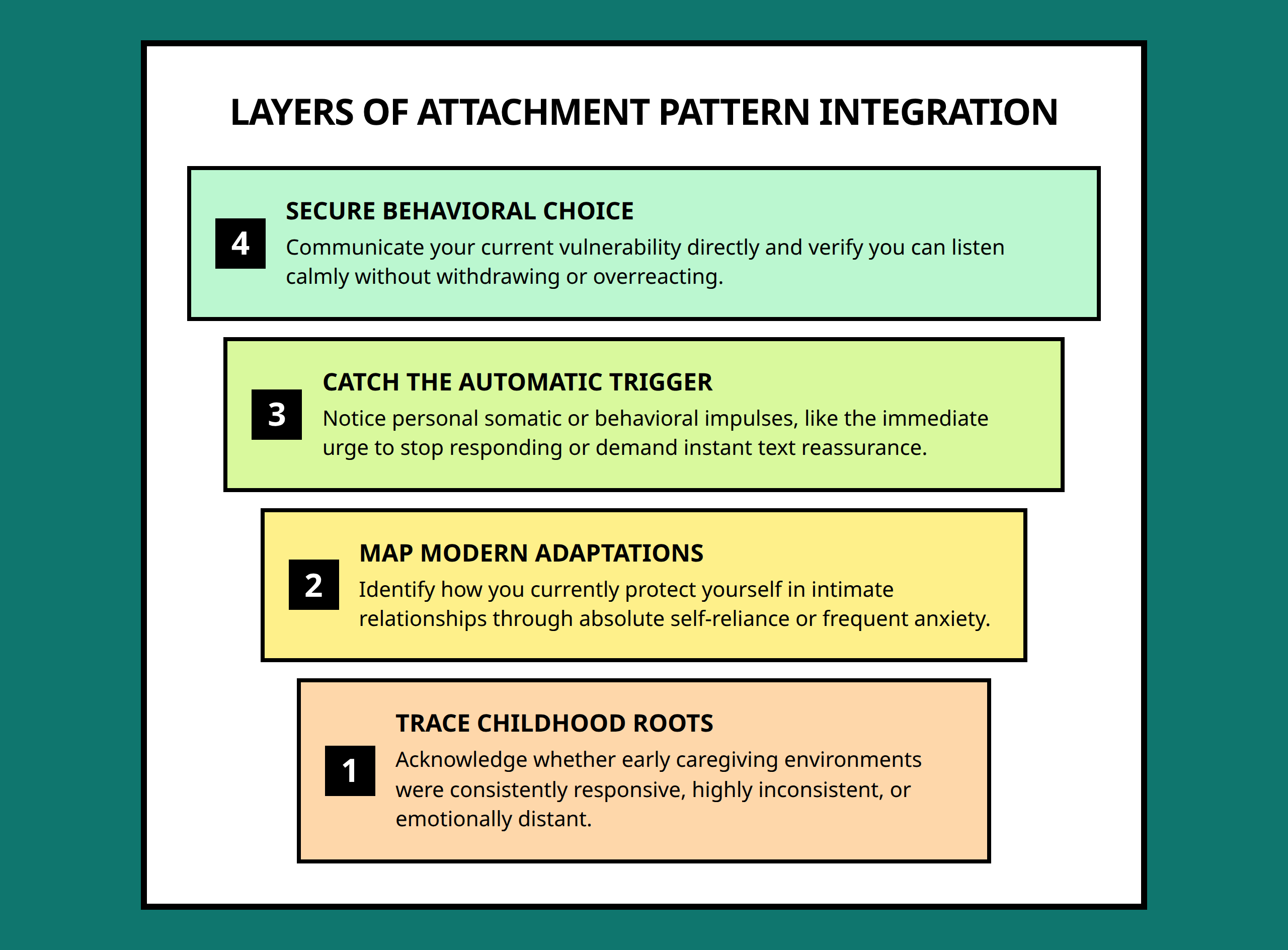
Most people show a mix of attachment strategies depending on the relationship and the level of emotional safety involved. Someone may behave securely with close friends and anxiously in romantic relationships. Another person may become avoidant only during conflict.
What matters more than the label is the pattern.
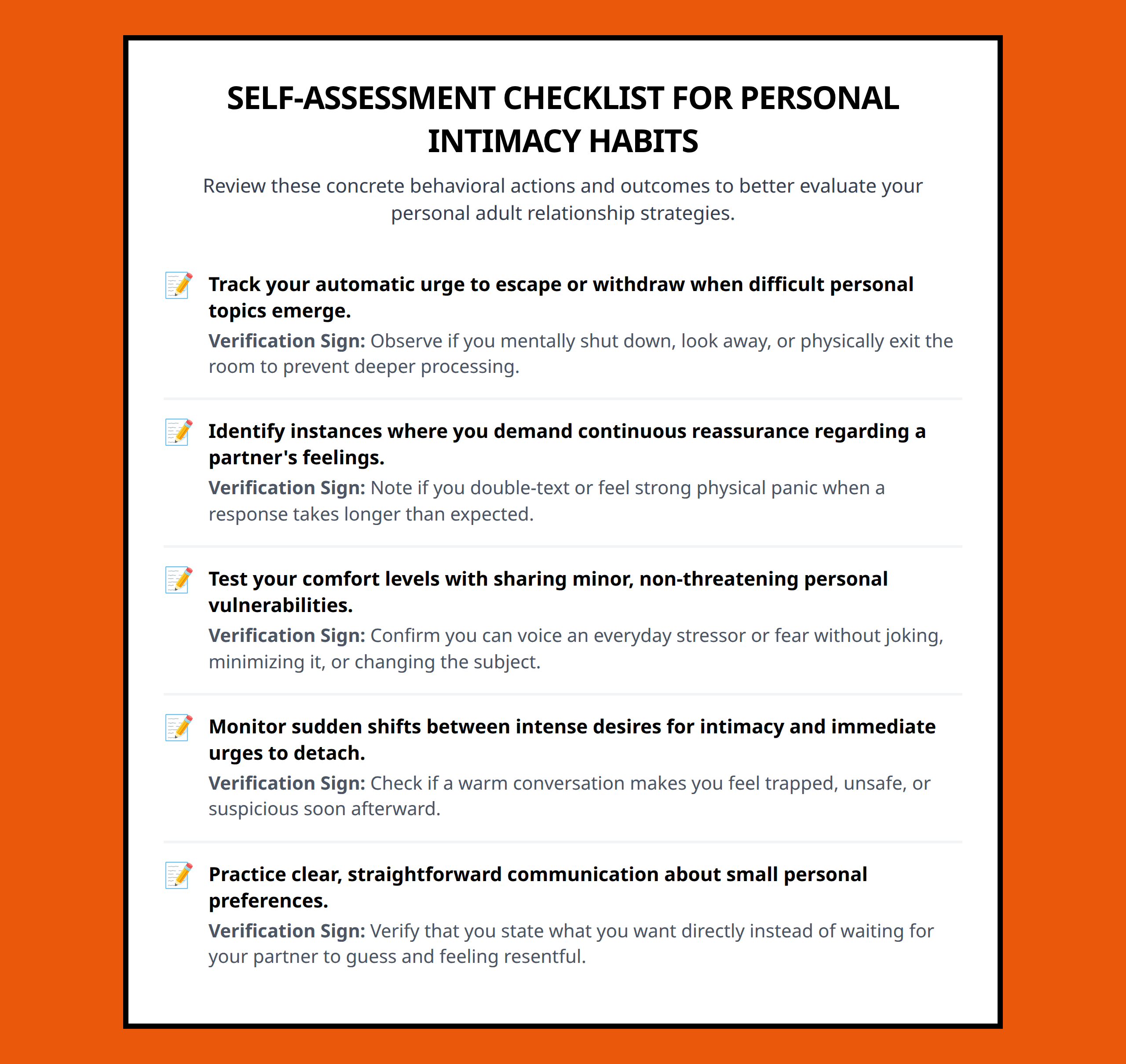
I would pay attention to questions like:
- What situations make me emotionally reactive?
- What kind of closeness feels uncomfortable?
- How do I respond when I fear rejection?
- What behaviors do I use to regain emotional safety?
- Do I move toward connection, away from it, or both?
Those patterns usually reveal more than any online attachment quiz.
The Most Important Shift Is Learning That Protection and Connection Are Not the Same Thing
Many attachment strategies were intelligent adaptations during childhood. The problem is that adult relationships suffer when those same protective responses remain permanently active.
Someone who learned not to need anyone may struggle to build intimacy. Someone who learned to chase inconsistent love may tolerate unhealthy relationships for too long. Someone who learned that love and fear belong together may distrust calm and emotionally safe connection.
I think the real work begins when people stop asking, “What is wrong with me?” and start asking, “What was my nervous system trying to protect me from?”
That question changes the tone completely. It replaces shame with understanding.
And once you understand the emotional strategy, you can finally decide whether it still belongs in your current relationships.
References:
- https://www.scientificamerican.com/article/how-childhood-relationships-affect-your-adult-attachment-style-according-to/
- https://www.youtube.com/watch?v=s0bMFGZ-qRY
- https://www.youtube.com/watch?v=w3qc6GYnAU0
- https://www.youtube.com/watch?v=h5lBRdhmOYU
- https://www.helpguide.org/relationships/social-connection/attachment-and-adult-relationships
- https://pmc.ncbi.nlm.nih.gov/articles/PMC10047625/
- https://www.thoughtsciencepsychology.com.au/blog/how-childhood-experiences-shape-adult-relationships
- https://labs.psychology.illinois.edu/~rcfraley/attachment.htm
- https://startmywellness.com/2025/04/how-childhood-attachment-styles-shape-adult-relationships/
- https://cbtprofessionals.com.au/the-psychology-of-attachment/
- https://www.simplypsychology.com/articles/childhood-attachment-adult-relationships
- https://behappyagain.com.au/attachment-styles-in-adults/