Many relationship struggles stem from unconscious attachment strategies formed in childhood. Recognizing and shifting these behaviors can help you build safer, more secure connections.
I’ve seen firsthand how automatic emotional reactions—pulling away, clinging, or shutting down—often trace back to early experiences with caregivers. Understanding these patterns is the first step toward creating relationships that feel safe rather than triggering old fears.
Recognizing your attachment strategy isn’t about labeling yourself permanently. It’s about identifying recurring emotional reactions and learning ways to respond differently in real time.
Start by Observing Your Automatic Reactions
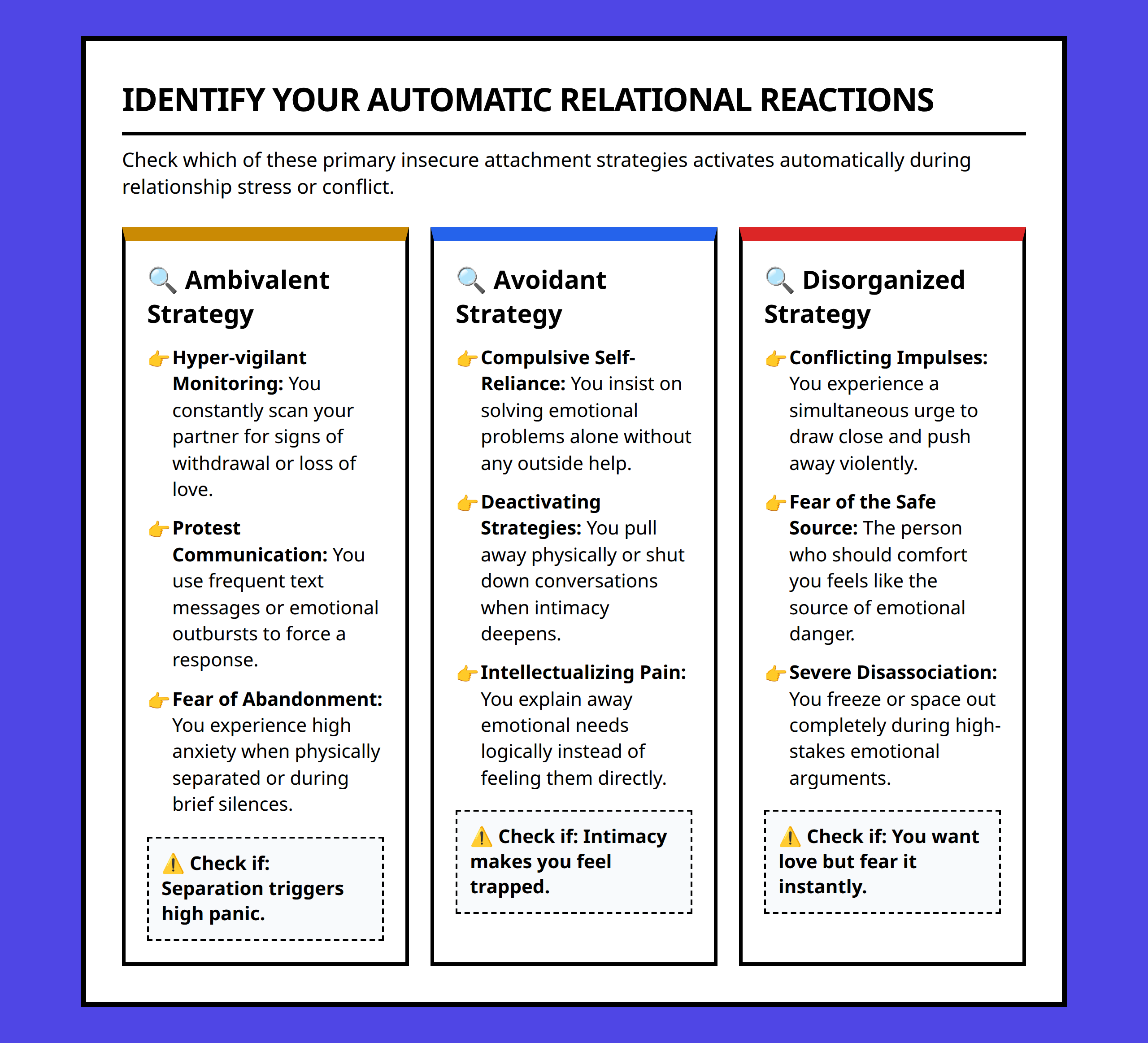
The first step is simply noticing your emotional triggers. Pay attention to moments when you feel anxious, defensive, or overly distant. Common signs include:
- Needing constant reassurance or validation
- Withdrawing when intimacy increases
- Becoming reactive during minor disagreements
- Feeling unusually responsible for others’ emotions
These reactions often feel automatic, as if your nervous system has memorized the safest way to survive relational stress. By journaling or reflecting on these responses, you create space between impulse and action, which is crucial for change【34†source】.
Understand the Roots of Your Attachment Patterns
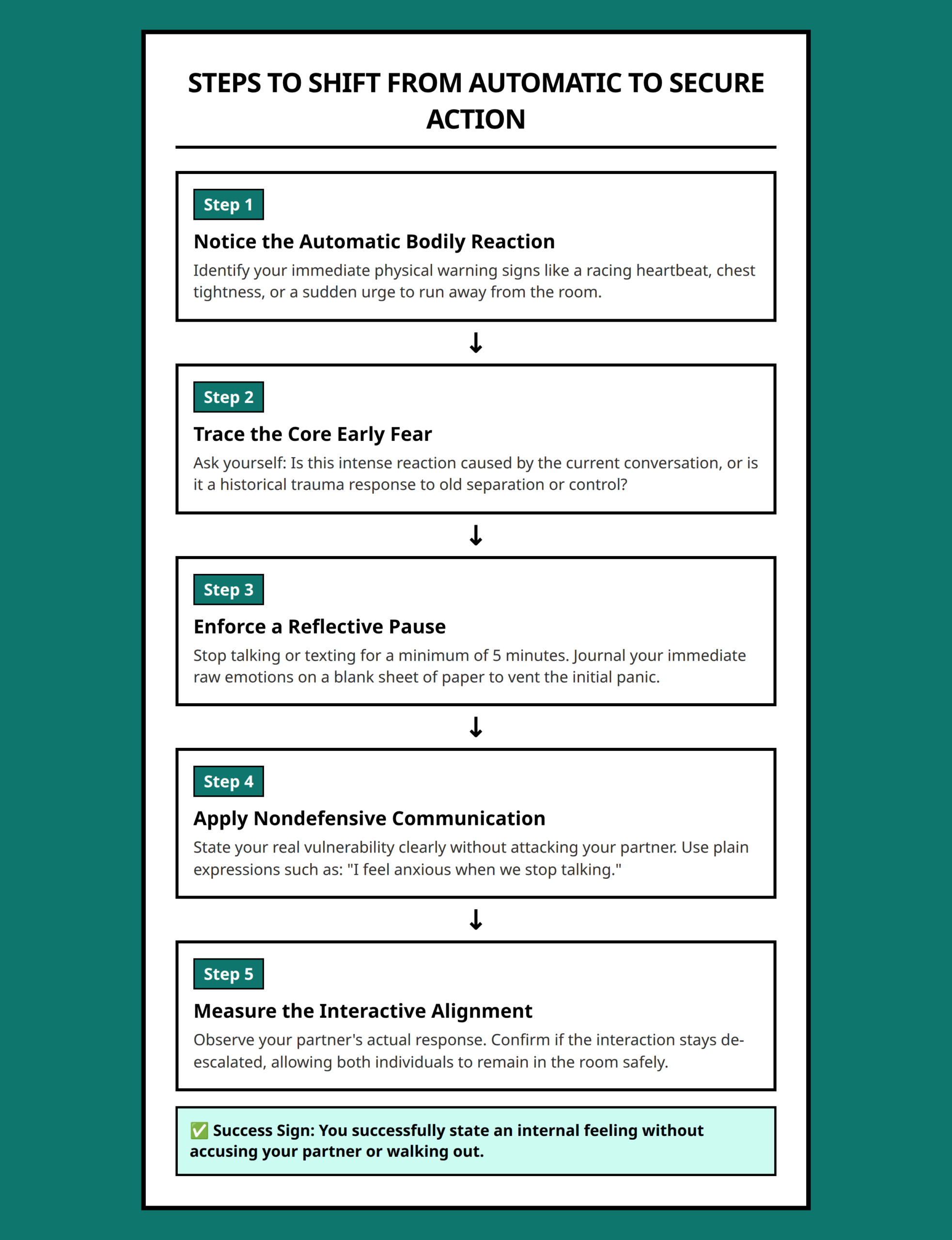
Once you’ve noticed your patterns, consider how they may have developed in early life. Inconsistent caregiving, emotional neglect, or familial instability often shapes ambivalent, avoidant, or disorganized strategies. Recognizing the origin helps reframe reactions from “I’m flawed” to “This is how my nervous system adapted”【34†source】.
For example, if you notice yourself seeking excessive reassurance, it may reflect a history of inconsistent attention from caregivers. Understanding this connection allows you to see these reactions as adaptive rather than personal failings.
Implement Small, Concrete Steps Toward Secure Behaviors
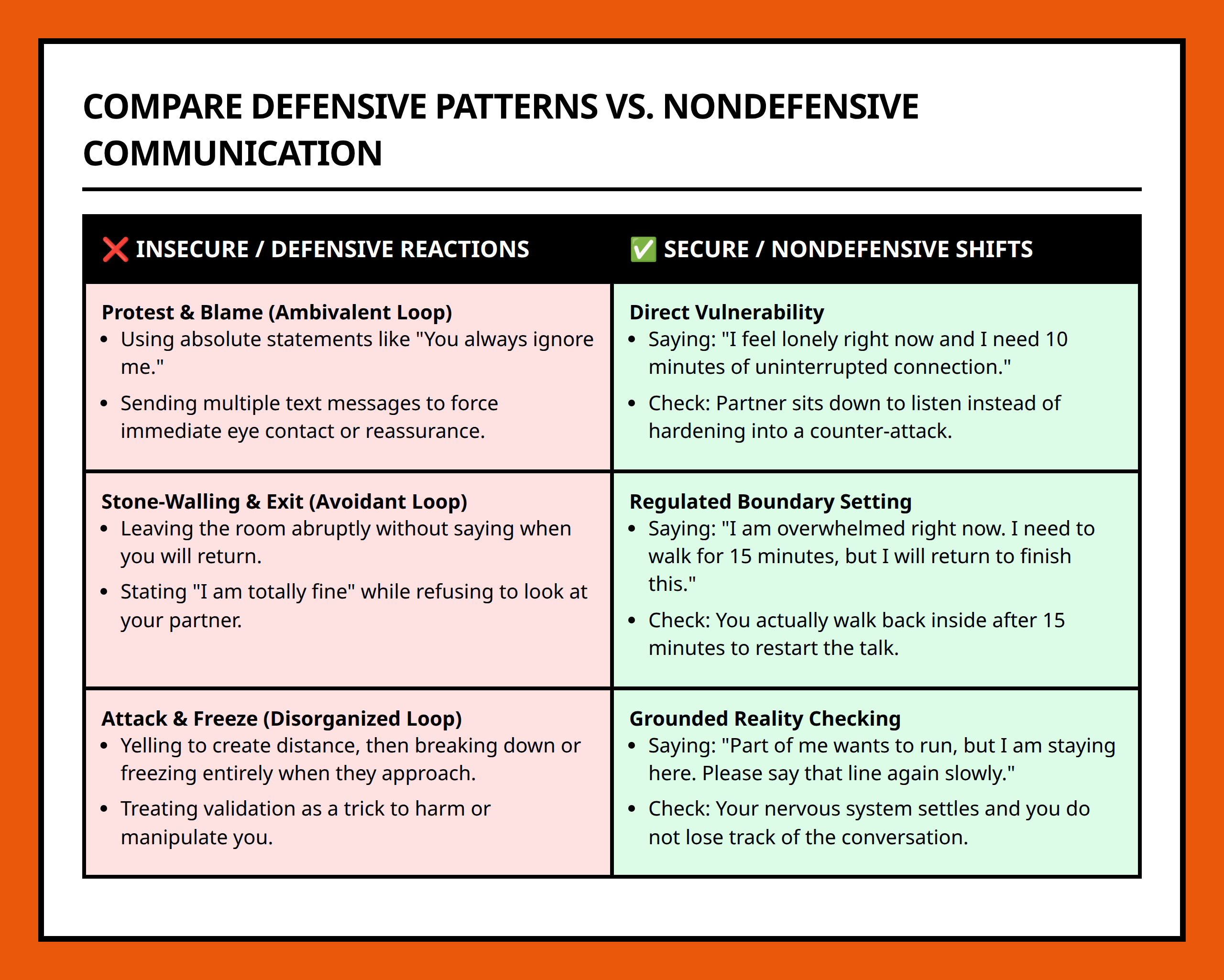
Practical shifts are more effective than attempting a complete personality overhaul. Some actionable steps include:
- Journaling about triggers and responses to clarify patterns
- Practicing brief pauses before reacting emotionally
- Engaging in safe, intentional interactions to test new behaviors
- Expressing feelings clearly and without blame
Over time, these small, repeated actions help retrain your nervous system, creating a stronger sense of emotional safety in relationships【34†source】.
Practice Nondefensive Communication
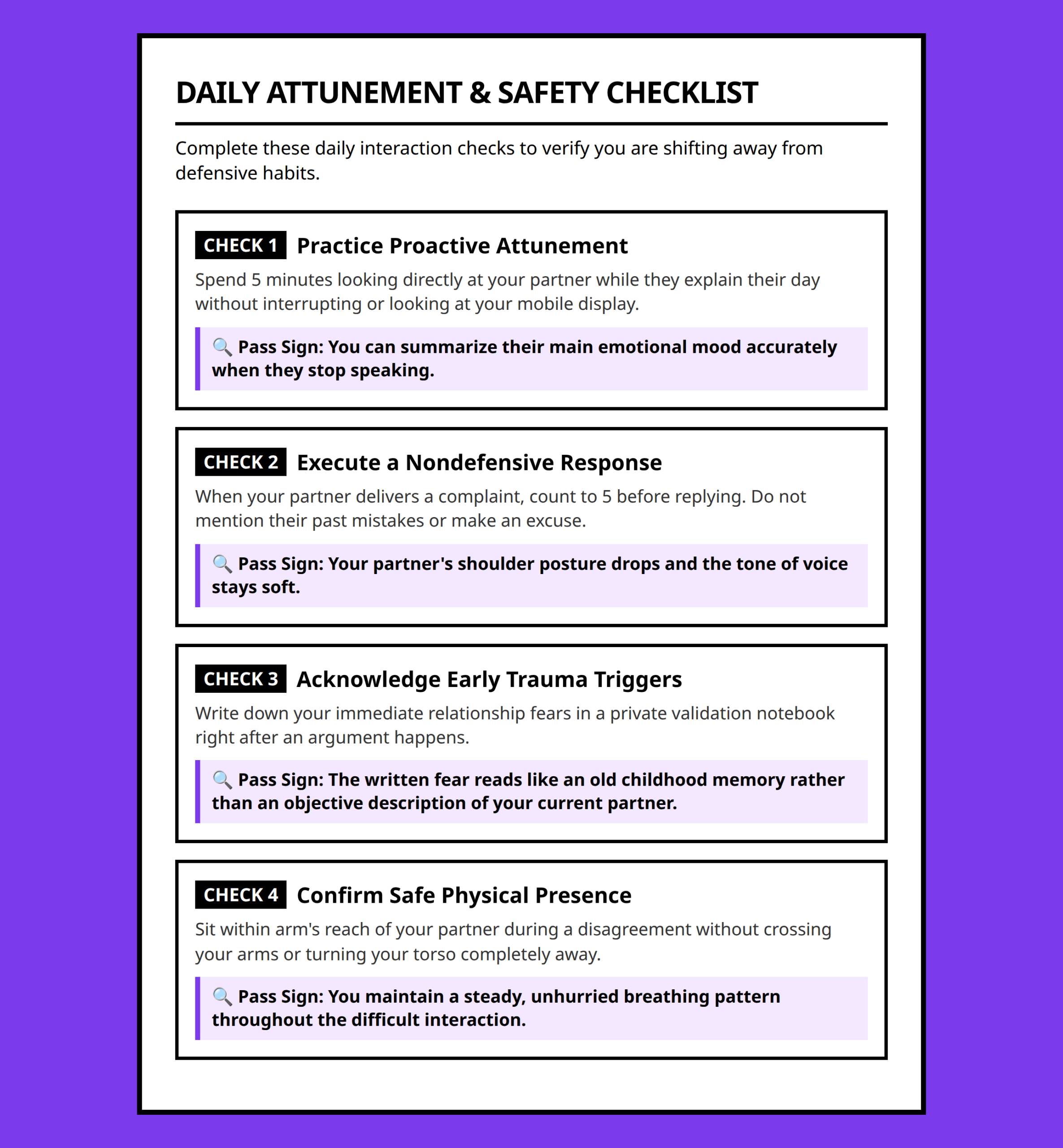
Nondefensive communication is a powerful tool for shifting attachment patterns. It involves expressing your emotions clearly while remaining open to feedback, rather than immediately reacting with fear or withdrawal.
For instance, instead of lashing out when feeling ignored, you might say, “I feel anxious when I don’t hear back from you and would like to understand what’s happening.” This approach reduces relational tension and encourages reciprocal vulnerability【34†source】.
Measure Progress and Adjust
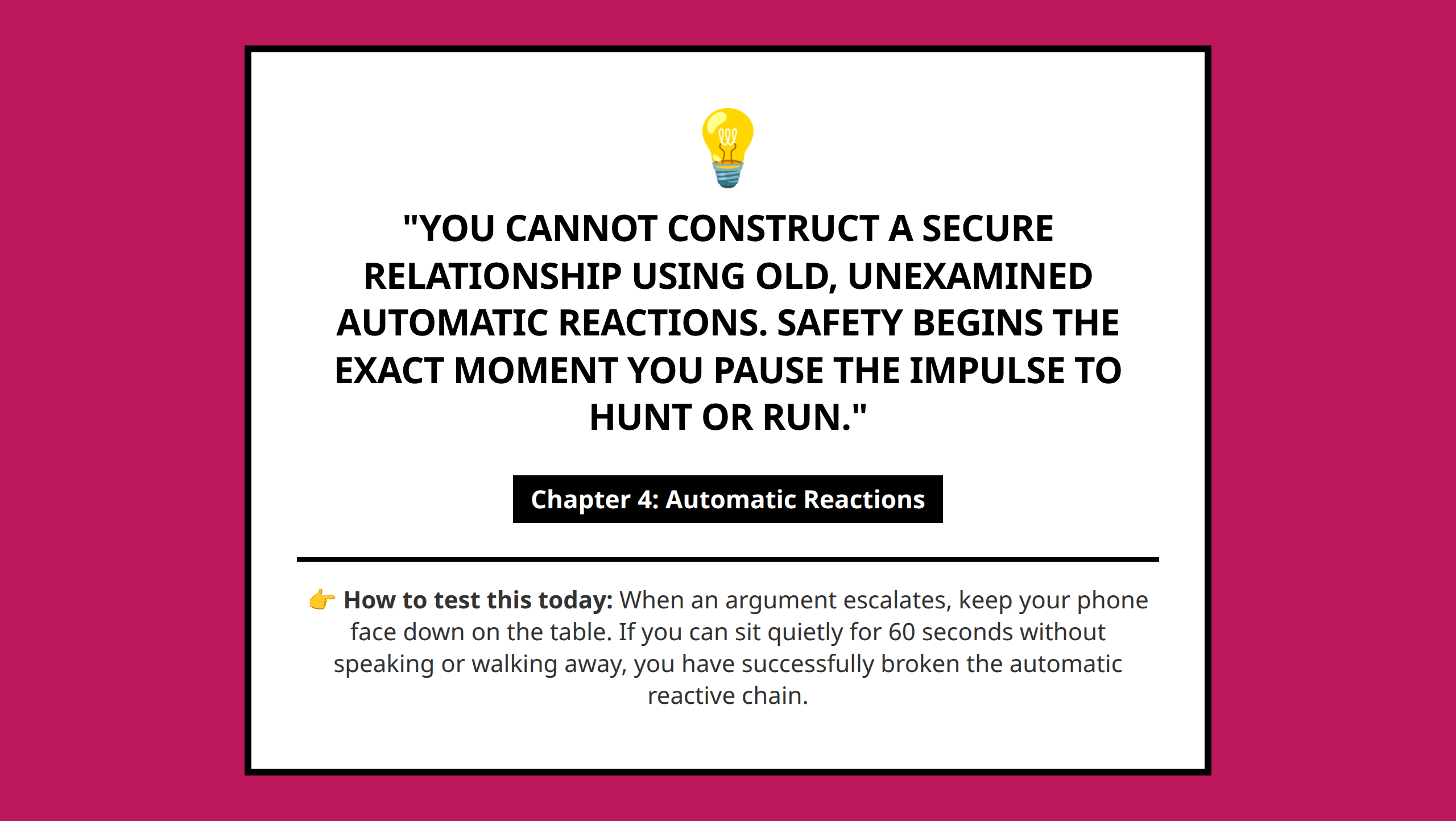
Track improvements by observing changes in your relational patterns. Are you less reactive during conflict? Do you feel more comfortable asking for needs to be met? Reflecting on progress, even in small increments, reinforces new secure behaviors and diminishes old insecure strategies over time【34†source】.
Every step toward recognizing and shifting attachment patterns is a move toward emotional attunement, safer connections, and healthier relationships.
References:
- https://www.verywellmind.com/marriage-insecure-attachment-style-2303303
- https://selfmasteryandbeyond.com/blog/the-roadmap-from-insecure-to-secure-attachment-mindset-emotions-and-nervous-system/
- https://www.youtube.com/watch?v=y6vNkYmryp0
- https://www.youtube.com/watch?v=8bjF-gRGvv8
- https://www.youtube.com/watch?v=qoQl1fIR57o
- https://www.attachmentproject.com/psychology/attachment-based-therapy/
- https://ftm.aamft.org/breaking-the-cycle-understanding-and-overcoming-insecure-attachment-in-relationships/
- https://www.zachbeach.com/how-to-shift-from-anxious-to-secure-attachment/
- https://www.helpguide.org/relationships/social-connection/attachment-and-adult-relationships
- https://beyondhealingcounseling.com/anxious-avoidant-attachment/
- https://www.wellnest.ca/post/from-insecure-to-secure-how-to-shift-your-attachment-style
- https://greatergood.berkeley.edu/article/item/how_to_stop_attachment_insecurity_from_ruining_your_love_life
- https://reachlink.com/advice/parenting/attachment-parenting-understanding-the-7-baby-bs-approach/