Python list comprehensions transform repetitive loops into concise, readable, and flexible expressions, making code cleaner and easier to maintain while performing the same data transformations and filtering operations.
For many new Python developers, the initial approach to processing lists involves standard for-loops. While functional, these loops often become verbose, especially when applying multiple filters or transformations. I’ve found that shifting to list comprehensions not only shortens the code but also improves clarity when revisiting scripts later.
Understanding this transition helps developers reduce boilerplate and avoid unnecessary complexity. Once I started systematically applying comprehensions for filtering and transformation tasks, coding tasks felt much more streamlined and readable.
Replacing Repetitive Loops
Traditionally, filtering a list required setting up an empty list, looping through elements, applying a conditional check, and appending valid items. For instance:
result = [] for number in numbers: if number % 2 == 0: result.append(number) This pattern works, but it quickly becomes cumbersome when multiple conditions or operations are needed. List comprehensions condense this into a single, expressive line:
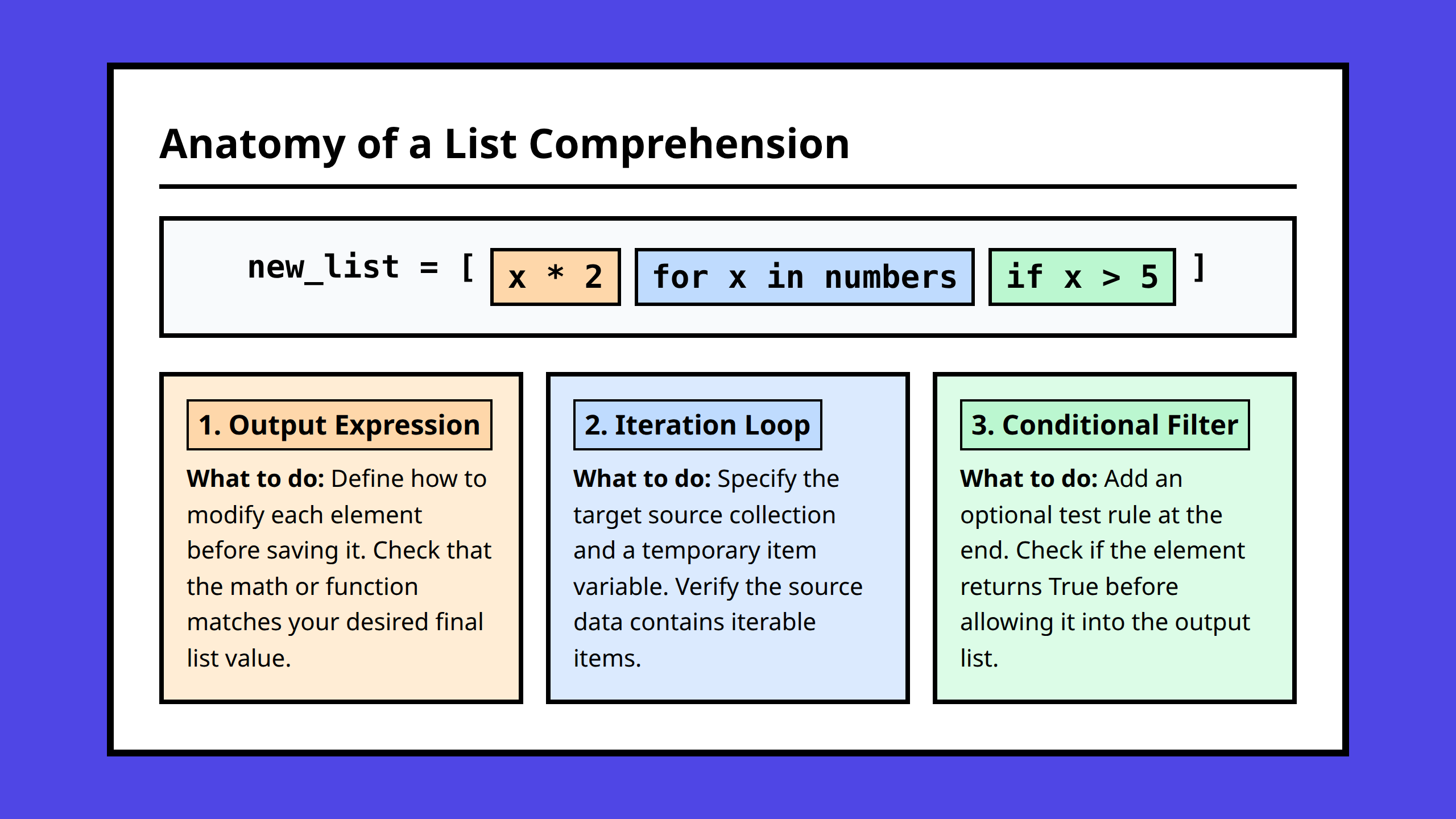
result = [number for number in numbers if number % 2 == 0]Not only is this shorter, but it visually communicates the intent: “collect even numbers from this list.” I’ve noticed that this clarity significantly reduces debugging time when revisiting code after a few weeks.
Adding Transformations and Conditions
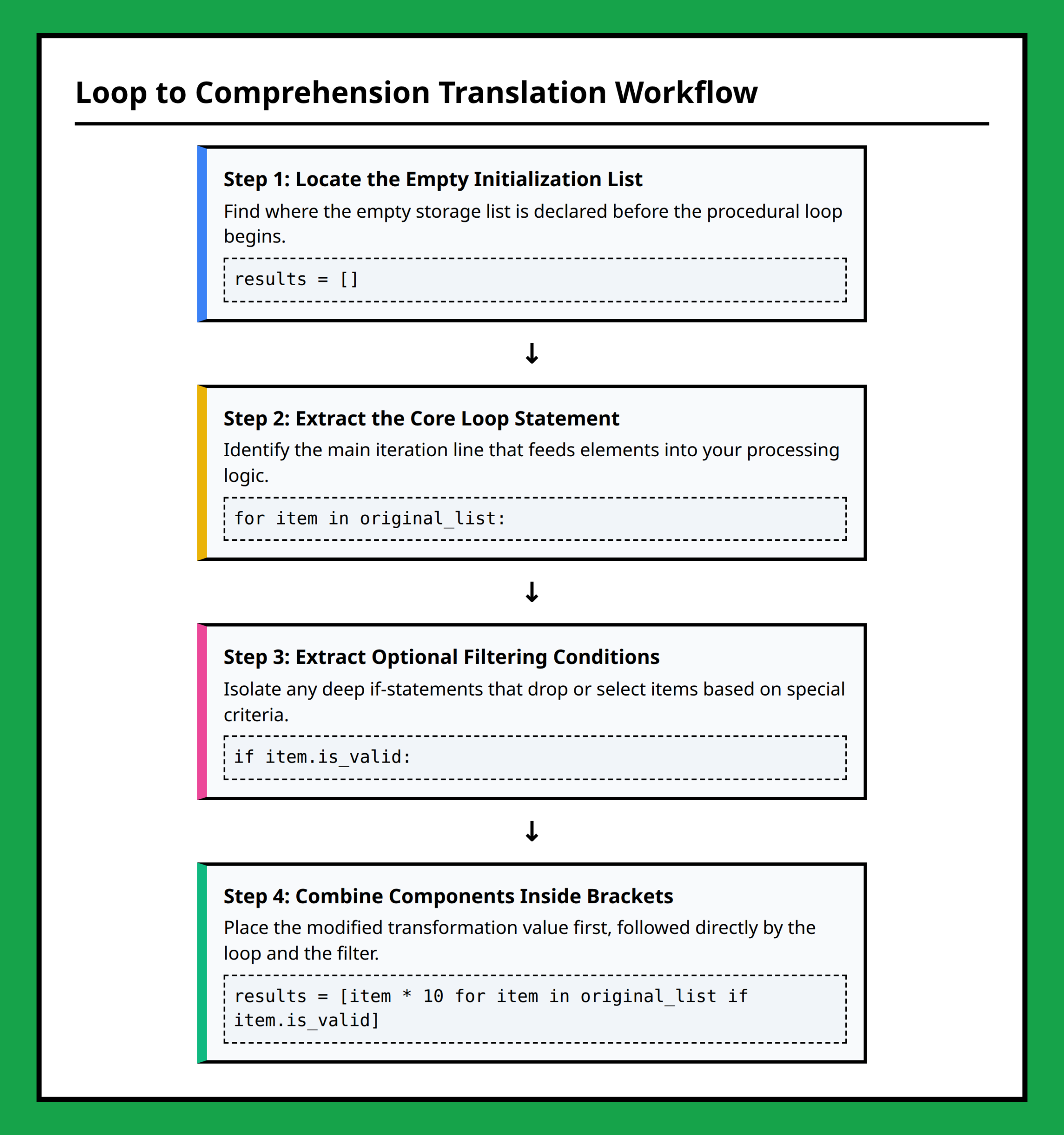
Comprehensions also handle transformations directly. For example, squaring only even numbers can be written concisely:
squares = [number**2 for number in numbers if number % 2 == 0]Compared to traditional loops with intermediate variables, this method keeps the logic compact and readable. I find it particularly useful when chaining multiple operations or generating new datasets from existing lists.
Practical Filtering and Mapping
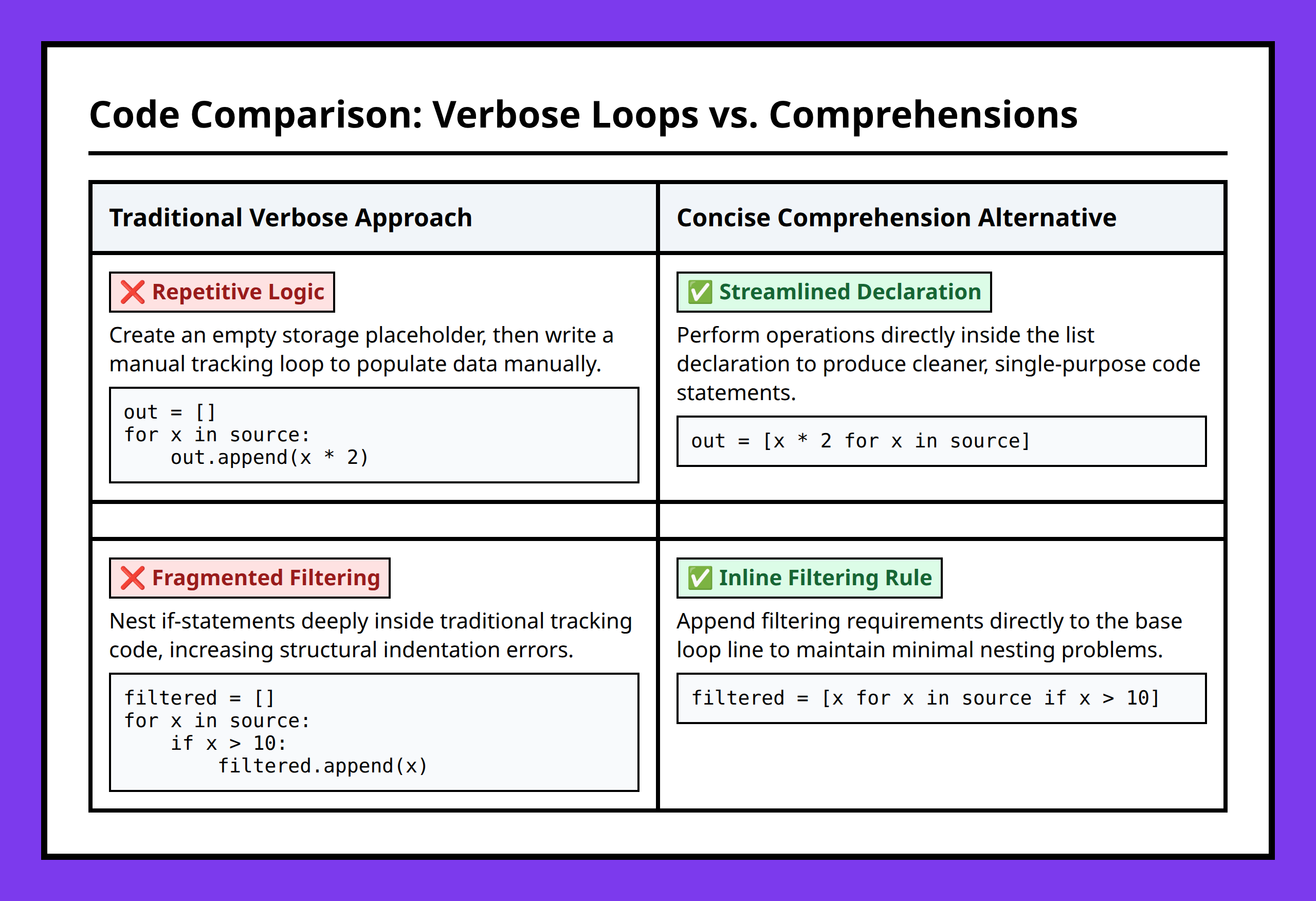
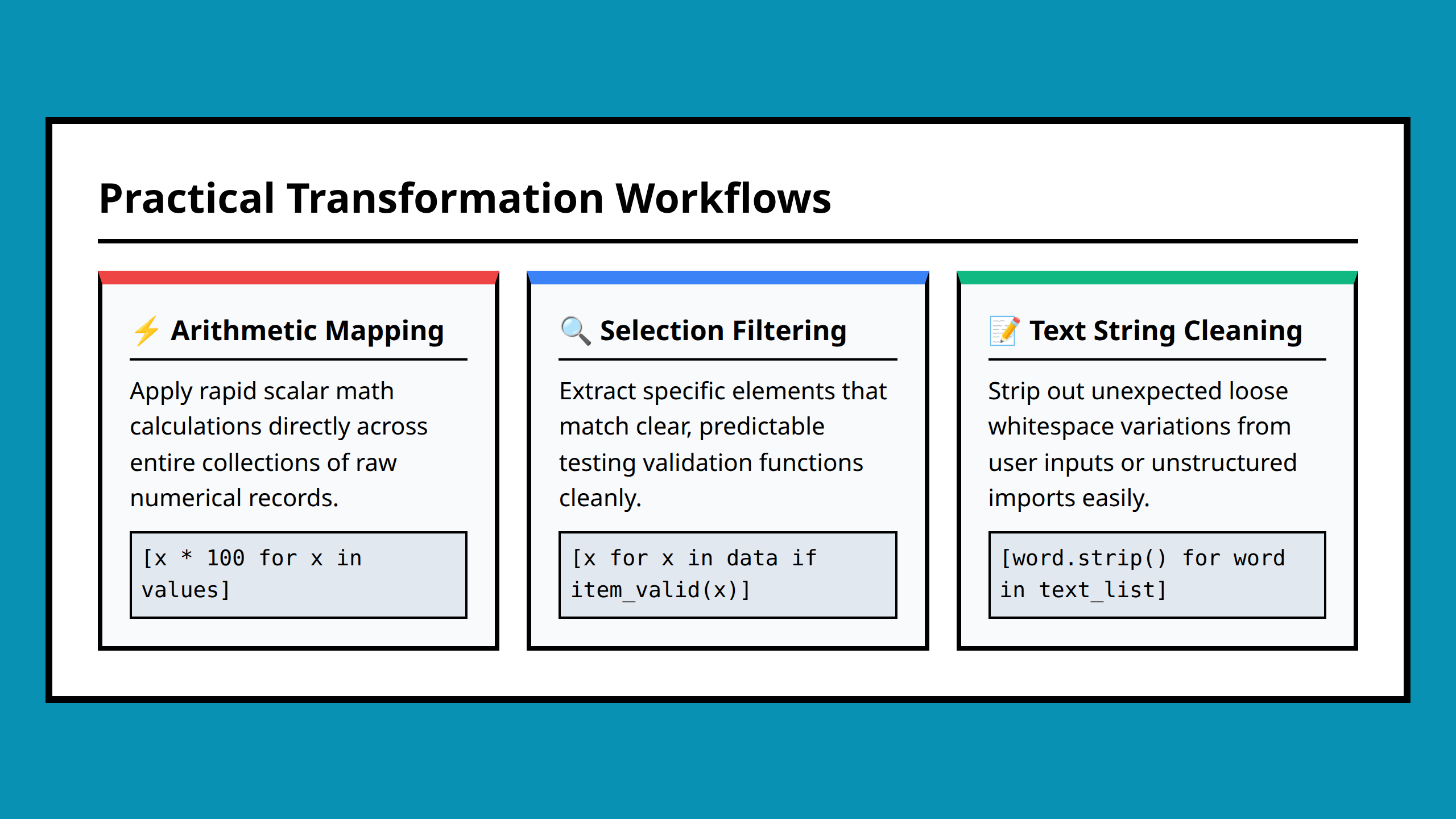
Beyond arithmetic transformations, list comprehensions make filtering more intuitive. For instance, removing empty strings or transforming text to uppercase can be done without multiple lines:
cleaned_data = [item.upper() for item in data if item]By integrating the condition directly into the comprehension, I can see both the filtering and the transformation at a glance. This aligns with how Python emphasizes readability and explicit intent.
Key Takeaways for Developers
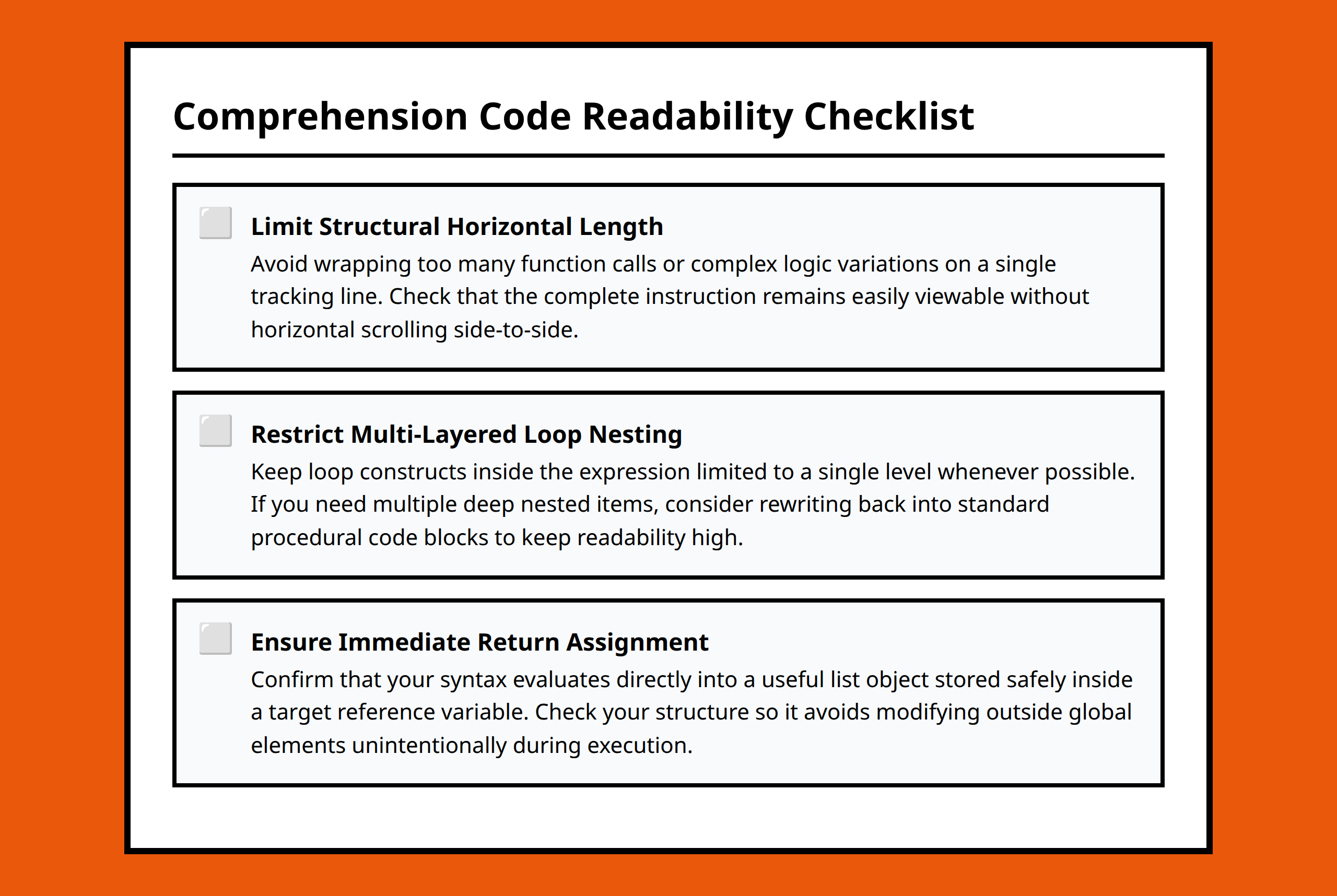
Switching from verbose loops to list comprehensions provides several advantages:
- Reduced code length and boilerplate
- Immediate readability of filtering and transformation logic
- Flexibility for adding multiple conditions or operations in a single line
- Consistency with Pythonic coding style
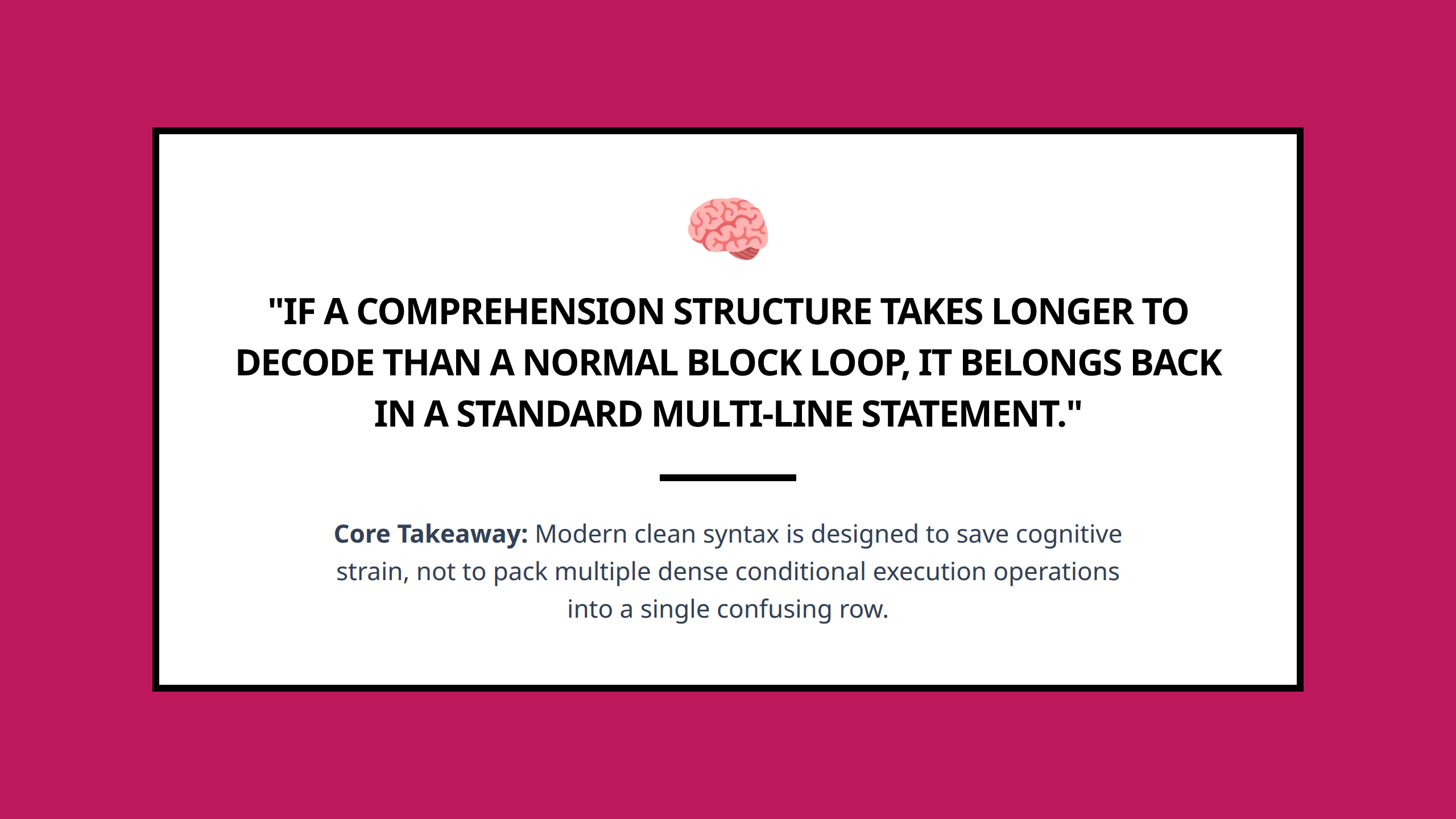
From my experience, the transition is most effective when starting with small, simple lists and gradually applying comprehensions to more complex scenarios. This ensures comprehension without sacrificing clarity.
References:
- https://www.youtube.com/watch?v=6SxAGtelBa0
- https://www.youtube.com/watch?v=6bHDQtVfsCM
- https://www.youtube.com/watch?v=YlY2g2xrl6Q
- https://realpython.com/list-comprehension-python/
- https://stackoverflow.com/questions/66338538/python-list-comprehension-for-more-complex-loops
- https://stackoverflow.com/a/66340341
- https://stackoverflow.com/questions/51556631/should-we-always-replace-for-loops-with-list-comprehension
- https://stackoverflow.com/questions/1460484/verbose-list-comprehension-in-python
- https://treyhunner.com/2019/03/abusing-and-overusing-list-comprehensions-in-python/
- https://medium.com/@23dce087/python-list-comprehensions-writing-elegant-and-efficient-code-bae4eaf04445
- https://dev.to/zeyu2001/replace-loops-map-and-filter-with-list-comprehensions-in-python-3lk1
- https://www.reddit.com/r/learnpython/comments/1nhnh2p/anyone_else_feel_like_theyre_overthinking_list/
- https://www.reddit.com/r/learnpython/comments/1nhnh2p/anyone_else_feel_like_theyre_overthinking_list/necr32r/
- https://www.reddit.com/r/Python/comments/x7y0xg/python_list_comprehensions_are_more_powerful_than/
- https://www.reddit.com/r/Python/comments/wi00ih/does_anybody_else_just_not_like_the_syntax_for/
- https://discuss.python.org/t/list-comprehension-as-compulsory-functional-style/16997
- https://switowski.com/blog/for-loop-vs-list-comprehension/
- https://python.plainenglish.io/5-ways-python-comprehensions-can-replace-your-loops-71ab3520fedd
- https://earthdatascience.org/courses/intro-to-earth-data-science/write-efficient-python-code/loops/list-comprehensions
- https://docs.python.org/3/tutorial/datastructures.html
- https://hacktec.gitbooks.io/effective-python/content/en/Chapter1/Item8.html