
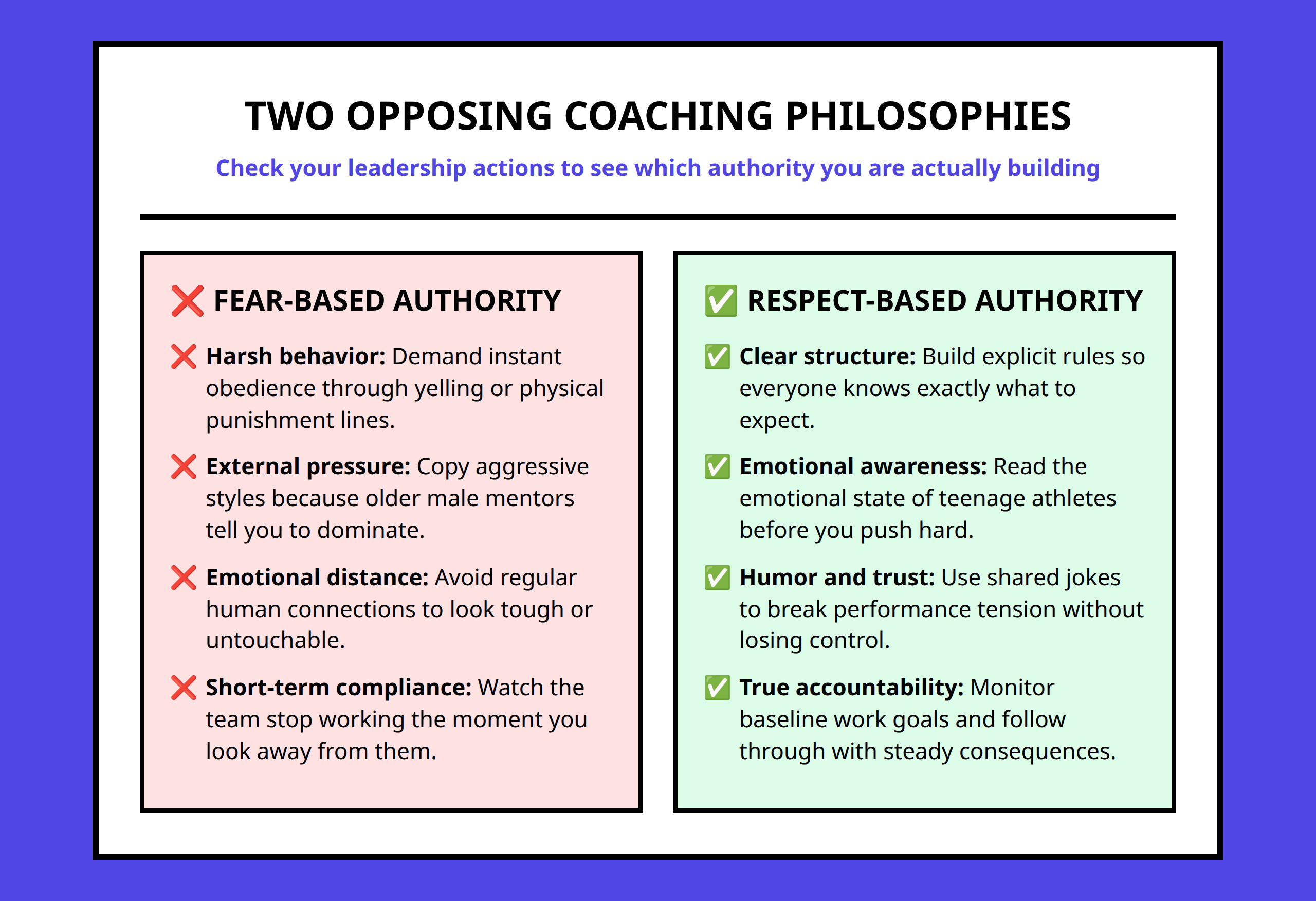
Many young leaders assume authority comes from acting tougher, louder, or stricter than everyone else. In practice, teams often respond better to structure, consistency, emotional control, and clear expectations than fear-driven leadership.
I’ve noticed that inexperienced leaders usually panic in one of two directions. They either become too passive because they want everyone to like them, or they overcorrect and become unnecessarily harsh because they are afraid of losing control.
The second approach often looks powerful at first. The leader sounds decisive. Rules get enforced quickly. People become quieter. But silence and respect are not the same thing, especially with teenagers or young teams.
What matters more is whether the group actually trusts the leader’s judgment when pressure rises.
Authority Usually Starts With Chaos, Not Confidence
One detail people underestimate about leadership is how messy the beginning often feels.
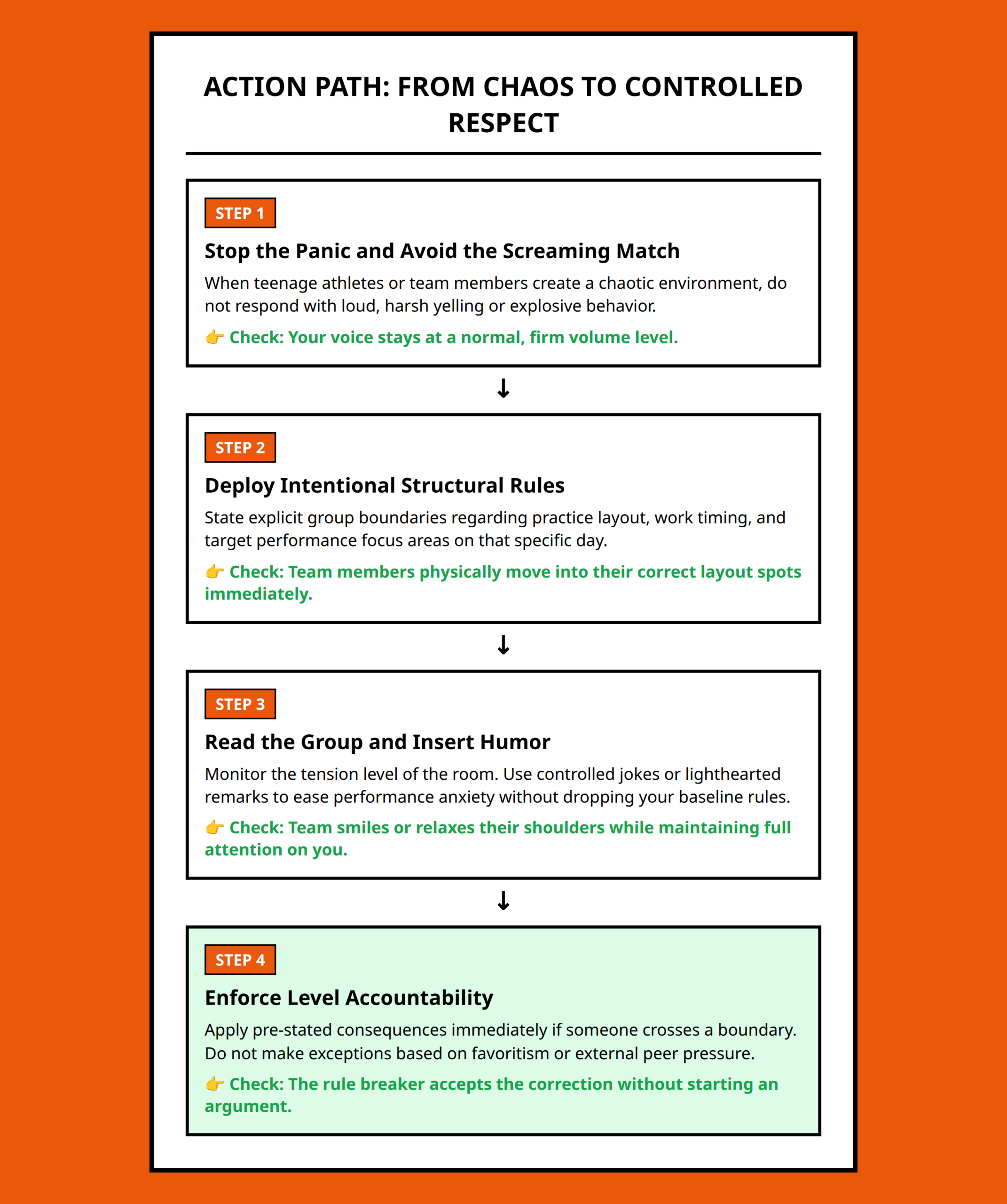
A new coach walking into a loud bus ride, distracted athletes, scattered routines, and nonstop side conversations does not immediately feel authoritative. Most first-time leaders feel overwhelmed long before they feel respected.
That matters because insecurity creates temptation. A young coach may start thinking:
- I need to sound tougher.
- I need to punish people faster.
- I need to prove I’m in charge immediately.
I understand why that reaction happens. Disorder feels personal when you are responsible for the group.
But emotional overreaction usually weakens authority instead of strengthening it. Teams start focusing on the coach’s mood rather than the actual standard.
The stronger approach is quieter. A leader notices the chaos without becoming emotionally consumed by it.
That distinction is important.
Structure Creates More Stability Than Intimidation
Fear-based leaders often rely on unpredictability. People obey because they want to avoid punishment.
Respect-based leaders usually rely on systems.
That difference changes the atmosphere completely.
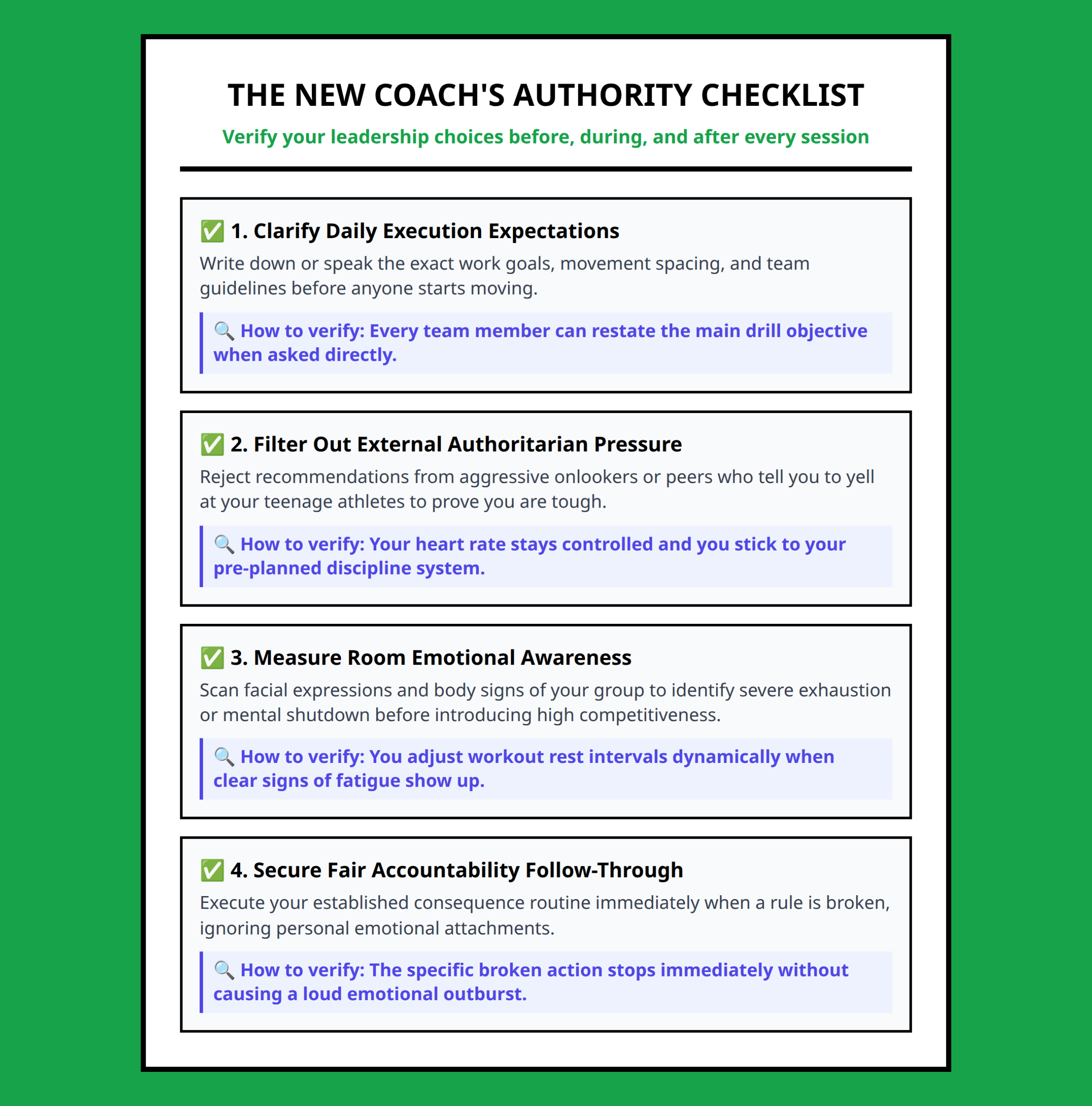
A coach who calmly explains expectations, establishes routines, repeats standards consistently, and follows through without drama creates psychological stability. Players know where the boundaries are. They know what happens if they ignore them. They also know the rules are not changing based on the coach’s emotions.
I would trust that kind of leader far more than someone who explodes unpredictably.
A simple example is handling team logistics. Imagine a dorm full of teenage athletes during training camp. There is noise everywhere. Soccer balls are flying through hallways. People are distracted. One coach reacts by screaming at everyone for twenty minutes. Another coach sets clear rules, explains consequences directly, uses humor strategically, and stays consistent when enforcing expectations.
The second coach usually gains stronger long-term authority because the team experiences control without emotional volatility.
That balance matters more than many leaders realize.
Humor Can Strengthen Authority When It Supports the Standard
Some young leaders avoid humor because they think it weakens authority.
I actually think controlled humor can strengthen leadership when used correctly.
The key word is controlled.
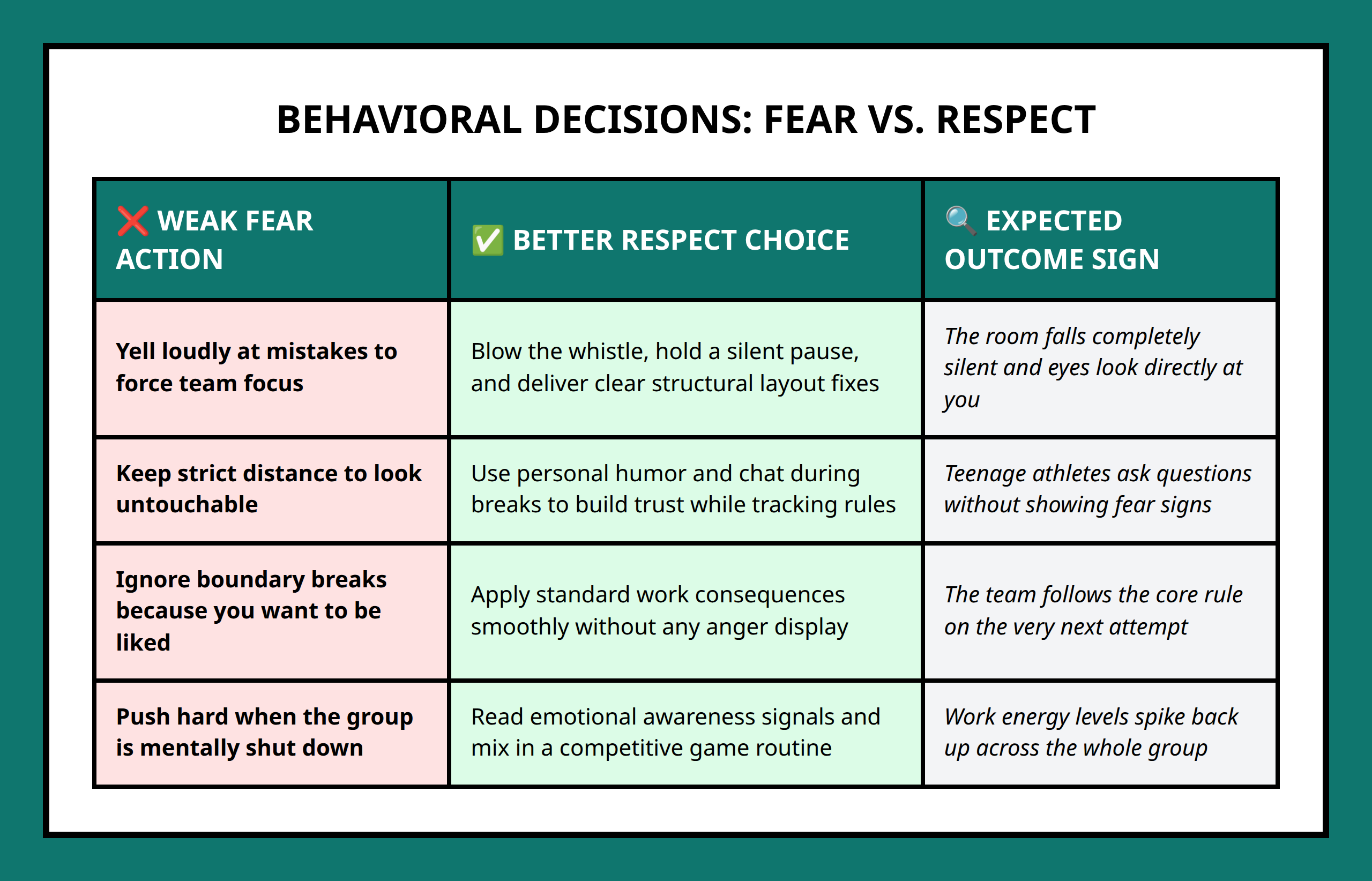
A coach joking with players while still maintaining expectations creates emotional flexibility inside the team. The environment feels human instead of militarized.
That does not mean becoming everybody’s friend.
The strongest leaders often know how to shift tone quickly. They can laugh with the group one moment and immediately refocus attention the next without losing credibility.
That transition is difficult for inexperienced leaders because they think authority depends entirely on emotional distance. In reality, emotional control is usually more important than emotional coldness.
I would pay close attention to whether humor supports discipline or replaces it. Good humor lowers tension without lowering standards.
Young Leaders Lose Authority When They React to Every Challenge
One trap for first-time coaches is treating every sarcastic comment, eye roll, or minor act of resistance like a direct threat.
Teenagers test boundaries constantly. So do employees, students, and new teams.
The test itself is normal.
The real question is whether the leader becomes emotionally reactive during the test.
I think inexperienced leaders sometimes confuse emotional escalation with strength. They feel pressured to “win” every interaction immediately.
But authority becomes fragile when it depends on constant confrontation.
A calmer leader understands that not every challenge deserves the same response. Some moments require direct correction. Others only require consistency and patience.
Imagine a player making a sarcastic comment during practice. A fear-based coach might stop everything, embarrass the player publicly, and turn the entire moment into a power struggle. A more controlled coach might acknowledge the comment briefly, redirect focus, and handle accountability without making the entire practice emotionally tense.
The second response often preserves more authority because the leader stays emotionally steady while maintaining the standard.
Respect-Based Leadership Still Requires Accountability
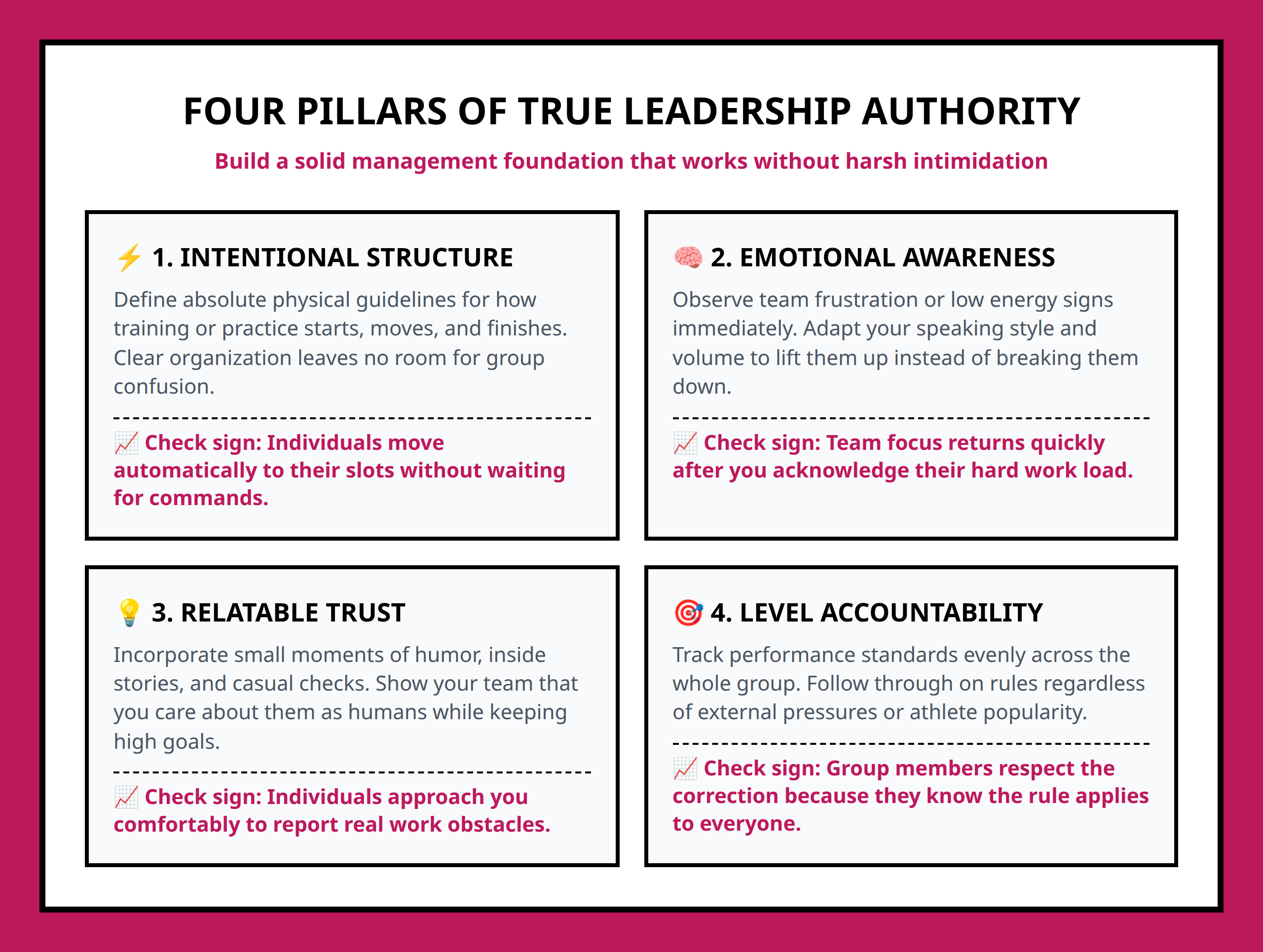
One mistake I see often is assuming that emotionally intelligent leadership means soft leadership.
It does not.
Teams still need consequences, boundaries, and accountability. Otherwise the environment becomes confusing very quickly.
The difference is that respect-based leaders usually enforce standards without making punishment feel personal.
That distinction changes how teams interpret discipline.
When athletes believe rules exist to improve the group, accountability feels constructive. When they believe rules exist mainly to protect the coach’s ego, resentment grows much faster.
I would rather coach a disciplined team that understands the purpose behind expectations than a fearful team constantly trying to avoid humiliation.
The first environment produces more trust under pressure.
Authority Gets Stronger When Players Feel Seen
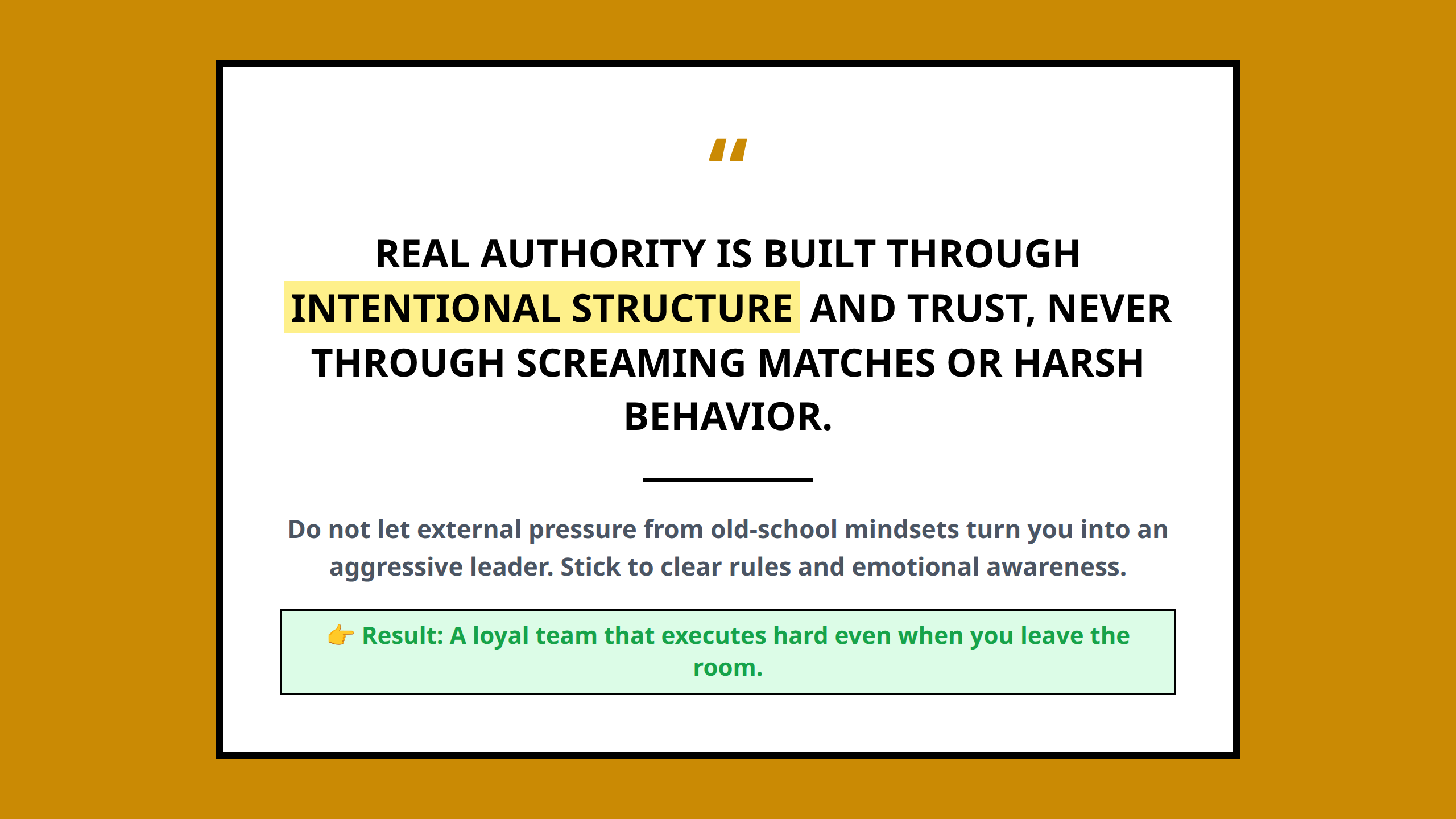
One of the most overlooked parts of leadership is emotional awareness.
A coach paying attention to exhaustion, insecurity, frustration, or unhealthy behavior patterns sends an important signal to the team: people matter beyond performance.
That does not weaken competitiveness. In many cases, it strengthens it.
Players usually commit harder to leaders who notice what is happening beneath the surface. A teenager skipping meals, shutting down socially, or spiraling emotionally may still follow orders temporarily, but long-term trust disappears when leadership ignores obvious warning signs.
I think strong authority often comes from attention more than dominance.
A team can feel the difference between a coach who wants control and a coach who genuinely wants the group to succeed.
The Best Young Coaches Learn to Stay Steady Under Pressure
Pressure reveals leadership style very quickly.
That is why young coaches often feel tempted to imitate older authoritarian leaders. Fear-based leadership can look efficient from a distance because it produces immediate compliance.
But long-term authority usually depends on emotional steadiness, not intimidation.
Players watch how leaders respond to stress. They notice whether expectations stay consistent. They notice whether accountability changes based on mood. They notice whether the coach can maintain standards without creating unnecessary fear.
I think that is the real challenge for first-time leaders.
Not becoming the loudest person in the room.
Becoming the person the team still trusts when the room gets difficult.
References:
- https://coachingfederation.org/blog/breaking-barriers-thriving-as-a-young-coach/
- https://www.linkedin.com/pulse/tale-two-managers-truth-coaching-control-why-fear-always-heady-k9rnc
- https://www.reddit.com/r/SoccerCoachResources/comments/1d5i867/younger_coach_struggling_with_respect_from/
- https://prestonjunger.medium.com/the-role-of-a-youth-coach-shaping-more-than-just-athletes-83d8f0e219b7
- https://coachad.com/articles/tips-projecting-authority-new-coach/
- https://www.fosburyflop.blog/p/there-is-no-authority-without-an
- https://www.animascoaching.com/blog/becoming-a-coach-without-changing-career/
- https://members.thecoachessite.com/article/generation-alpha-and-the-future-of-coaching
- https://www.oakconsult.co.uk/the-terminator-leadership-styles-part-1/
- https://skillshark.com/blog/coaching-youth-sports