
Most people see practices, game plans, and conditioning drills when they think about coaching. What they often miss is the constant emotional monitoring happening underneath everything else, especially when teenagers are involved.
I don’t think many first-time coaches realize how quickly the role expands beyond sports. A coach may start the week thinking about training schedules and performance goals, then suddenly spend hours managing confidence issues, social tension, emotional meltdowns, or unhealthy behavior patterns inside the team.
That emotional workload is difficult partly because much of it stays invisible. When things go well, nobody notices it. When something goes wrong, everybody suddenly expects the coach to have seen it coming.
The Job Starts With Logistics but Quickly Becomes Emotional Management
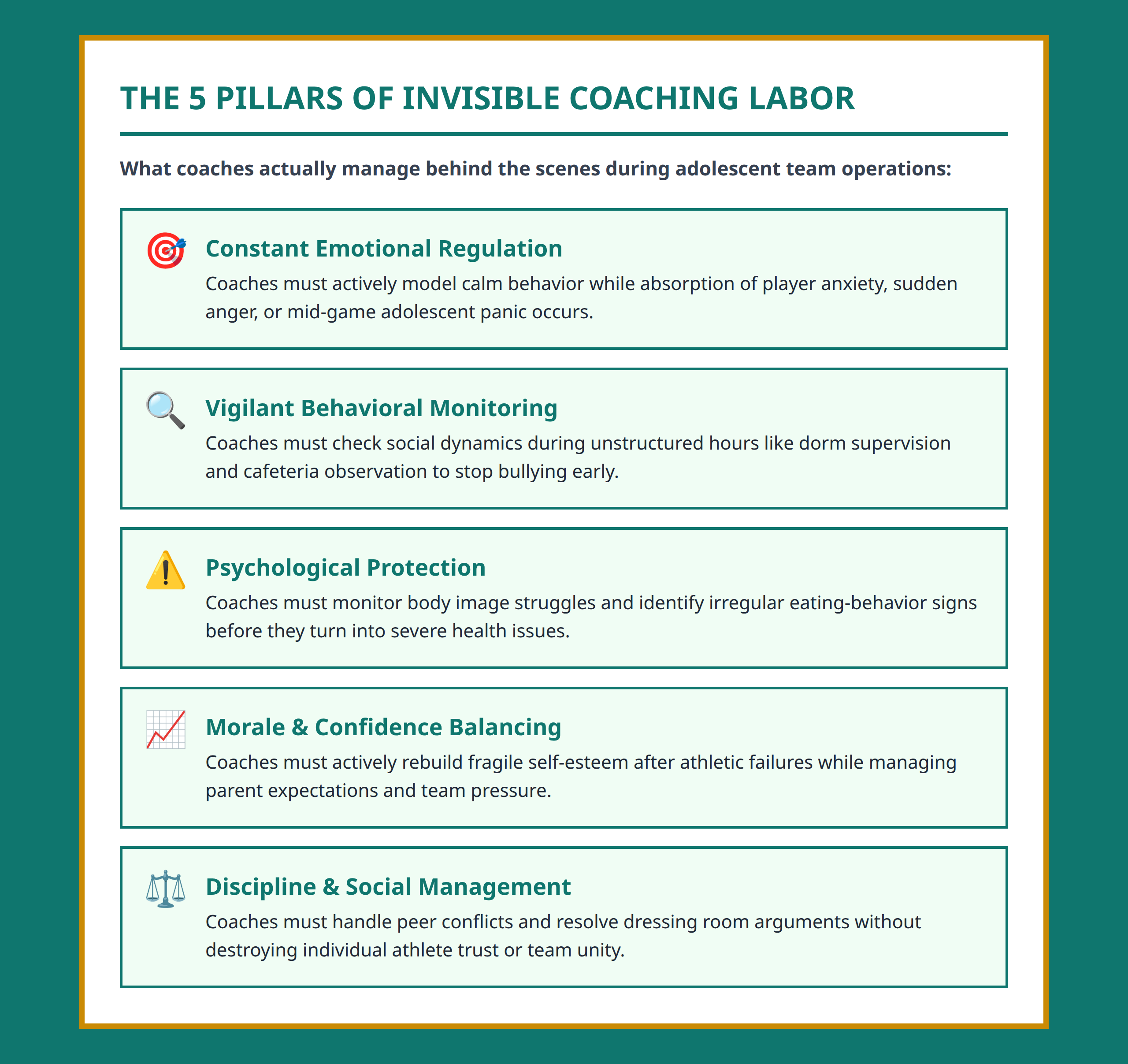
You can see the shift happen almost immediately in youth sports environments.
At first, the problems look operational: noisy bus rides, scattered athletes, late arrivals, dorm supervision, cafeteria routines, and team discipline. From the outside, it can seem like basic crowd management.
But underneath those moments, the coach is constantly reading emotional signals.
Who looks isolated?
Who keeps withdrawing socially?
Who is trying too hard to impress everyone?
Who seems emotionally fragile after small mistakes?
I think this is one reason youth coaching becomes mentally exhausting so quickly. The coach cannot focus only on athletic performance because emotional instability eventually affects everything else.
A teenager who feels embarrassed, anxious, excluded, or insecure rarely leaves those feelings outside practice.
Teen Athletes Rarely Tell Coaches the Full Truth Directly
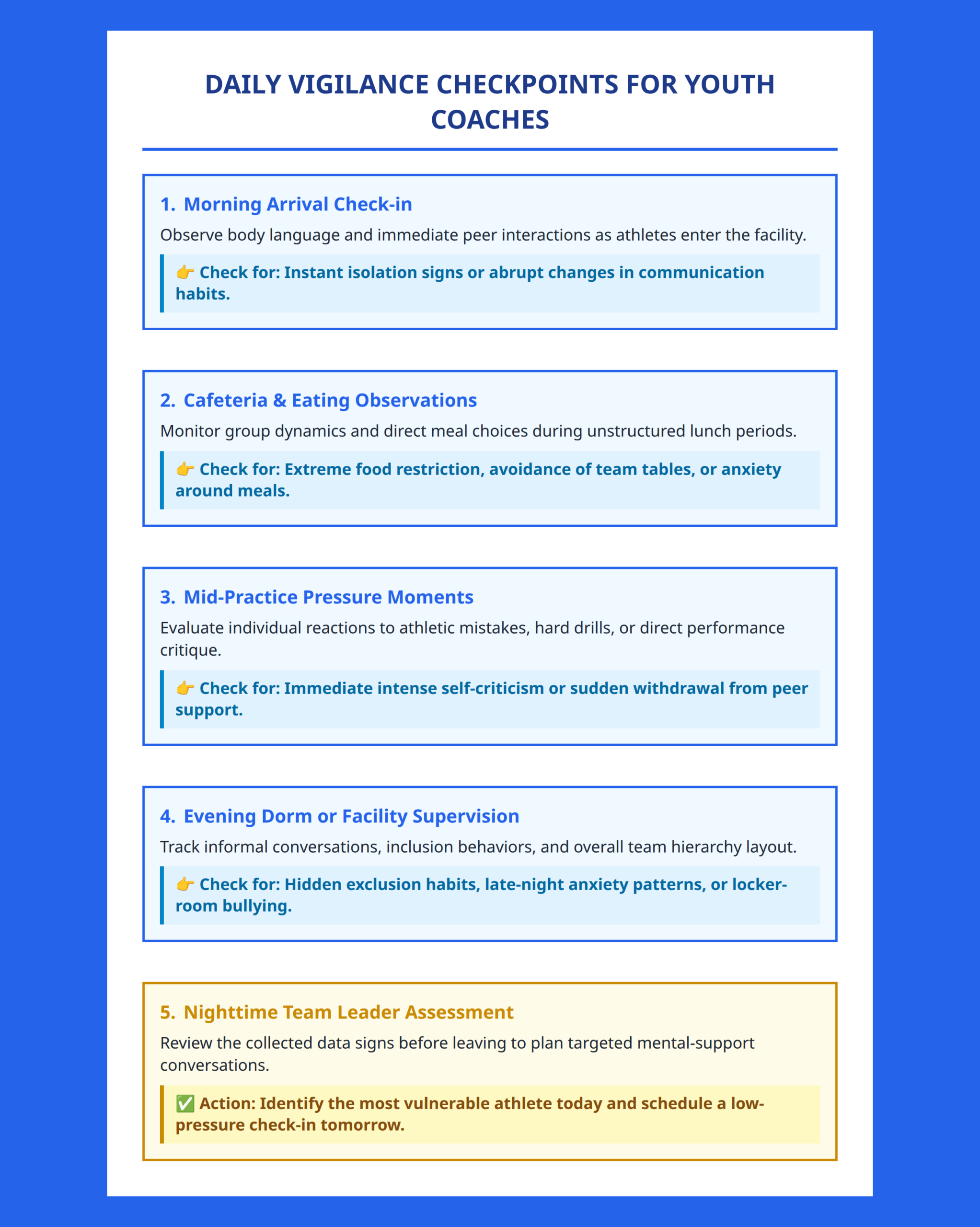
One thing I would pay close attention to in any youth team is indirect behavior.
Teenagers often communicate emotional distress sideways rather than openly.
A player may become sarcastic instead of admitting insecurity. Another may stop eating normally without ever discussing body image pressure. Someone else may suddenly act disruptive because they feel invisible inside the group.
The difficult part is that these behaviors can easily look like simple attitude problems at first.
That creates an emotional balancing act for coaches. They still need accountability and structure, but they also need enough awareness to recognize when a behavioral problem may actually be emotional distress underneath.
I think inexperienced leaders sometimes miss this because they interpret every issue through discipline alone.
But adolescents are rarely emotionally straightforward, especially in competitive environments where performance, popularity, appearance, and identity all overlap at the same time.
Food, Body Image, and Performance Pressure Intersect Constantly
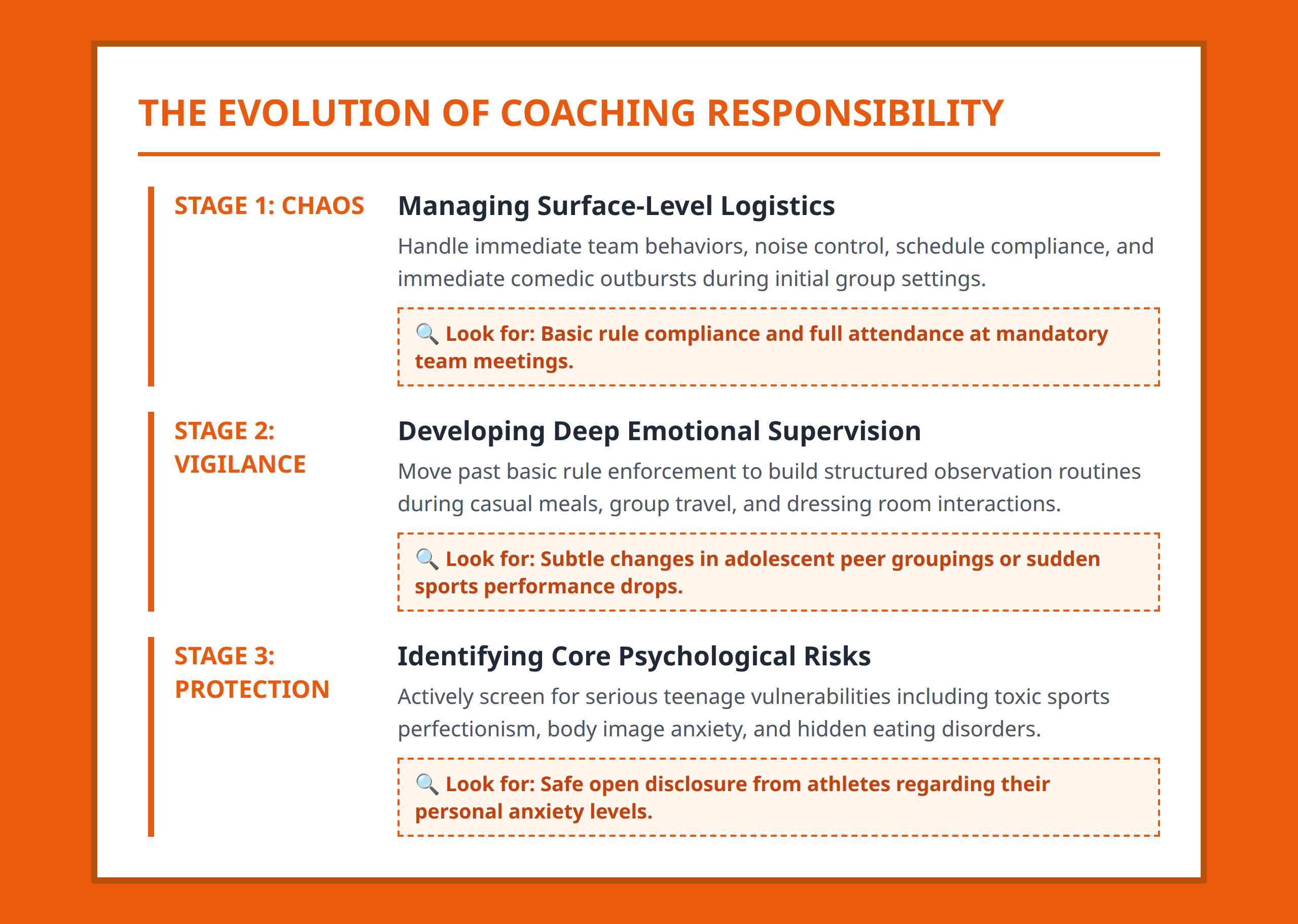
One of the strongest emotional undercurrents in competitive youth environments is body awareness.
Teen athletes are not just trying to perform well. Many are also navigating social pressure, appearance anxiety, and comparison culture simultaneously.
A coach watching players at dinner may notice things other adults overlook immediately: untouched meals, performative “healthy eating,” nervous food habits, or athletes quietly monitoring what everyone else consumes.
I think this is where emotional labor becomes especially heavy. A coach cannot force vulnerability from teenagers, but they also cannot ignore warning signs once they notice them.
Imagine a training camp where players are exhausted, surrounded by peers, constantly active on social media, and under pressure to appear disciplined and attractive at the same time. Even normal meals can become emotionally loaded situations.
The coach now carries an invisible responsibility: protect the athlete without humiliating them.
That requires emotional judgment far beyond tactical coaching.
Team Morale Requires Constant Adjustment
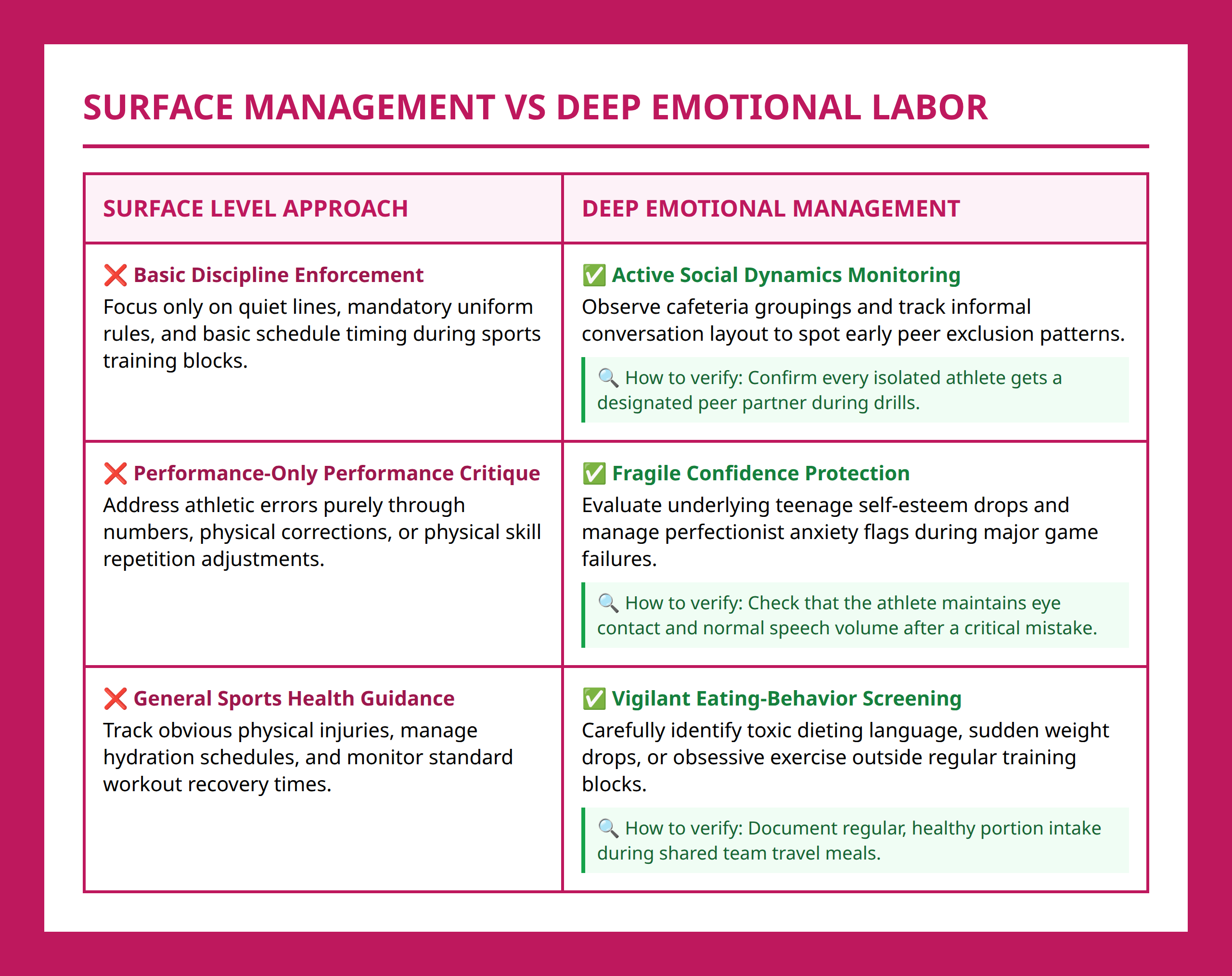
One thing that stands out in adolescent environments is how quickly group emotion changes.
A team can move from excitement to irritation in less than an hour.
A sarcastic comment spreads tension. One athlete’s bad mood affects the room. A conflict during practice quietly follows everyone into dinner.
I think coaches sometimes underestimate how much emotional energy gets spent stabilizing group morale before real training can even happen.
And unlike strategy sessions or conditioning plans, morale management has no clear finish line. It resets every day.
A coach may spend an entire afternoon preventing one athlete from spiraling emotionally after a mistake while simultaneously making sure the rest of the team does not lose focus.
That kind of emotional multitasking rarely appears in public discussions about coaching.
Humor Often Becomes a Survival Tool
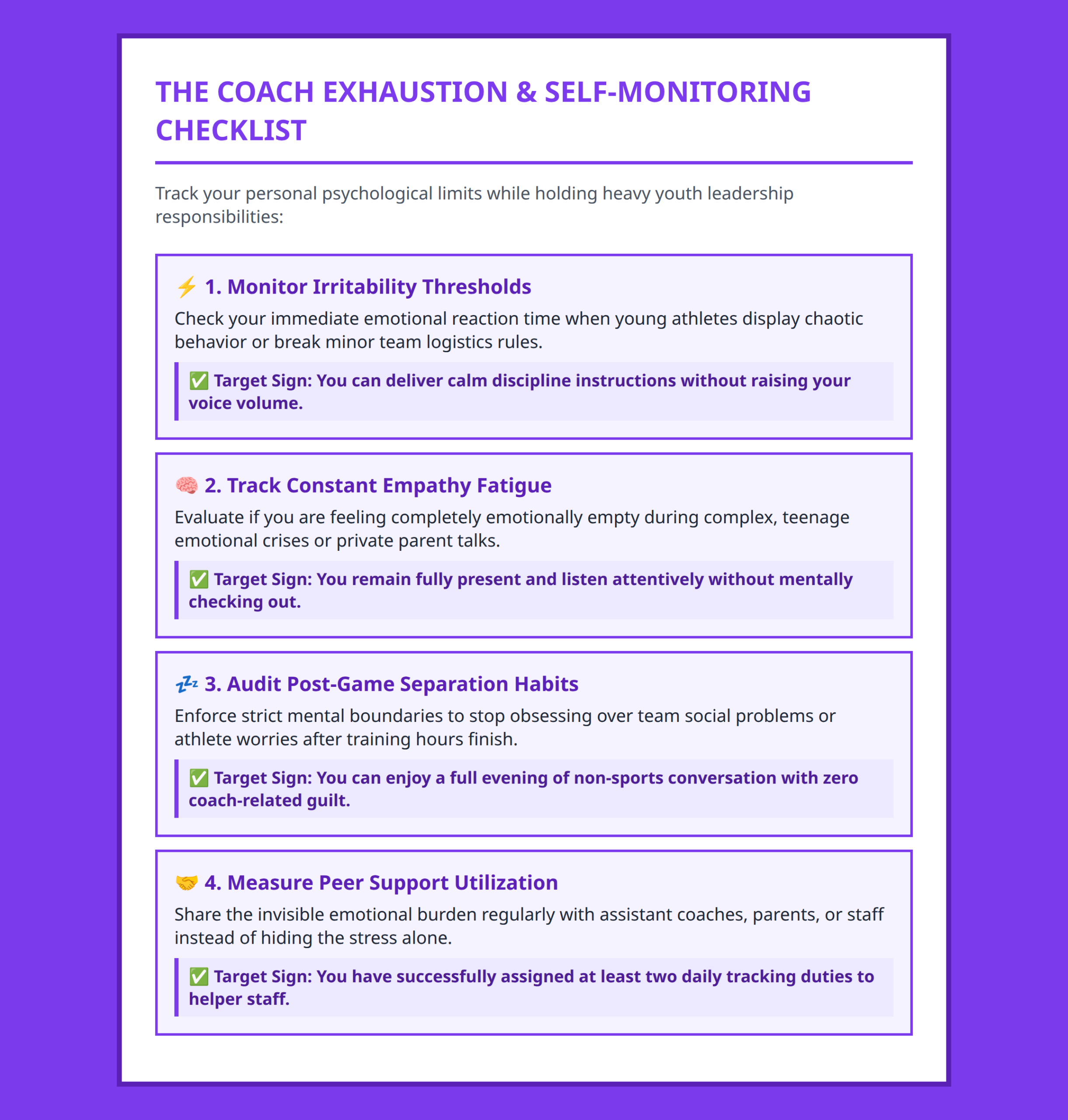
One reason humor appears so often in youth coaching environments is because emotional pressure builds constantly.
Without moments of release, the atmosphere can become emotionally rigid very quickly.
I’ve noticed that strong coaches often use humor strategically, not just socially. A joke can reduce tension after conflict. Light teasing can redirect attention without escalating embarrassment. A playful comment can stop teenagers from emotionally shutting down after criticism.
That does not mean avoiding seriousness.
It means understanding that emotional regulation sometimes matters as much as tactical instruction.
A coach who keeps the environment emotionally survivable often gets better long-term buy-in from young athletes.
The Emotional Monitoring Never Fully Stops
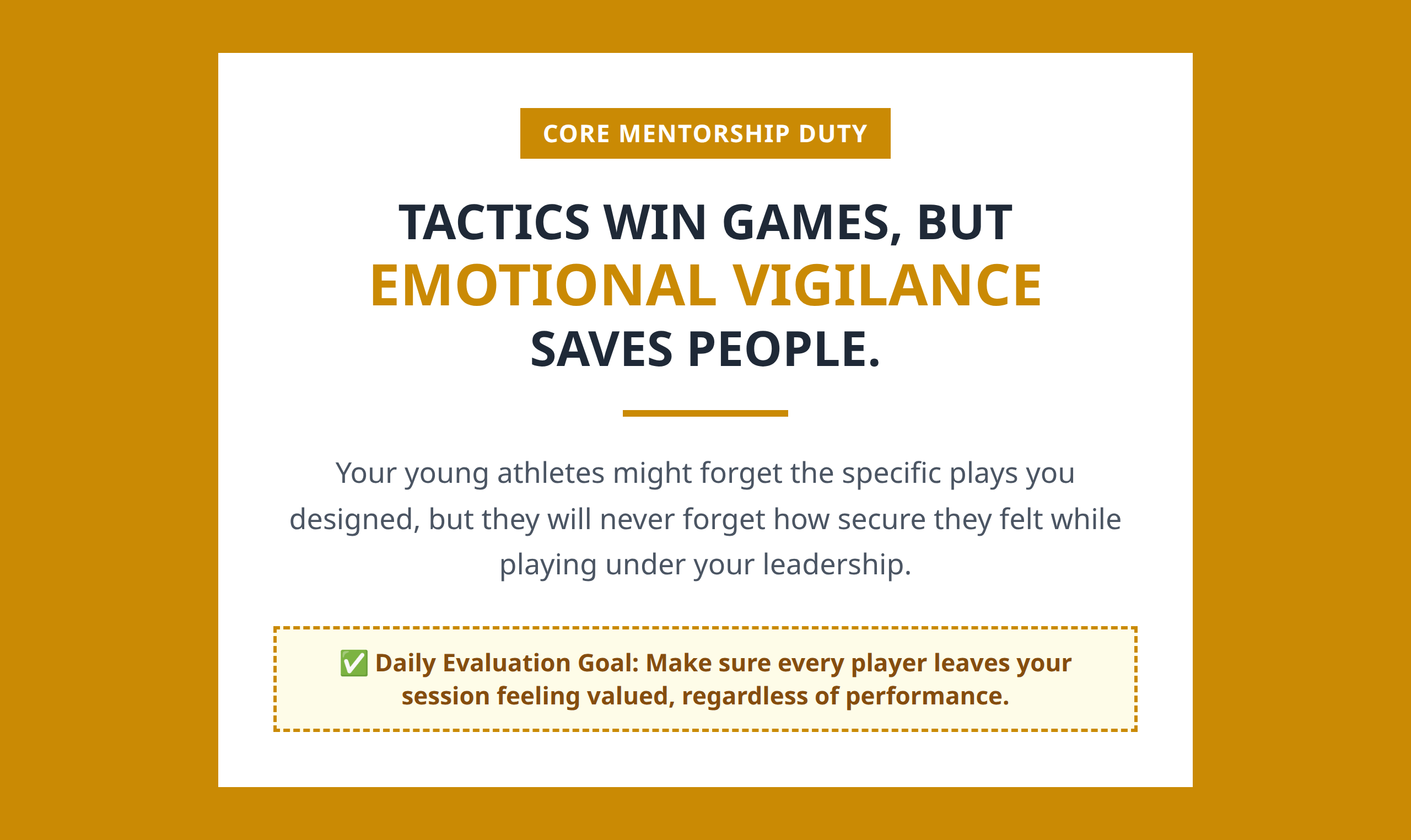
One detail I think outsiders underestimate is how difficult it is for coaches to mentally “clock out.”
Even after practice ends, the monitoring continues.
Who skipped dinner?
Who suddenly got quiet?
Who seems homesick?
Who is isolating themselves socially?
Who is pretending to be fine?
The coach may physically leave the field, but emotionally the responsibility often follows them back to the dorm, hotel, or home.
That ongoing vigilance becomes draining because adolescence is unpredictable. Emotional situations can escalate quickly even inside well-run teams.
I think this is why many youth coaches quietly carry exhaustion that has very little to do with the sport itself.
Young Athletes Need More Than Performance Management
The strongest youth coaches usually understand something important: teenagers are still becoming themselves while they compete.
That changes the entire leadership responsibility.
The coach is not only shaping athletic performance. They are influencing confidence, emotional resilience, social belonging, discipline, self-image, and trust in authority at the same time.
That is a massive amount of psychological influence for one role to carry.
I would actually argue that the emotional side of coaching matters most during ordinary moments, not dramatic speeches or championship games. Small reactions, casual comments, overlooked insecurities, and quiet support often shape how young athletes experience competition far more deeply than tactical instruction does.
And once I started looking at youth coaching through that lens, the job stopped looking like sports management and started looking much more like emotional stewardship under pressure.
References:
- https://www.youtube.com/watch?v=j0K0ksIJHzU
- https://www.tandfonline.com/doi/full/10.1080/00336297.2025.2608612
- https://www.researchgate.net/publication/281221212_Emotional_Labor_in_Sports_Coaching_Development_of_a_Model
- https://www.psychiatrictimes.com/view/leadership-under-pressure-coach-sleep-decision-making-and-team-functioning-in-elite-sport
- https://www.drpaulmccarthy.com/post/how-to-build-mental-toughness-in-teen-athletes-a-coach-s-guide-to-sports-psychology
- https://www.athletesforhope.org/2025/07/beyond-the-game-protecting-the-mental-health-of-young-athletes/
- https://journals.humankinetics.com/abstract/journals/jsm/39/6/article-p407.xml
- https://repository.essex.ac.uk/42398/1/TheHiddenStrugglesofEliteCoachingHowCoachesDontBalanceAthleteWelfarewiththePressuretoPerform.pdf
- https://pmc.ncbi.nlm.nih.gov/articles/PMC12605058/
- https://www.linkedin.com/posts/scott-barker-65834722_a-conversation-the-other-day-that-struck-activity-7392284937984532480-RASG