Rivalries do more than create excitement before a game. They change how teams practice, communicate, focus, and respond to pressure. In competitive environments, rivalry can become a psychological force that sharpens discipline and strengthens group identity faster than ordinary motivation ever could.
I’ve always found it interesting that teams rarely discover their strongest identity during comfortable periods. Most groups become sharper when there is someone specific to beat, someone who exposes weaknesses, challenges status, or threatens pride.
That pressure changes behavior quickly. A coach becomes more intentional. Players pay closer attention. Small mistakes suddenly matter. Rivalry turns vague ambition into something emotional and immediate.
The important detail, though, is that rivalry does not automatically improve performance. It improves performance only when the pressure gets channeled into structure, accountability, and shared focus instead of ego and chaos.
Rivalries Give Teams a Clear Emotional Target
One reason rivalry works so well is that it removes abstraction.
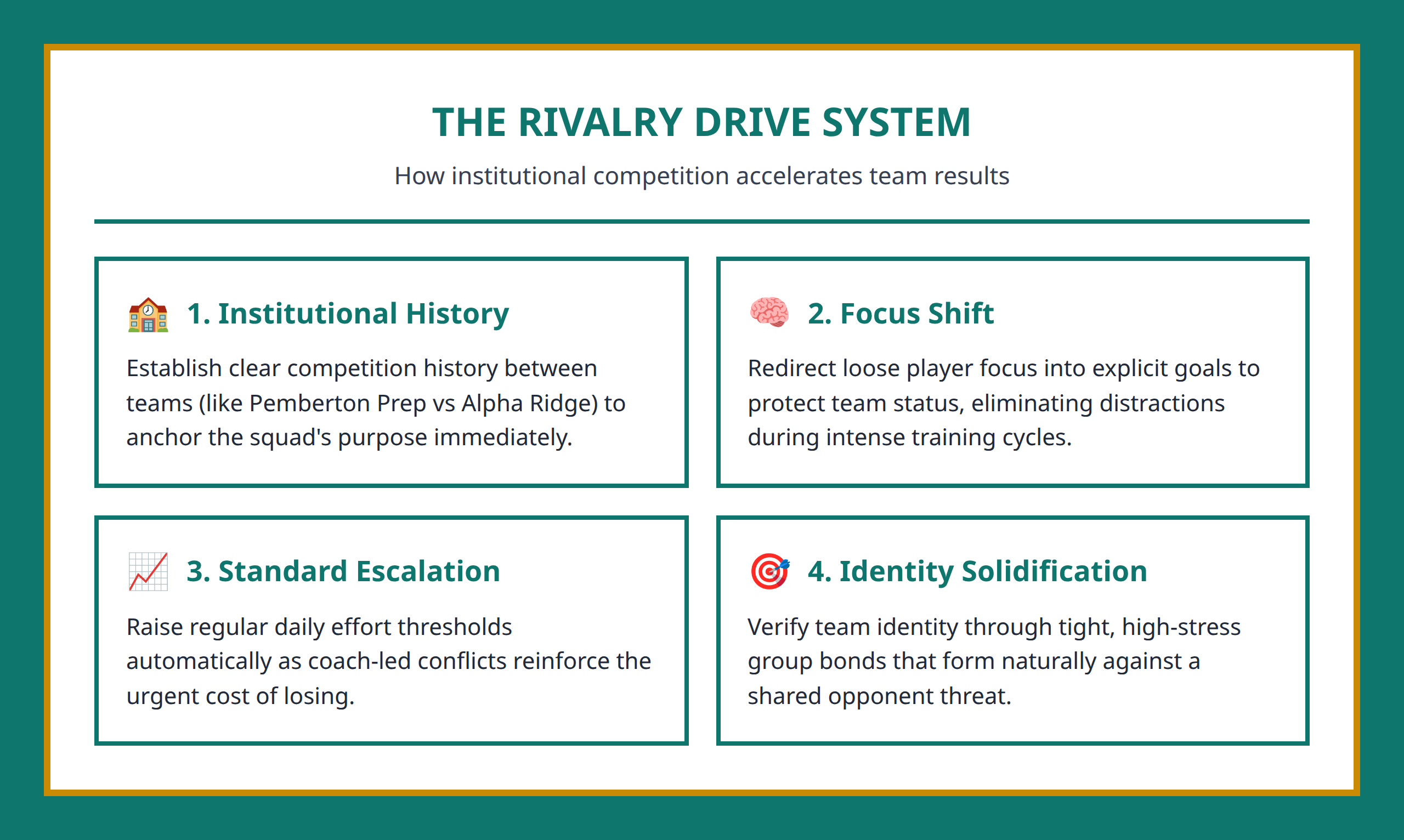
Many teams say they want to “improve” or “win,” but those goals often stay too broad to create urgency during daily routines. A rivalry changes that. Suddenly there is a visible opponent tied to pride, reputation, and identity.
That emotional target creates intensity almost immediately. You can see it in small moments before competition even starts: coaches reading too deeply into comments, athletes noticing who arrived first, teams reacting emotionally to simple interactions on the field.
What matters psychologically is not just the opponent itself, but what the opponent represents. Rival teams often symbolize status, legitimacy, superiority, or respect. Once those emotional meanings appear, performance pressure becomes much stronger.
I think this is why some teams look flat against average opponents but suddenly become hyper-focused against rivals. The rivalry compresses attention. Players stop drifting mentally because every interaction feels important.
Competition Between Leaders Spreads Through the Entire Team
One detail people often miss is how quickly emotional rivalry between leaders transfers to the group.
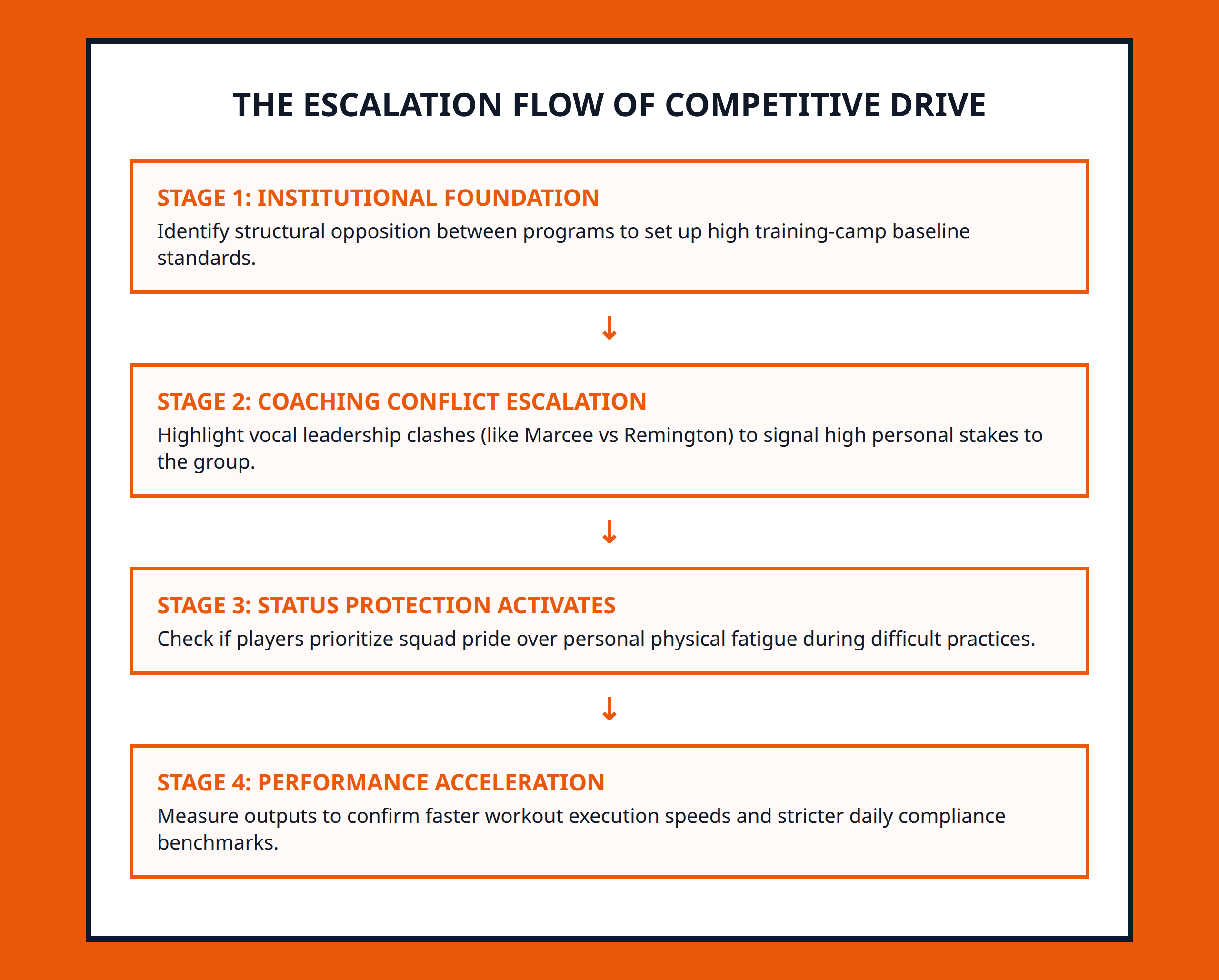
When coaches challenge each other publicly or privately, players absorb the tension almost immediately. That does not require dramatic speeches. Sometimes it starts with sarcasm, dismissive comments, visible confidence, or subtle attempts to establish authority.
A team notices all of it.
Imagine two coaches arriving at the same training camp. One treats the other like inexperienced competition. The second coach responds defensively and becomes determined to prove herself. Before long, the athletes start mirroring that emotional intensity. Practices become sharper because nobody wants to appear weaker than the rival side.
That emotional escalation can be productive when it increases preparation standards. I would much rather coach a team that feels emotionally invested than one that treats competition like a routine obligation.
But rivalry also creates a danger: leaders sometimes confuse emotional intensity with effective preparation.
That distinction matters. A coach who spends more energy on proving superiority than improving execution can accidentally push the team toward emotional exhaustion instead of growth.
Rivalries Create Faster Team Identity Formation
Most teams struggle early because identity takes time to develop. Players may technically belong to the same roster while still thinking like individuals.
Rivalry accelerates that process.
Once an outside opponent becomes emotionally significant, internal unity often strengthens automatically. Players start speaking in terms of “us” versus “them.” Shared frustration, shared pressure, and shared goals become easier to build around.
I notice this especially in environments where the team is still new or uncertain. Rivalry gives people a reason to commit emotionally before trust fully develops.
A simple example is a preseason training camp. Athletes may arrive distracted, socially fragmented, or unsure about leadership. Then a respected rival team appears nearby. Suddenly the group pays closer attention during drills. Conversations become more focused. Team members start defending each other socially because group identity is forming in real time.
The rivalry acts like a shortcut for emotional cohesion.
That does not mean the team culture becomes healthy automatically. It only means the emotional walls between teammates start dropping faster because external pressure pushes them together.
Pressure Makes Weaknesses Impossible to Ignore
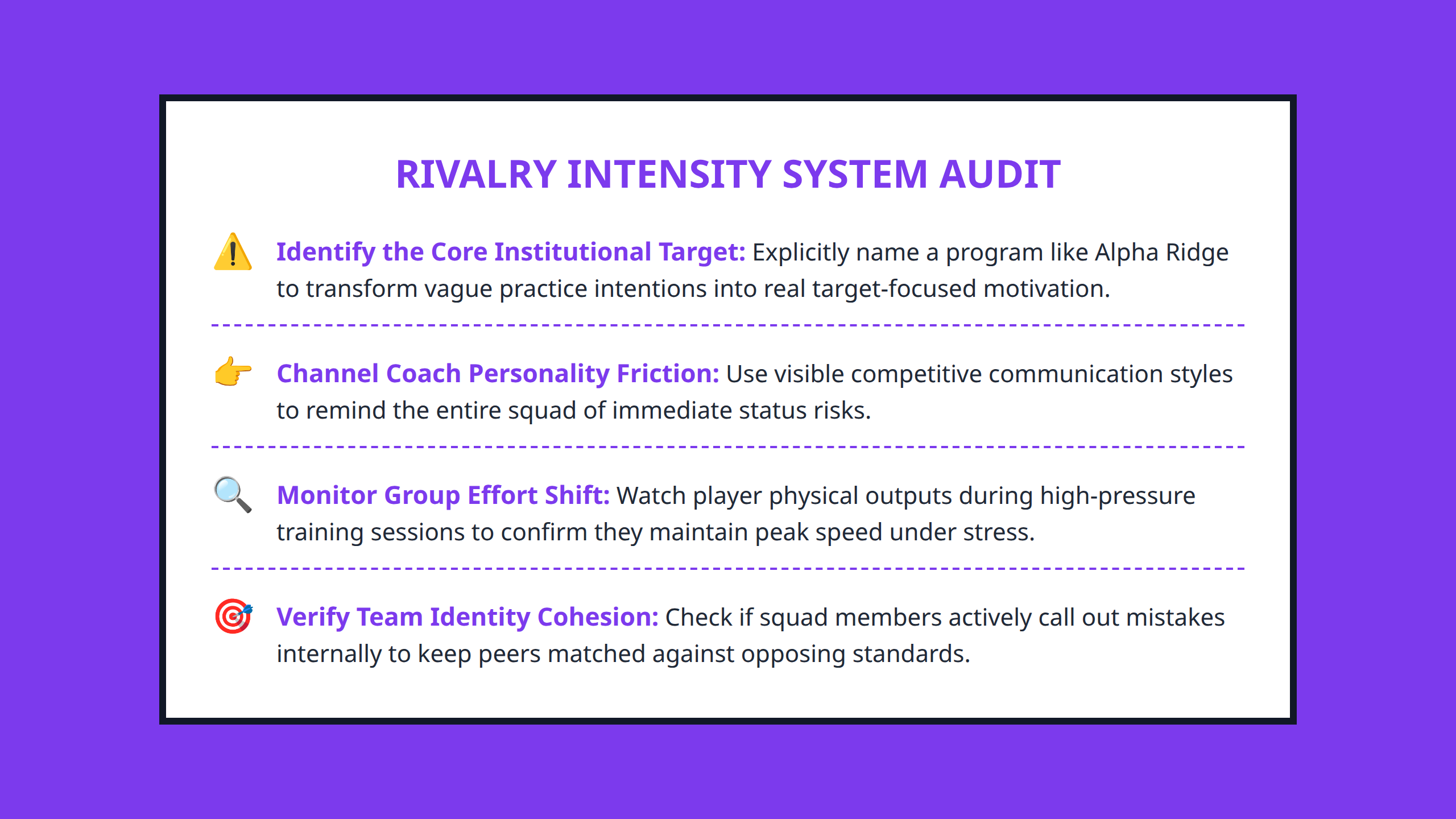
Rivalries also expose weak systems very quickly.
That is one of their most useful functions.
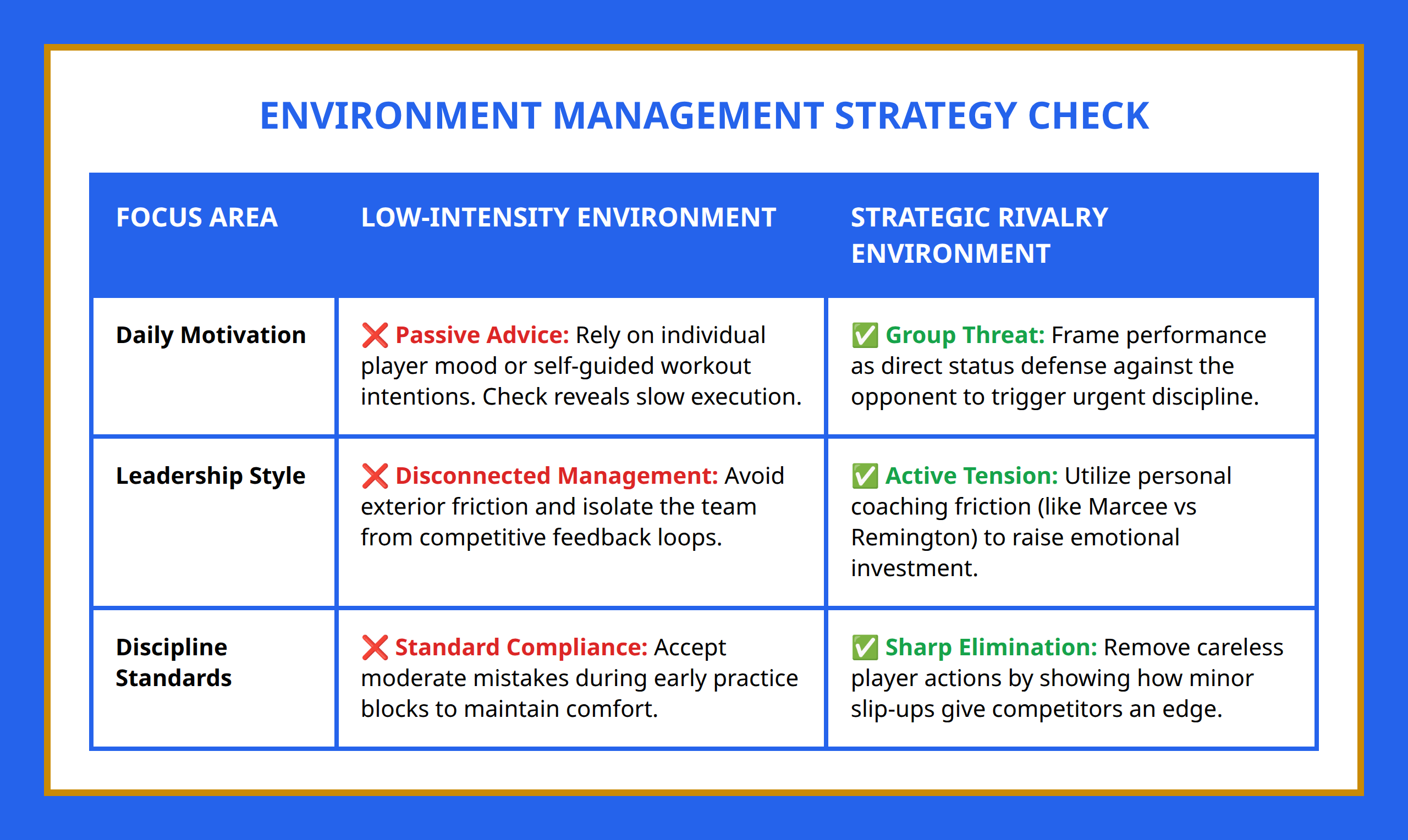
Without meaningful competition, teams can hide behind routines that feel productive but are not actually demanding. A rivalry increases scrutiny. Coaches notice discipline problems sooner. Athletes become more aware of conditioning gaps, communication breakdowns, and emotional inconsistency.
I think strong rivalries often force honesty that normal environments avoid.
A coach may tolerate sloppy effort during ordinary practices, but not when a rival is watching from the next field. Players may ignore tactical mistakes during casual competition, but not when losing would feel humiliating.
The emotional stakes create sharper self-awareness.
That can be uncomfortable. Rivalries often increase insecurity along with motivation. But psychologically, that discomfort can become useful if the team responds with structure instead of panic.
The Best Rivalries Raise Standards Without Creating Chaos
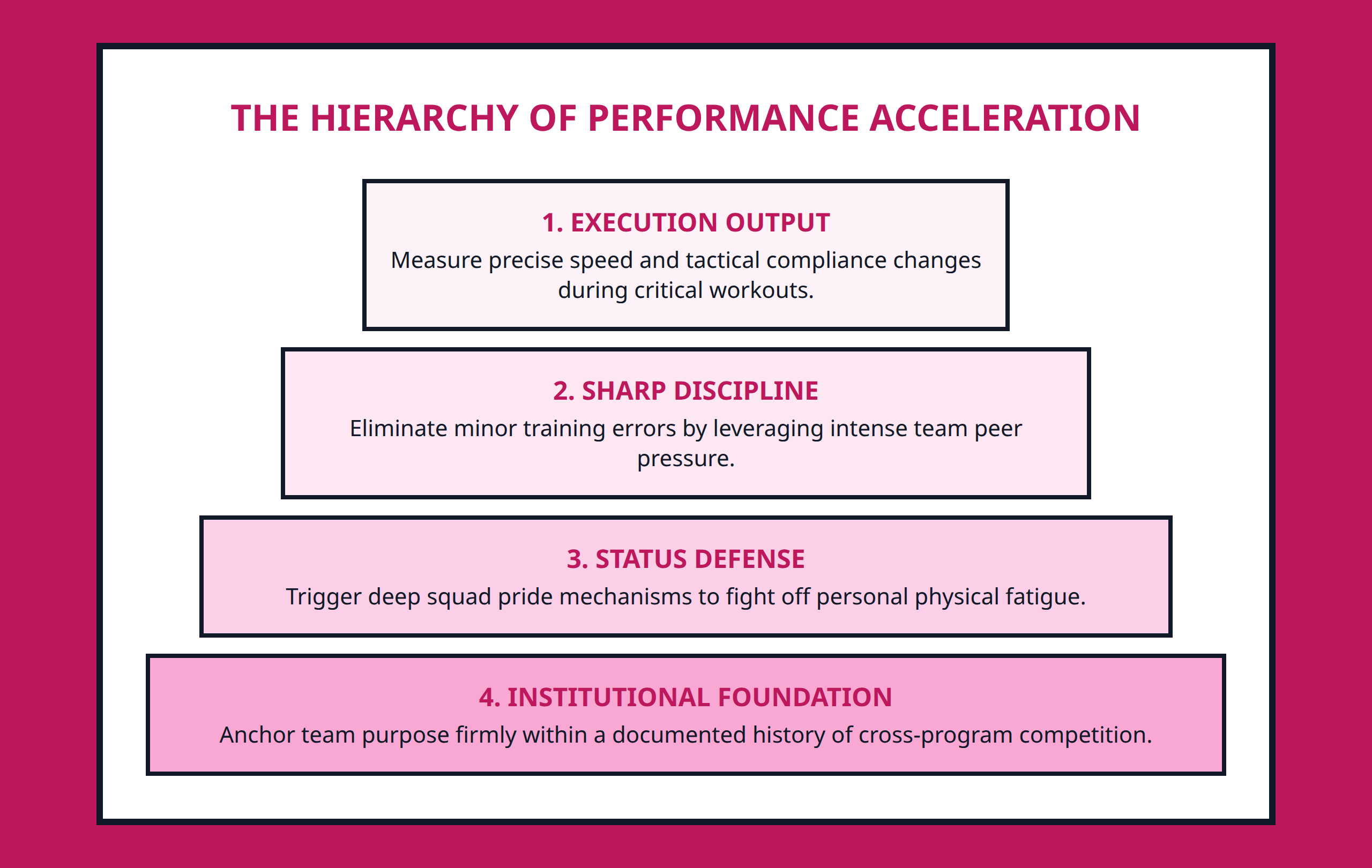
Not every rivalry improves performance.
Some rivalries simply create distraction, resentment, and emotional volatility. Teams become obsessed with proving superiority instead of improving fundamentals.
The healthiest rivalries usually have three characteristics:
- The rivalry increases preparation standards.
- The rivalry strengthens internal accountability.
- The rivalry keeps attention on execution rather than personal drama.
That balance is difficult because rivalry naturally pulls people toward ego. A coach wants respect. Players want validation. Teams want symbolic victories that prove something larger than the scoreboard.
But once rivalry becomes entirely personal, performance often declines.
I would pay attention to one practical question: Does the rivalry make the team more disciplined or merely more emotional?
The answer usually reveals whether the competitive environment is helping or hurting.
Why Rivalries Feel So Intense Even Outside Competition
One thing I find fascinating is how rivalry pressure extends far beyond actual games.
Teams carry it into meals, travel, warmups, casual conversations, and even body language. People start interpreting ordinary moments symbolically. A comment becomes disrespect. Confidence becomes arrogance. Small victories become proof of superiority.
That emotional spillover matters because it keeps the rivalry psychologically active long before competition begins.
In practical terms, this means teams often enter competition emotionally exhausted before the first whistle if leaders do not manage the atmosphere carefully.
At the same time, controlled emotional intensity can improve preparation dramatically. Athletes often train harder when they feel observed by meaningful rivals. Coaches become more precise because mistakes suddenly feel visible.
Rivalry creates emotional consequences for mediocrity.
That is why competitive environments can sharpen performance so effectively when the pressure stays directed toward standards instead of personal resentment.
The Most Useful Rivalries Change How People See Themselves
At its best, rivalry does not just create better short-term performance. It changes identity.
People begin expecting more from themselves because the competitive environment no longer allows passive participation. Teams stop seeing preparation as optional. Coaches stop tolerating ambiguity. Athletes stop separating effort from outcome.
I think that is the real psychological value of rivalry.
It forces people to decide whether they truly want excellence or only like the idea of it.
A rivalry exposes the difference very quickly.
And in strong competitive environments, that pressure often becomes the exact thing that transforms a collection of individuals into a serious team.
References:
- https://www.drpaulmccarthy.com/post/why-group-dynamics-in-sport-make-or-break-team-success-a-coach-s-guide
- https://pubmed.ncbi.nlm.nih.gov/29489442/
- https://research.uky.edu/news/behind-blue-psychology-behind-sports-rivalries-why-we-love-loathe-other-team
- https://sirc.ca/articles/the-paradox-of-competition-and-cooperation-finding-the-balance-in-team-sport/
- https://premiersportpsychology.com/2016/12/05/rivalry-the-good-the-bad-and-the-ugly/
- https://journals.indianapolis.iu.edu/index.php/sij/article/view/27691
- https://www.peaksports.com/sports-psychology-blog/mindset-for-playing-rivalries/
- https://www.psychologicalscience.org/publications/observer/obsonline/how-rooting-for-a-rival-could-help-your-team.html
- https://www.drpaulmccarthy.com/post/the-unseen-battles-how-rivalry-shapes-the-minds-of-athletes
- https://www.tandfonline.com/doi/full/10.1080/16184742.2016.1188842
- https://www.bbc.co.uk/bitesize/guides/zffrnrd/revision/3
- https://guides.newman.baruch.cuny.edu/porter/competitive_rivalry