Many emotional habits inside families are inherited long before they are questioned. Understanding these patterns can help people stop repeating forms of emotional disconnection they never consciously chose.
One thing I keep noticing in conversations about family dynamics is how often people describe painful relationship patterns as if they appeared out of nowhere. But emotional disconnection rarely starts with one person. It usually travels quietly through generations.
A parent who struggles to express affection may have grown up in a home where vulnerability felt unsafe. Someone who becomes emotionally controlling may have learned early that unpredictability creates fear. Even emotional silence inside families often has a long history behind it.
That does not excuse harmful behavior. But it changes how I interpret it. Instead of seeing family patterns as isolated personality flaws, I see many of them as emotional survival systems passed from one generation to the next.
Most Families Pass Down Emotional Habits Without Naming Them
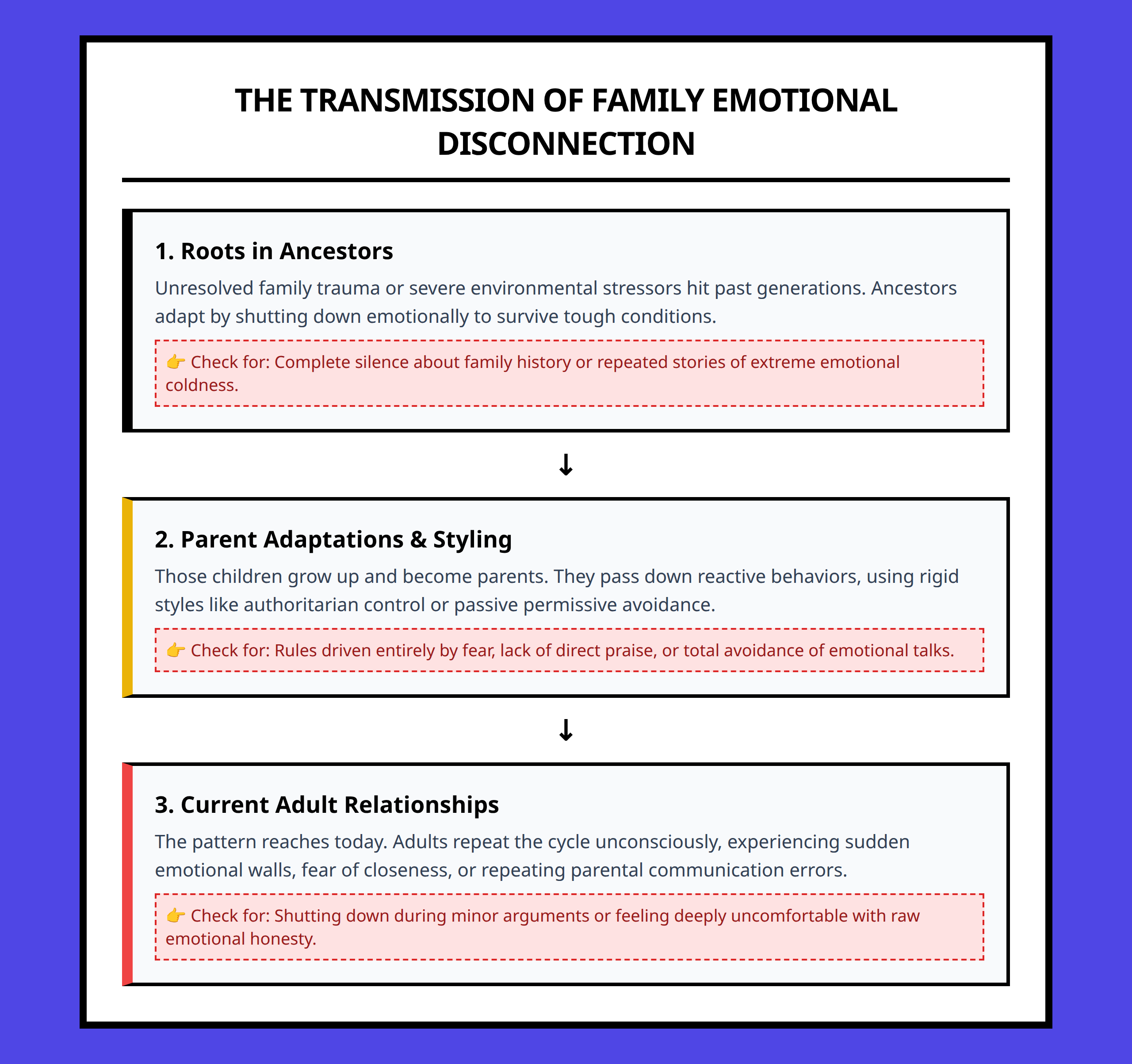
Families transmit emotional behavior constantly, even when nobody talks about emotions directly.
Children learn from tone, reactions, conflict patterns, emotional availability, and what happens when someone expresses vulnerability. They notice who gets ignored, who gets criticized, who stays silent, and who is allowed to have emotional needs.
I think this explains why many adults repeat relational behaviors they consciously dislike. Emotional patterns are often learned before they are evaluated.
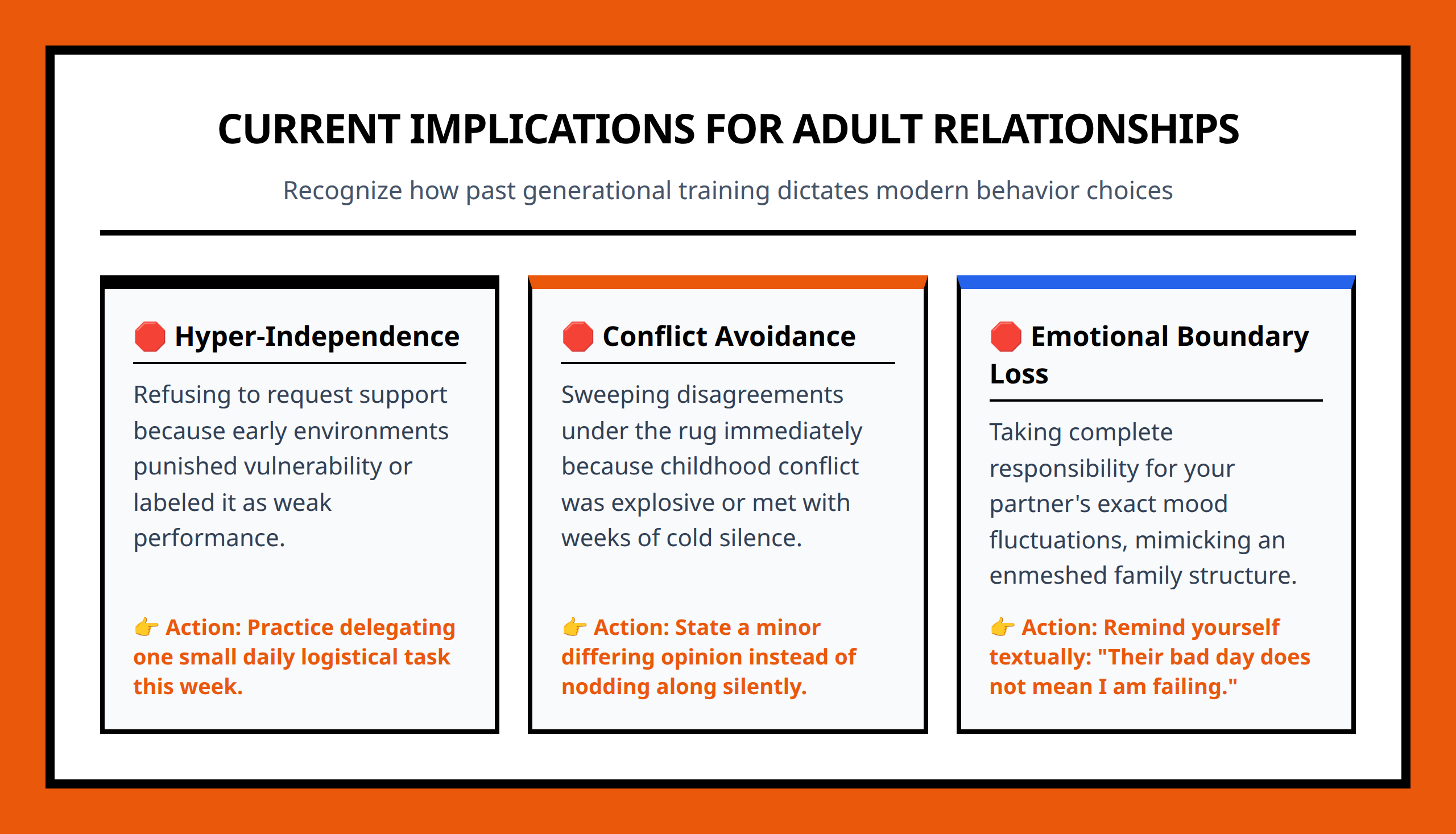
A child raised in a home where anger was explosive may later become conflict-avoidant in adult relationships. Another child raised around emotional withdrawal may learn to suppress feelings entirely because openness never seemed welcome.
These adaptations usually make sense inside the original environment. The problem comes later when those same strategies limit emotional intimacy and safety in adult life.
Authoritarian Homes Often Teach Fear Before Connection
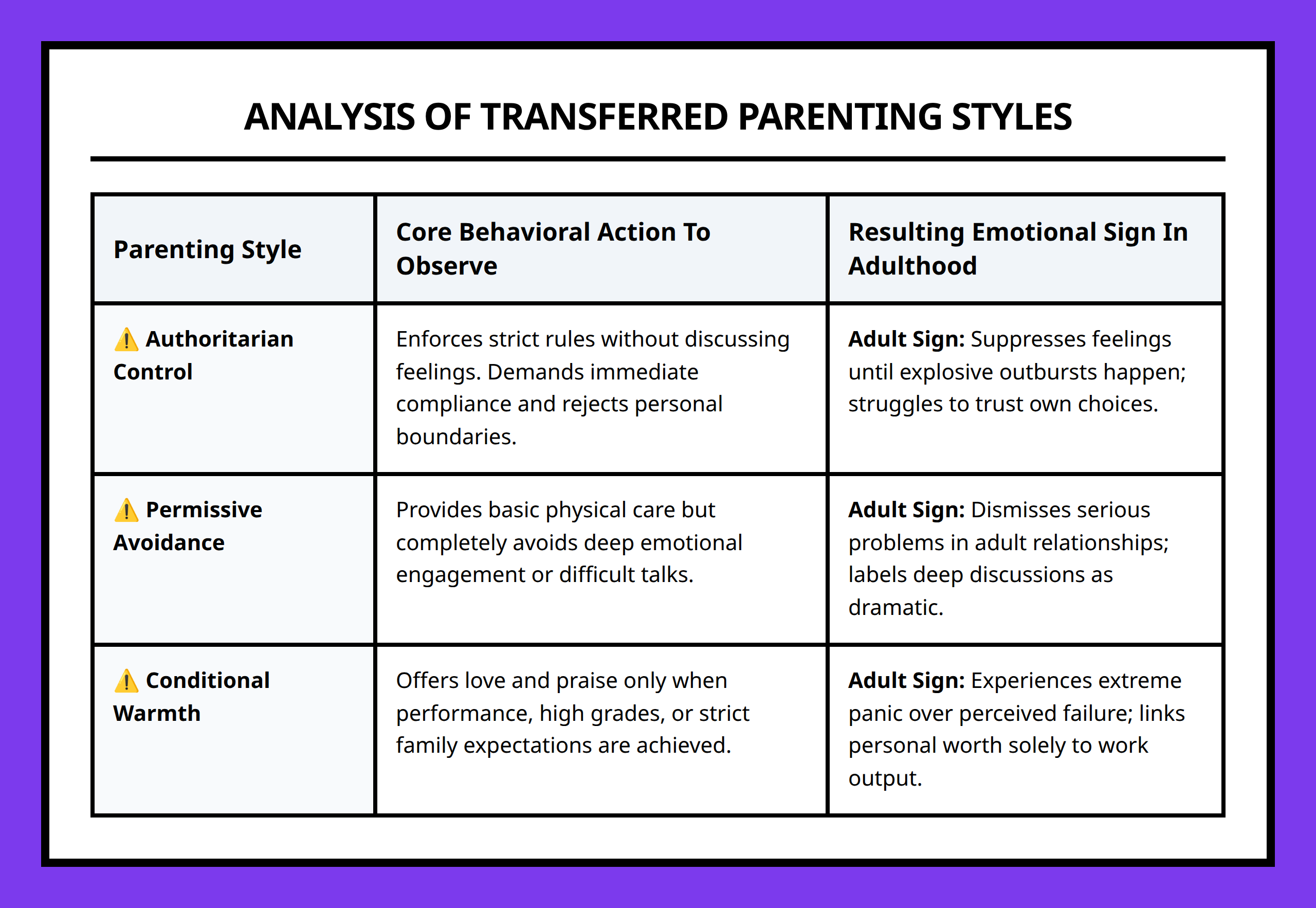
Authoritarian parenting environments are often structured around obedience, control, punishment, and emotional hierarchy.
In these homes, children may learn that emotional expression creates consequences rather than connection.
I would pay close attention to what happens when children are only valued for compliance. Many grow up highly skilled at monitoring authority figures while struggling to recognize their own emotional needs.
As adults, this can show up as:
- difficulty setting boundaries
- fear of disappointing others
- people-pleasing during conflict
- emotional shutdown under criticism
- confusing control with care
A realistic example might look surprisingly ordinary. Someone receives mild feedback from a partner and immediately feels intense shame or panic, even though the conversation itself is calm. Their nervous system may still associate mistakes with emotional danger.
What stands out to me is that these reactions often persist long after the original authority figure is gone.
Permissive or Emotionally Inconsistent Homes Create Different Problems
Not all emotional disconnection comes from strict households.
In permissive or emotionally inconsistent homes, children may receive affection and attention unpredictably. Boundaries may shift constantly. Emotional support may depend on the caregiver’s mood, stress level, or availability.
This inconsistency creates confusion around emotional security.
I think many adults from these environments become hyperfocused on maintaining connection because stability never felt guaranteed. They may overanalyze relationships, tolerate emotional instability, or become highly reactive to signs of distance.
One detail I find important is that inconsistency often teaches children to prioritize emotional survival over emotional clarity. They learn to read the room constantly instead of developing a stable internal sense of safety.
Some Families Normalize Emotional Disconnection Entirely
In some families, emotional absence becomes the norm.
People may avoid difficult conversations completely. Affection may feel awkward or nonexistent. Painful experiences may be minimized, ignored, or treated like weakness.
Children raised in these environments often learn that emotional needs should stay hidden.
I do not think this always happens because caregivers lack love. In many cases, emotional numbness itself was inherited.
A parent who never received emotional attunement may genuinely struggle to offer it. Someone raised in survival-focused environments may prioritize practical responsibilities while remaining emotionally disconnected from themselves and others.
The result is often a family culture where people live near each other emotionally but rarely feel deeply known.
The “Cycle Breaker” Usually Feels Different From the Family System
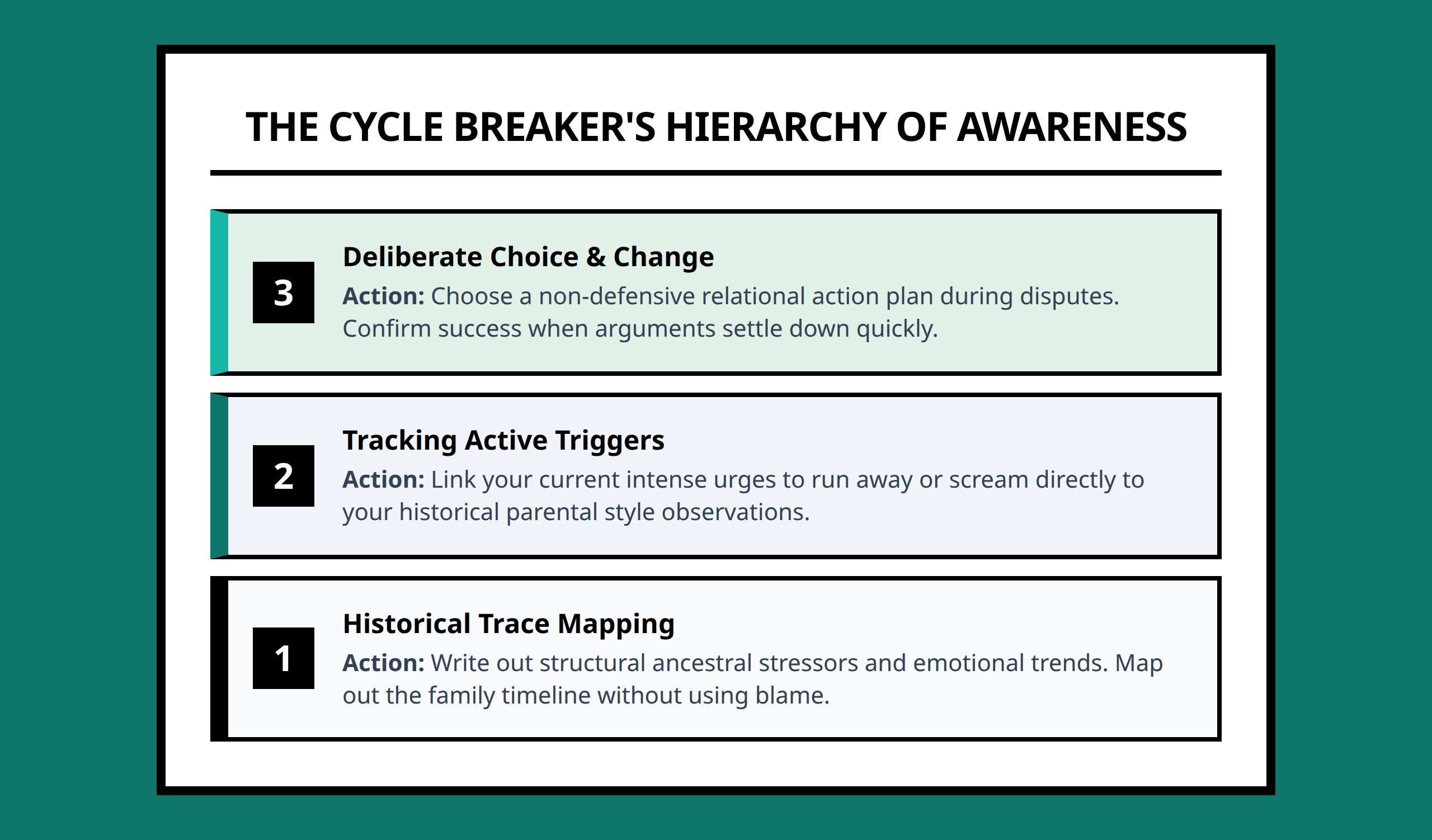
One of the most emotionally difficult positions inside a family is becoming the person who starts questioning inherited patterns.
The cycle breaker is often the first person willing to notice:
- how conflict is handled
- how affection is expressed
- which emotions are allowed
- how shame and criticism operate
- what kinds of behavior are normalized
I think people underestimate how uncomfortable this role can feel. Breaking family patterns does not only involve learning new behaviors. It often involves tolerating misunderstanding, resistance, guilt, or emotional distance from the original system.
A person may start setting boundaries for the first time and immediately feel selfish. Someone else may try communicating openly in a family that avoids emotional conversations entirely and get treated as “too sensitive.”
That discomfort does not automatically mean the change is wrong.
Awareness Alone Is Not Enough to Interrupt a Pattern
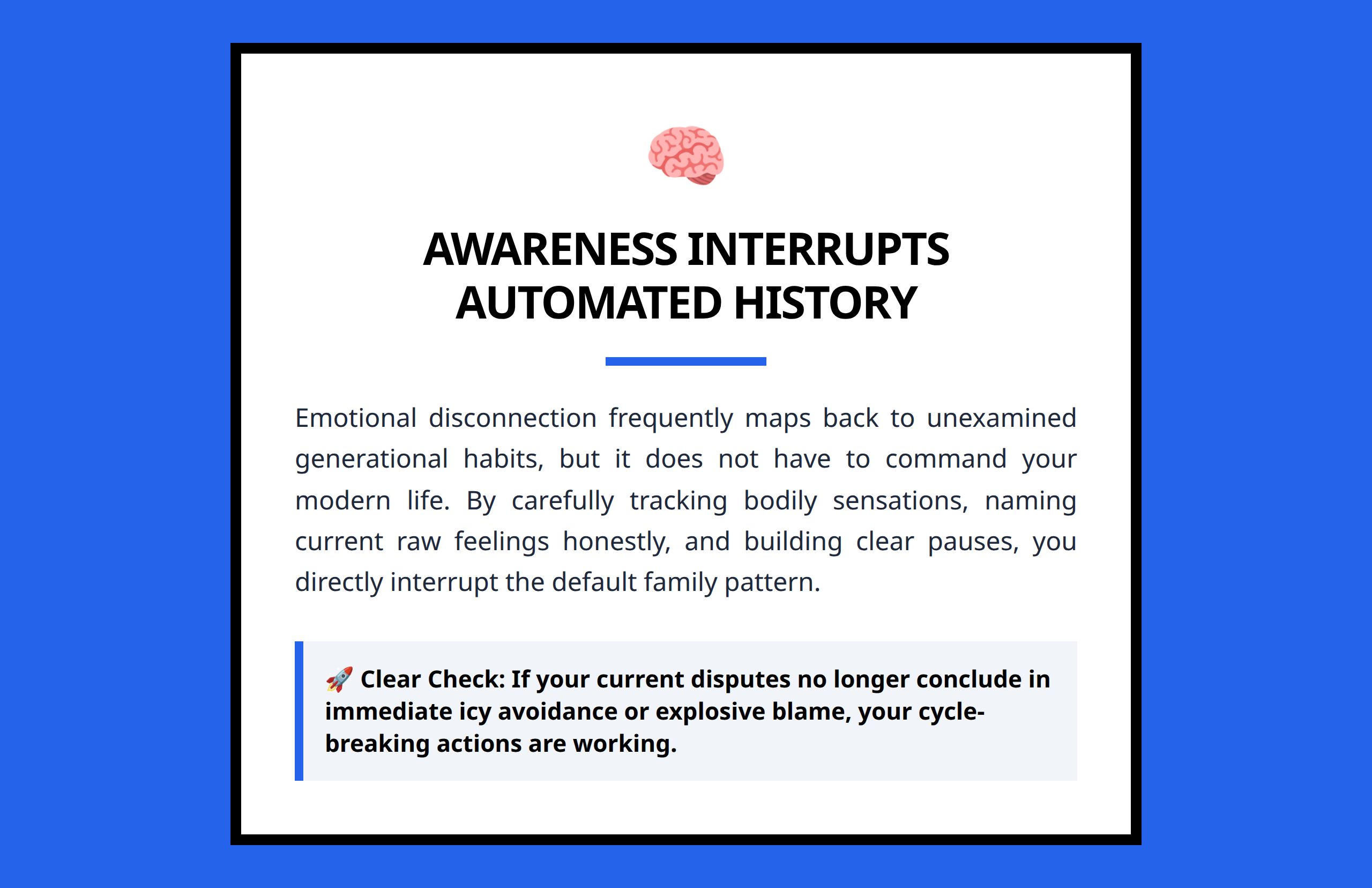
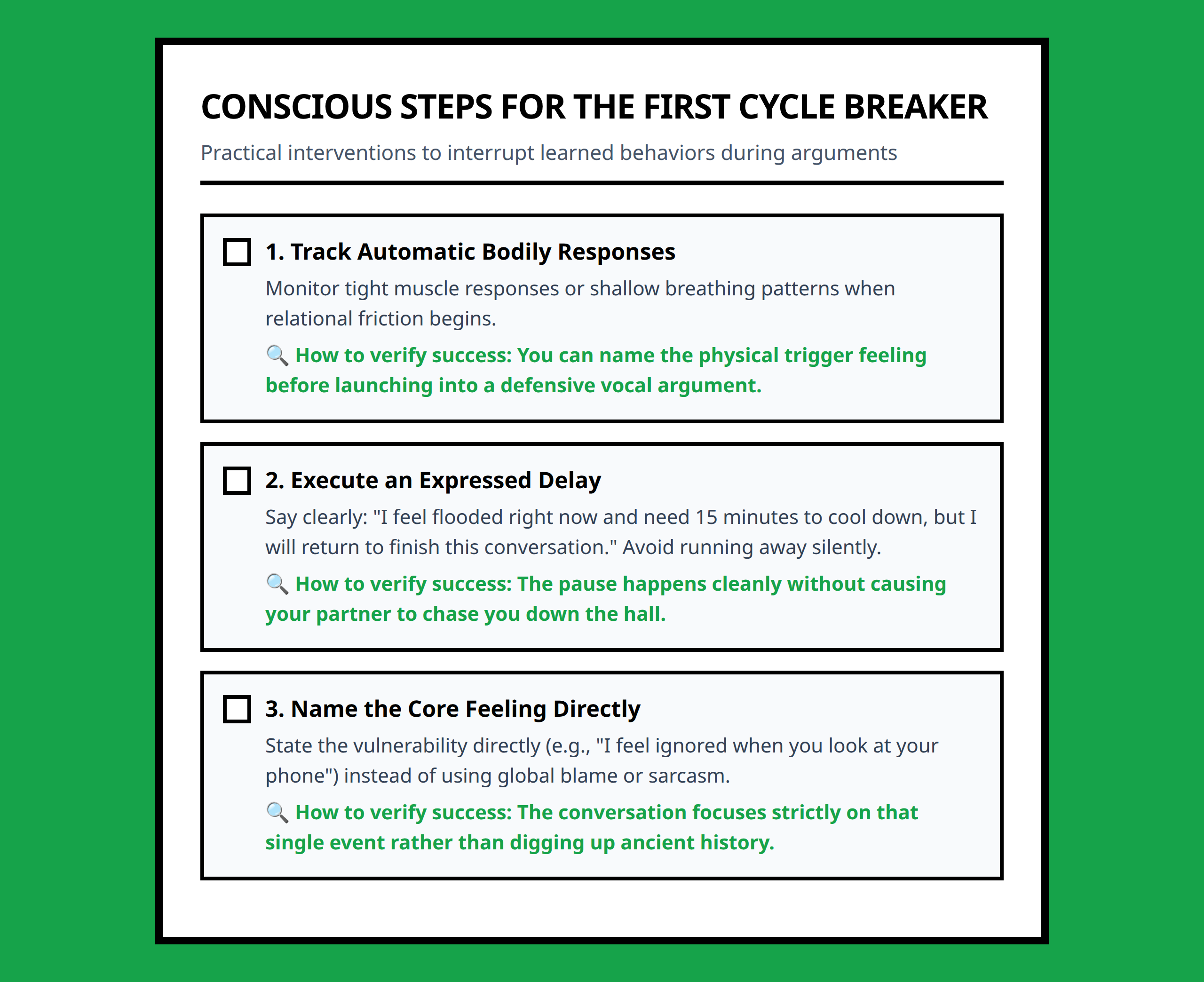
Recognizing a family pattern matters, but awareness by itself usually does not create change.
I would look carefully at the moments when inherited behaviors activate automatically.
For example:
- Do you become emotionally defensive during disagreement?
- Do you shut down when someone needs emotional closeness?
- Do you tolerate disrespect because conflict feels dangerous?
- Do you confuse emotional intensity with love?
Those automatic responses often reveal where the family system still lives inside adult relationships.
Interrupting the cycle usually requires practicing new relational experiences repeatedly. That may involve learning emotional regulation, communicating more directly, tolerating healthy conflict, or staying emotionally present instead of defaulting to old protection strategies.
Breaking the Cycle Often Changes Adult Relationships First
One reason I think intergenerational patterns matter so much is that they quietly shape adult partnerships, friendships, and parenting styles.
Someone raised around criticism may unintentionally recreate criticism in romantic relationships. Someone who grew up emotionally neglected may struggle to recognize healthy care when it appears.
But new patterns can also spread across relationships.
When one person learns to repair after conflict instead of withdrawing completely, the emotional tone of the relationship changes. When someone stops using shame as a communication tool, emotional safety increases for everyone around them.
These shifts may seem small, but they interrupt emotional inheritance in real time.
The Goal Is Not to Blame Previous Generations
I do not think healing family patterns requires turning parents or grandparents into villains.
Many people passed down emotional strategies they never had the chance to question themselves. Some survived environments shaped by trauma, scarcity, instability, addiction, violence, discrimination, or emotional neglect.
Understanding that context matters.
At the same time, understanding a pattern is different from continuing it automatically.
The most meaningful shift often happens when someone can hold both truths together: compassion for where the pattern came from and responsibility for what they choose to continue.
That is usually where emotional inheritance finally starts to change.
References:
- https://www.psychologytoday.com/sg/blog/your-emotional-meter/202502/breaking-family-intergenerational-patterns-gently
- https://www.youtube.com/watch?v=1HecUxp0Zs0
- https://anniewright.com/break-intergenerational-trauma-cycles-driven-women/
- https://health.clevelandclinic.org/generational-trauma
- https://www.reneecalhounlmft.com/breaking-generational-patterns
- https://www.researchgate.net/publication/343199724_The_Family_Cycle_Breaking_the_Intergenerational_Transmission_of_Trauma_through_Mentalizing
- https://riviamind.com/blog/how-to-heal-intergenerational-trauma-and-break-family-cycles/
- https://rodgerscc.com/breaking-generational-patterns/
- https://www.bambiweb.org/news/breaking-cycle-moving-past-generational-trauma-brighter-future