A healthy support system is not only about having people around you. It is about knowing which relationships create emotional safety, mutual care, and genuine attunement over time.
I think many people confuse social access with emotional support. Someone may have dozens of contacts, active group chats, and regular social plans while still feeling emotionally isolated during difficult moments.
What matters more than the size of a social network is the quality of emotional safety inside it. Some relationships calm the nervous system. Others quietly increase stress, self-protection, or emotional exhaustion.
That difference becomes much easier to see once you start thinking about relationships intentionally instead of treating every connection as emotionally equal.
The Relationship Circle Helps Clarify Emotional Priorities
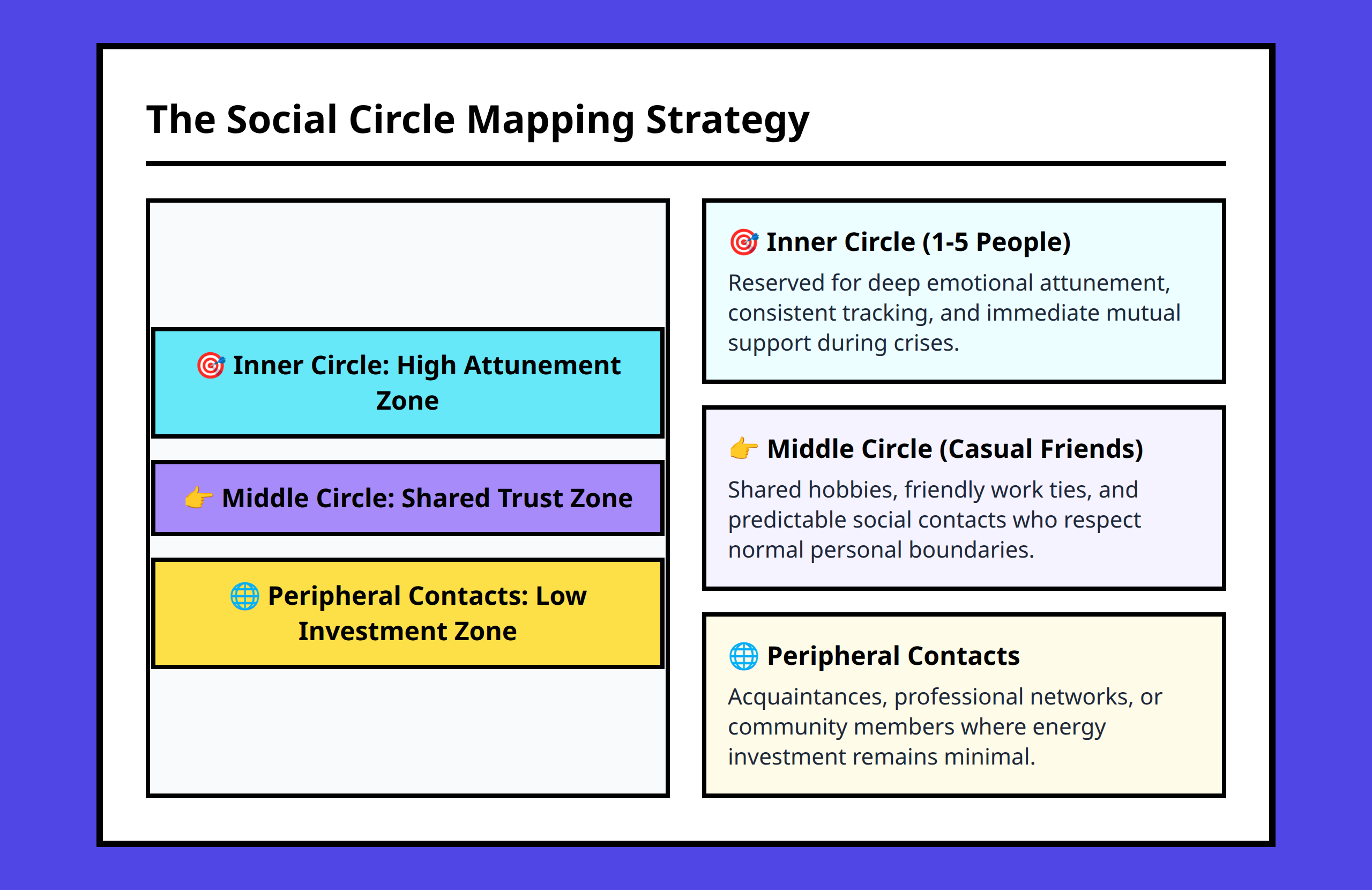
One of the most useful ideas in attachment-focused relationship work is the relationship circle.
Instead of viewing all relationships the same way, this approach encourages people to organize relationships based on emotional safety, trust, reciprocity, and consistency.
I like this framework because it immediately exposes an uncomfortable truth: not everyone should receive the same level of emotional access.
Some people belong in the inner circle. Others belong at a healthy distance.
That distinction matters because many people overinvest emotionally in relationships that repeatedly create confusion, instability, criticism, or emotional depletion.
Your Inner Circle Should Feel Emotionally Safe, Not Emotionally Performative
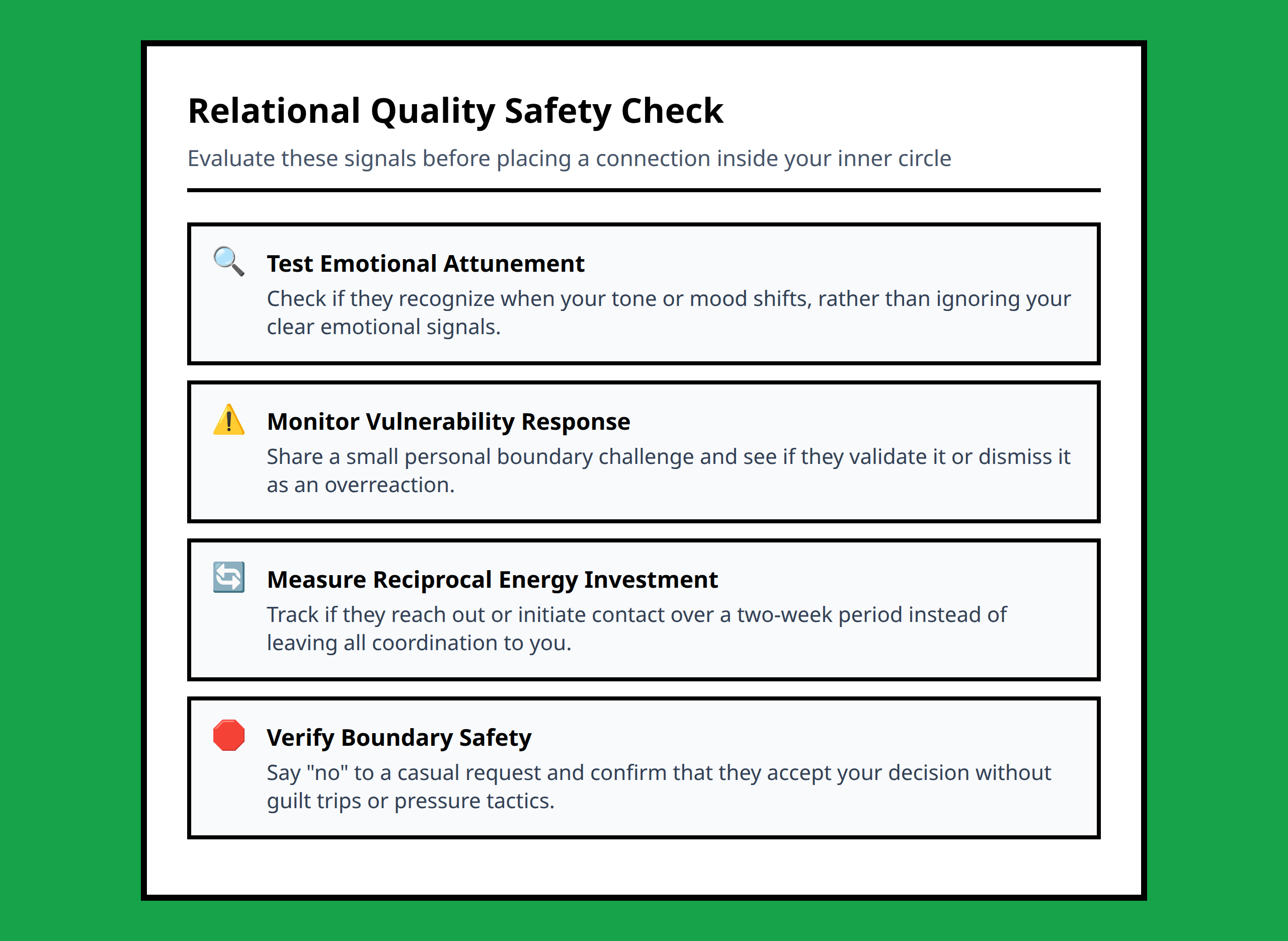
The inner circle represents the people who consistently support emotional safety and attunement.
These are usually the relationships where:
- you can express vulnerability without fear of humiliation
- repair is possible after conflict
- boundaries are respected
- emotional support feels reciprocal
- you do not constantly monitor yourself for safety
I would pay attention to how your body feels around these people, not just how the relationship looks socially.
Sometimes a relationship appears successful from the outside while still feeling emotionally exhausting internally. You may leave interactions tense, hypervigilant, defensive, or emotionally drained.
A relationally safe person usually creates more nervous system stability, not less.
A simple real-life example might be noticing who you instinctively want to contact after a painful day. Most people already know, at a nervous system level, which relationships feel emotionally safer.
Peripheral Relationships Still Matter
Not every relationship needs deep emotional intimacy to have value.
I think people sometimes swing between two extremes: oversharing with everyone or isolating completely. The relationship circle creates healthier emotional gradations.
Peripheral relationships may include:
- friendly coworkers
- activity-based friendships
- neighbors
- casual social connections
- community acquaintances
These relationships can still provide belonging, structure, familiarity, and positive social contact without requiring deep emotional dependence.
What matters is recognizing the difference between supportive contact and emotionally intimate trust.
Assess Relationships by Patterns, Not Occasional Gestures
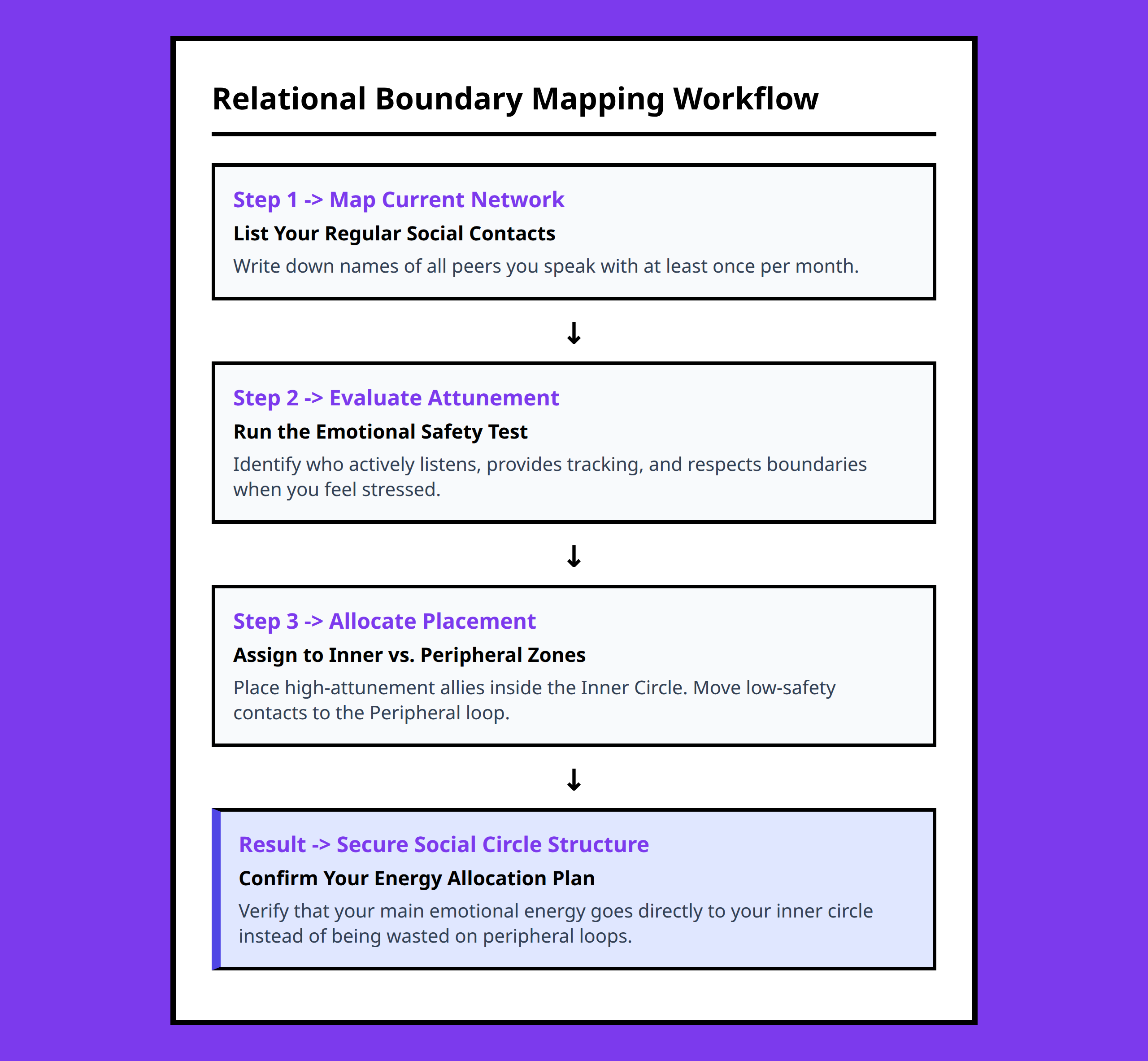
One mistake I think many people make is evaluating relationships based on isolated moments instead of recurring patterns.
Someone may occasionally offer support while remaining emotionally inconsistent most of the time. Another person may appear highly caring publicly while repeatedly dismissing vulnerability privately.
I would look at patterns like:
- How does this person respond when I express pain?
- Do I feel emotionally safer or more guarded after spending time with them?
- Can conflict happen without punishment or emotional withdrawal?
- Is support reciprocal or one-sided?
- Does this relationship require constant self-protection?
Those questions reveal much more than surface friendliness.
Attachment security grows through consistency, not occasional emotional intensity.
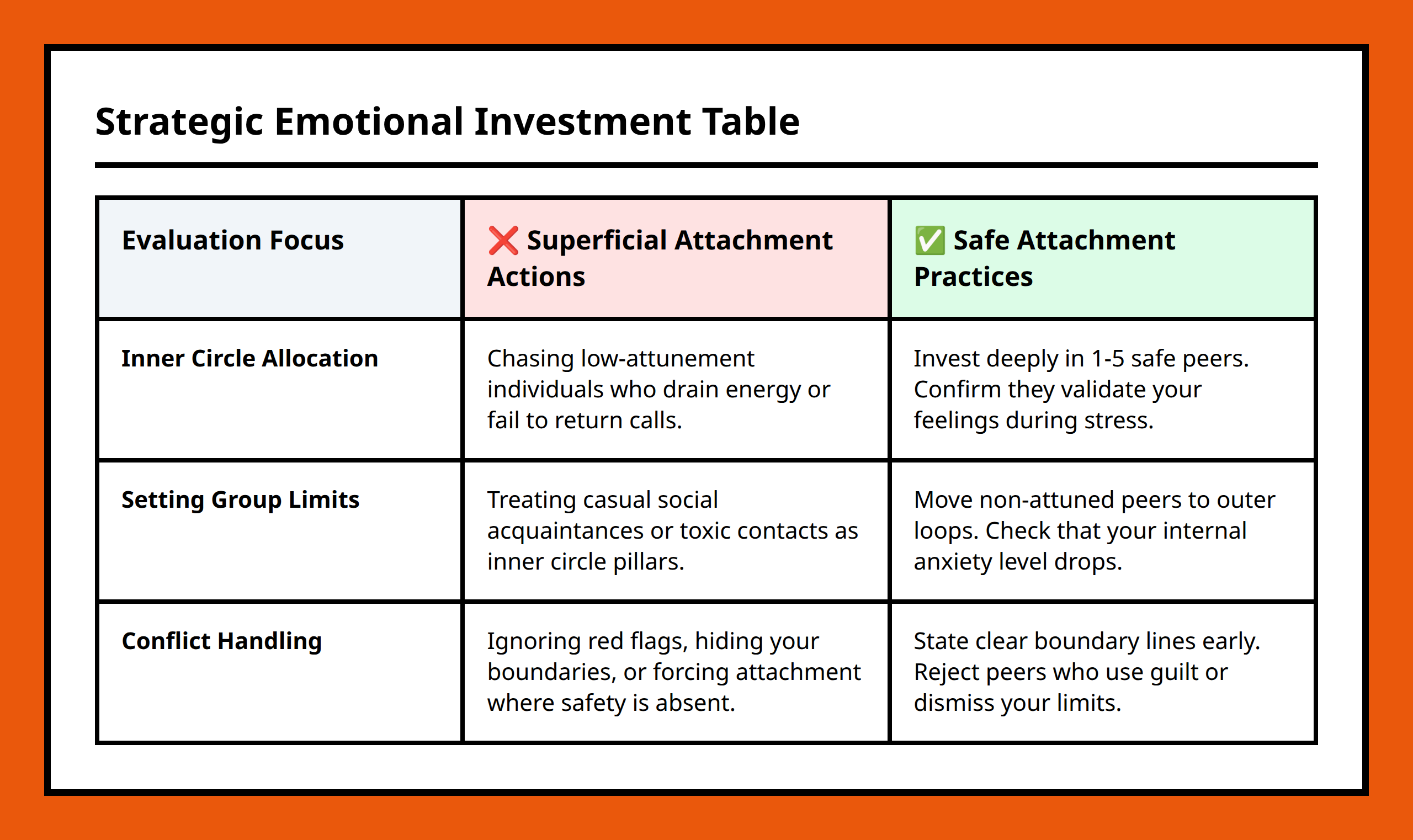
Emotional Investment Should Match Relational Safety
I think many emotionally exhausted people are investing deeply in relationships that repeatedly show limited emotional capacity.
That imbalance creates chronic disappointment.
Relational safety improves when emotional investment becomes more intentional. Instead of giving equal emotional energy to every connection, it helps to prioritize relationships that repeatedly demonstrate trustworthiness, empathy, accountability, and consistency.
This does not mean relationships become transactional. It means emotional access becomes more conscious.
A realistic situation might involve someone who repeatedly confides in a friend who minimizes their feelings, changes the subject, or shares private information carelessly. Eventually, the nervous system starts associating vulnerability with emotional risk.
Protecting emotional energy is not selfish when the goal is relational safety.
Healthy Boundaries Make Safe Relationships Stronger
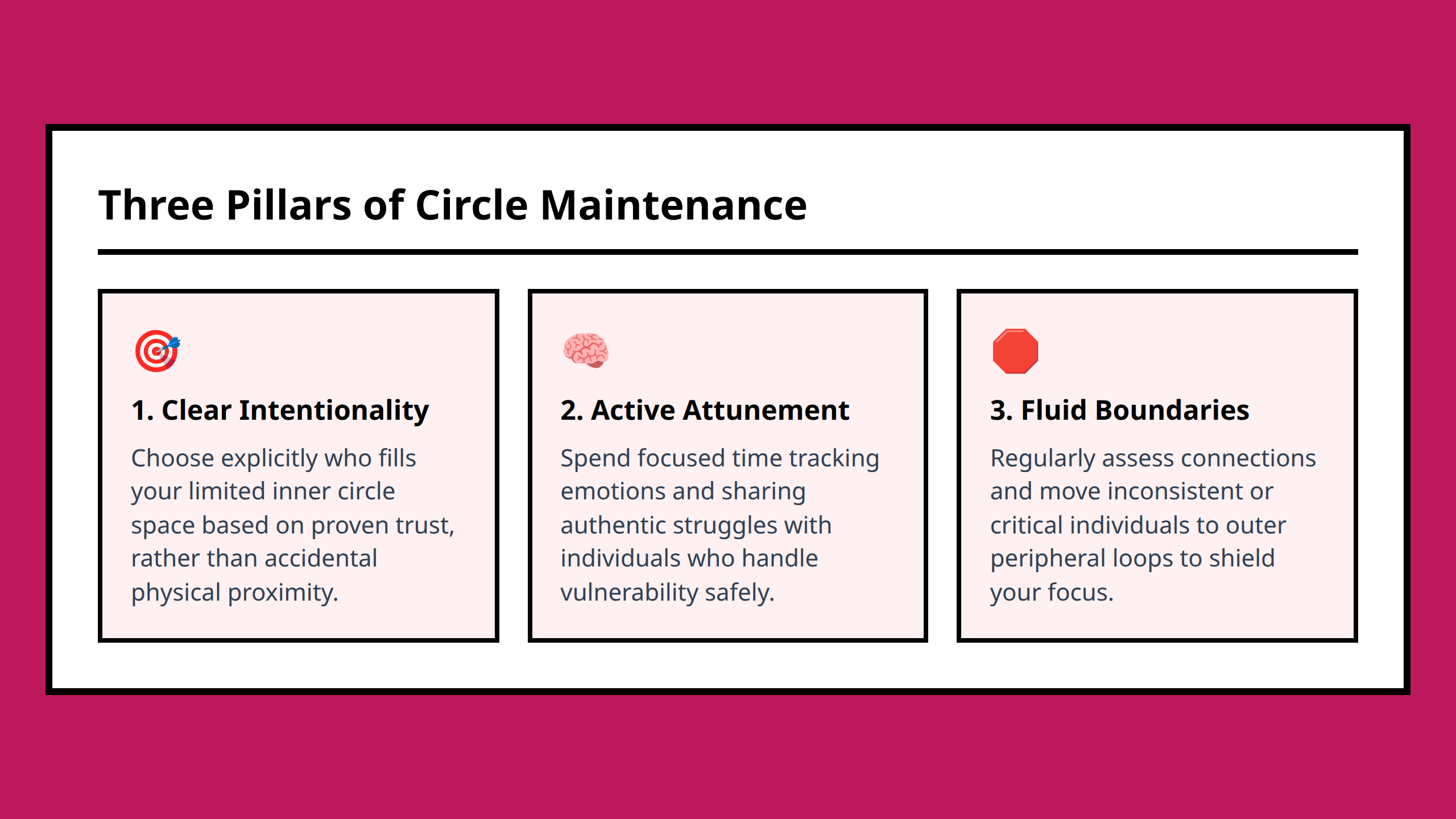
Many people assume boundaries create distance. In reality, healthy boundaries often make closeness more sustainable.
Without boundaries, resentment, emotional exhaustion, and overfunctioning tend to grow quietly.
I would especially pay attention to relationships where saying “no” feels dangerous. Fear around boundaries often reveals an attachment dynamic built on approval, guilt, or emotional instability.
Safe relationships usually allow:
- differences without punishment
- space without abandonment fears
- honest communication without emotional retaliation
- changing needs over time
That flexibility is important because relational circles should remain adaptable, not rigid.
Your Social Circle Will Change as Attachment Security Improves
One thing I find important is that relational priorities often shift during healing.
As people become more emotionally attuned to themselves, they frequently lose tolerance for relationships built around criticism, inconsistency, emotional chaos, or one-sided caretaking.
At the same time, emotionally safe relationships may start feeling more attractive than emotionally intense ones.
That transition can feel surprisingly uncomfortable.
Someone accustomed to unstable relationships may initially experience calm, respectful relationships as unfamiliar or even emotionally “boring.” But nervous system stability often grows slowly through repeated experiences of reliability and emotional safety.
Creating Community Is Less About Popularity and More About Emotional Reliability
I do not think emotionally safe community comes from maximizing social exposure or collecting as many connections as possible.
It usually comes from identifying the people who consistently support mutual care, repair, emotional honesty, and nervous system safety.
That may involve a small circle rather than a large one.
What matters most is whether the relationships allow people to remain emotionally present instead of constantly shifting into self-protection.
A relationally safe support circle is not built through perfection. It is built through repeated experiences of trust, consistency, accountability, and emotional steadiness over time.
References:
- https://www.youtube.com/watch?v=ieyUnZNu0Ec
- https://www.youtube.com/watch?v=HD8kUjrEnz0
- https://www.youtube.com/watch?v=WP5vt-F7tZo
- https://www.psychologytoday.com/sg/blog/in-your-corner/202504/want-better-relationships-start-with-the-circles-of-support
- https://www.unicef.org/adolescentkit/media/2486/file/AdolKit-Guide-Keeping-circles-safe-and-strong-EN.pdf
- https://www.circleofsecurityinternational.com/blogs/resources/core-sensitivities-our-relationship-patterns
- https://physis.co.in/creating-safe-circles/
- https://www.wellnessrecoveryactionplan.com/a-wellness-tool-developing-and-keeping-a-circle-of-support-2/
- https://www.mylifeboat.io/blog/building-circle-support-complete-guide-creating-lasting-connections
- https://sweetinstitute.com/the-importance-of-a-healing-circle-for-relationships/
- https://www.ric.org.au/assets/Uploads/circles-of-support/fc67c032b4/Circles-of-Support-Manual-2019.pdf
- https://www.emmatpsychology.com/resources/the-circle-of-closeness
- https://www.helensandersonassociates.com/relationship-circle/
- https://www.routledge.com/Assessment-in-Couple-Therapy-Navigating-the-7-Cs-of-Relationships/Williams/p/book/9780367753160
- https://www.blanchard.com/blog/who’s-in-your-circle-of-trust