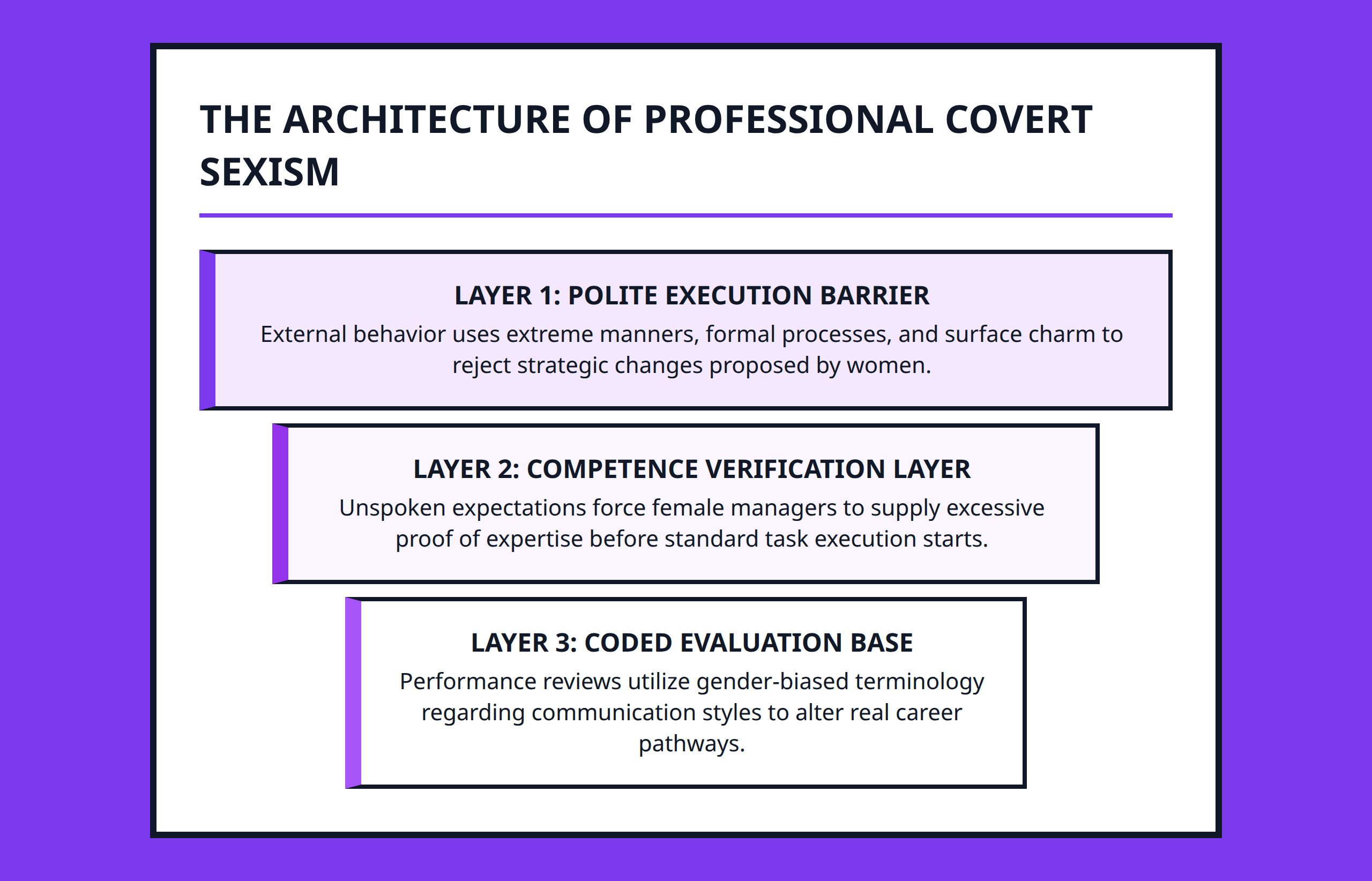
Many people expect sexism in competitive workplaces to look obvious and aggressive. In reality, it often appears through polite skepticism, patronizing advice, selective standards, and coded ideas about who naturally “fits” leadership roles.
I think this is one reason subtle sexism becomes so difficult to challenge. The behavior often arrives wrapped in professionalism, humor, mentorship, or concern. Nothing sounds openly offensive enough to create a clean confrontation, yet the cumulative effect still limits authority and credibility.
What makes these environments psychologically exhausting is not just the bias itself. It is the constant uncertainty around whether the bias will ever be acknowledged directly.
Condescension Often Arrives Before Open Disrespect
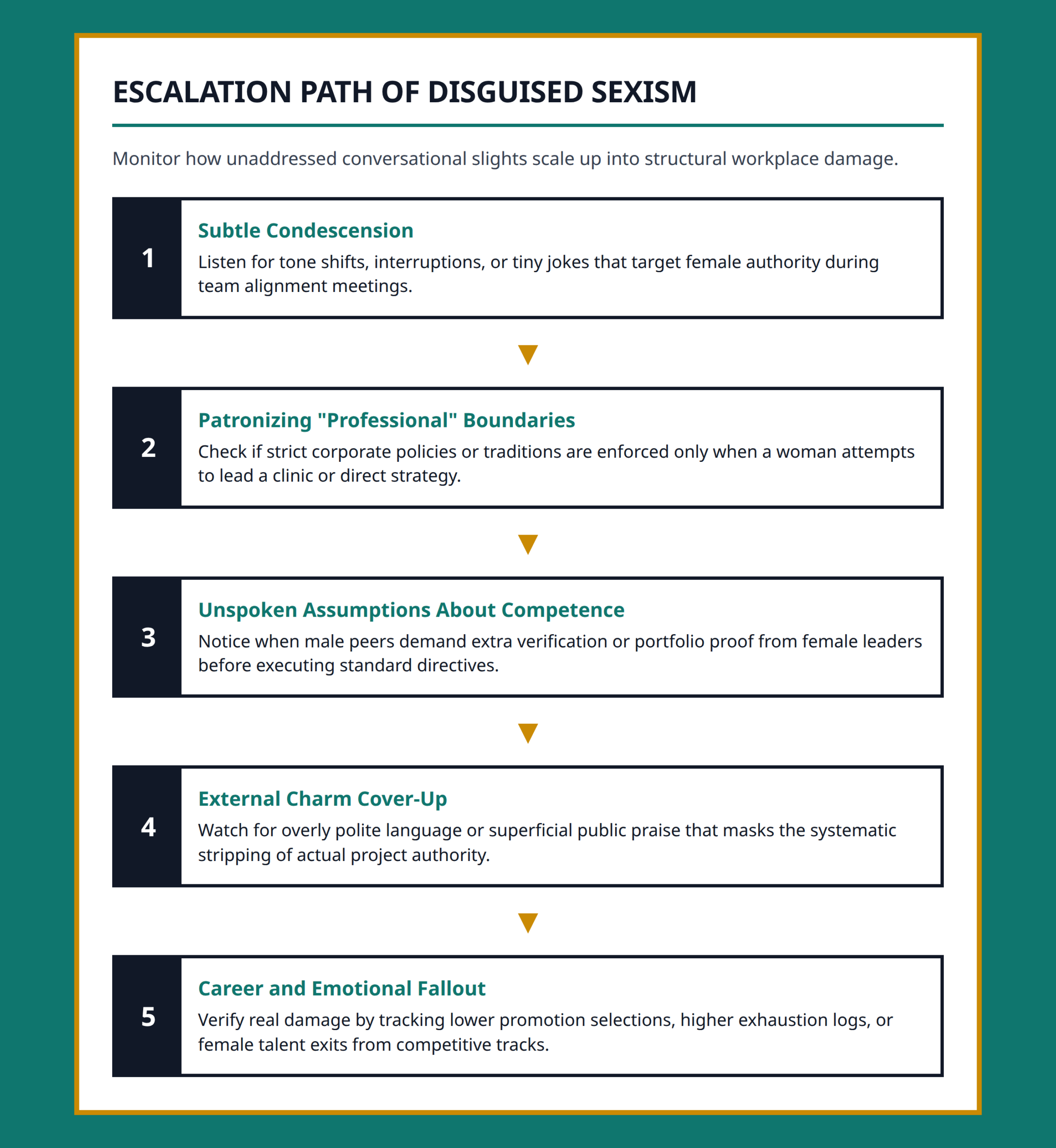
One of the clearest patterns in competitive environments is that sexism rarely starts with direct hostility.
It usually begins with assumptions.
A woman enters a leadership space and immediately receives a different tone: extra explanations, subtle surprise at competence, overly familiar jokes, or comments that quietly frame her as unusual for being there at all.
The important detail is that these interactions can still sound socially acceptable on the surface.
A male colleague may technically remain polite while still communicating doubt through phrasing, tone, or selective concern. Someone may repeatedly explain obvious concepts. Another person may speak as if guidance is necessary before the woman has even demonstrated incompetence.
I think many people underestimate how psychologically destabilizing this becomes over time.
Not because any single interaction seems catastrophic, but because the pattern quietly reframes authority as something the woman must continuously re-earn.
“Professionalism” Can Become a Shield for Unequal Standards
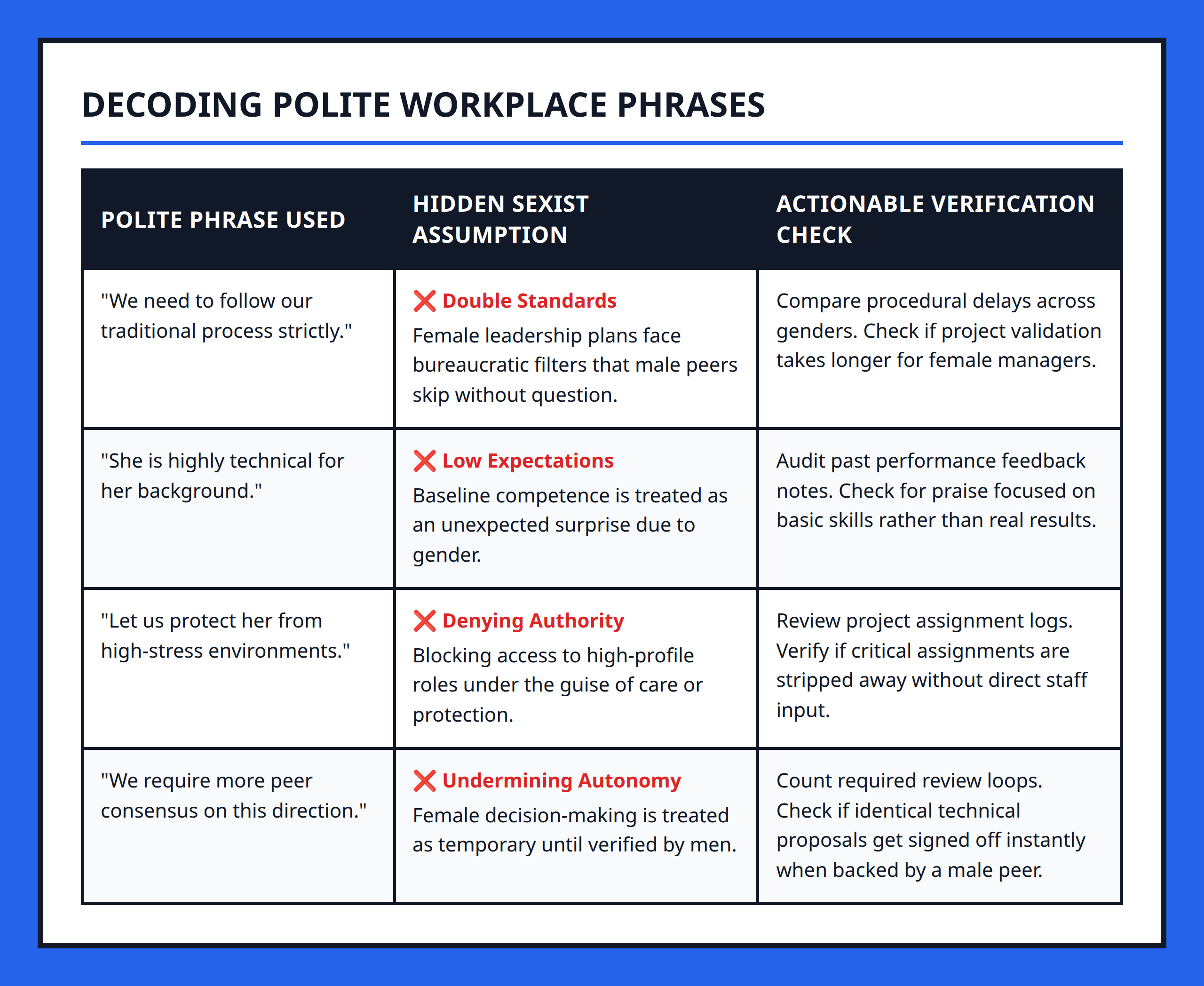
One thing I pay close attention to in competitive workplaces is whether professionalism gets applied evenly.
That is usually where hidden bias becomes visible.
In many environments, men are allowed emotional range while women are expected to maintain emotional perfection. A confident man appears decisive. A confident woman suddenly risks being described as difficult, emotional, arrogant, or aggressive.
The language changes even when the behavior stays similar.
A workplace may insist it only values “professionalism,” yet quietly interpret the same leadership traits differently depending on who displays them.
I think this is why subtle sexism often feels difficult to explain clearly to outsiders. Each individual moment sounds reasonable in isolation. The problem appears when the standards consistently shift in one direction.
Imagine two coaches challenging authority during a competitive discussion. One gets framed as passionate and competitive. The other gets framed as emotional and inexperienced despite demonstrating equal competence.
The professional language stays clean, but the judgment underneath it changes.
Charm Can Hide Bias Surprisingly Well
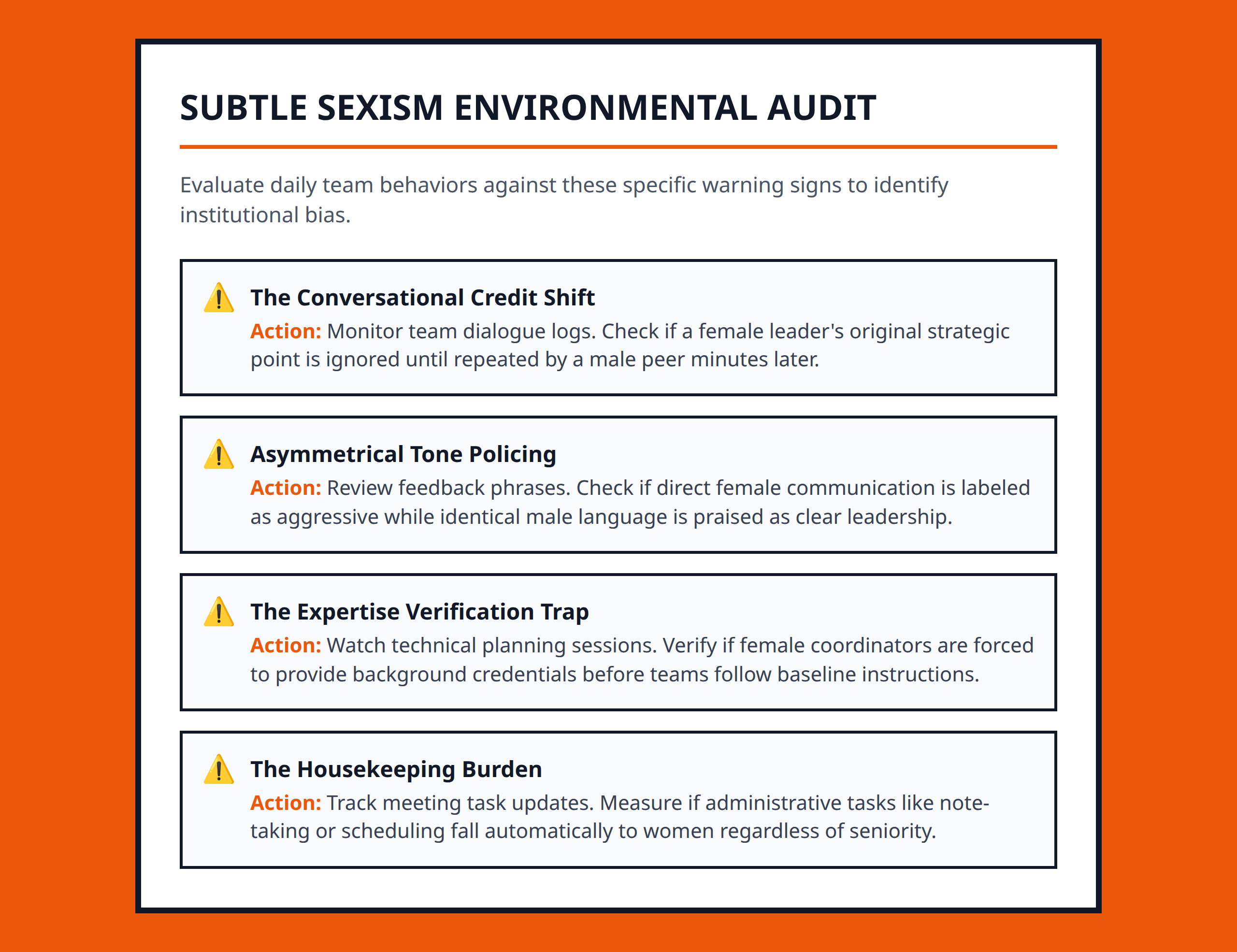
One detail I find important is that sexist environments are not always socially cold.
Sometimes the most dismissive people are also charismatic.
That combination creates confusion because warmth and prejudice appear contradictory. A person may joke comfortably, flirt lightly, offer encouragement, and still hold deeply unequal assumptions about competence and authority.
I think this is where many women start second-guessing themselves.
The interaction feels pleasant socially, yet limiting professionally.
A colleague may sound supportive while simultaneously implying that leadership standards are naturally harder for women to meet. Another may compliment personality while subtly questioning resilience, toughness, or strategic ability.
The emotional contradiction matters because charm lowers defensive instincts. People expect hostility to feel hostile.
But bias wrapped in friendliness often becomes harder to recognize immediately.
Subtle Sexism Often Forces Women Into Hypervigilance
One of the hidden consequences of these environments is constant self-monitoring.
When authority feels conditional, people begin managing themselves excessively.
How direct should I sound?
Was that too emotional?
Did I speak too strongly?
Did I appear inexperienced?
I think this psychological pressure becomes exhausting because the evaluation never feels fully stable. The person is not only doing the job. They are also managing how the job performance gets interpreted socially.
That extra layer of emotional calculation rarely gets acknowledged openly inside competitive workplaces.
And ironically, the more subtle the bias becomes, the more difficult it is to challenge without appearing “oversensitive” or “unprofessional” yourself.
Institutional Bias Often Hides Inside Informal Culture
Many people look for sexism primarily inside formal policy decisions.
But in competitive environments, informal culture often matters just as much.
Who gets taken seriously immediately?
Who gets interrupted?
Whose confidence feels acceptable?
Who must repeatedly prove basic competence before receiving trust?
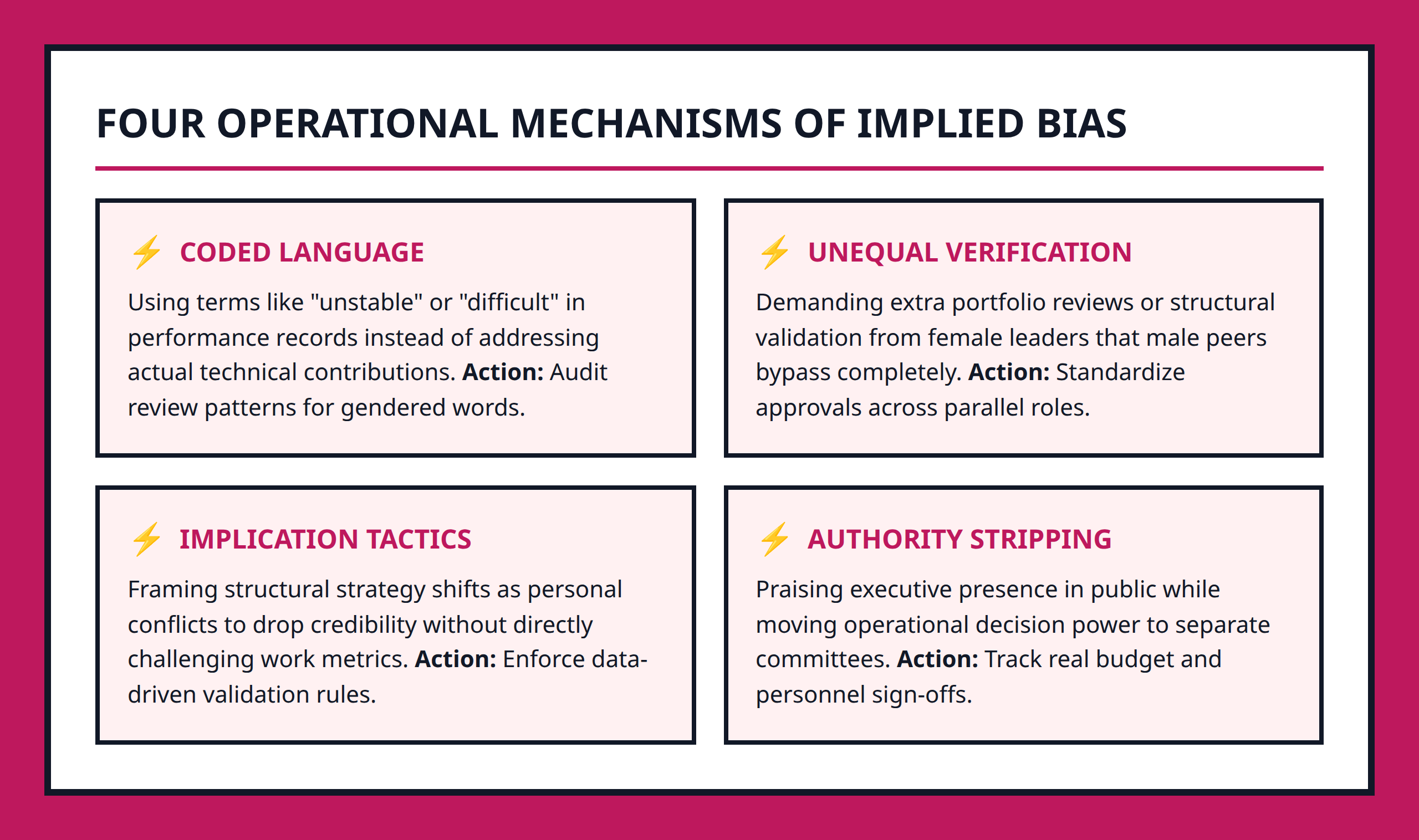
I think workplace culture reveals itself most clearly during casual interactions rather than official meetings. Hallway jokes, dismissive comments disguised as teasing, patronizing advice, and subtle gatekeeping often communicate more than written policy ever does.
A younger woman entering a highly competitive workplace may notice that every mistake feels amplified while equivalent mistakes from others disappear quickly. Nobody openly announces unequal standards. The culture simply absorbs them quietly.
That subtlety is exactly what makes the environment difficult to navigate emotionally.
Why Many Women Hesitate to Push Back Directly
One thing I would caution against is oversimplifying why people stay quiet in these situations.
The hesitation is often strategic, not passive.
In highly competitive environments, challenging subtle sexism carries social risk. If the behavior remains ambiguous enough, speaking up can damage reputation faster than the original comment itself.
I think many women become skilled at calculating this tradeoff constantly:
- Will addressing this improve anything?
- Will I appear difficult?
- Will people claim I misunderstood the situation?
- Will this affect future opportunities?
That ongoing calculation becomes another invisible form of emotional labor inside biased environments.
Especially when the sexism hides behind language that technically remains polite.
The Most Revealing Question Is Often the Simplest One
When I try to evaluate whether an environment has hidden bias, I usually return to one practical question:
Does this workplace interpret competence consistently across people?
That question cuts through a surprising amount of surface-level professionalism.
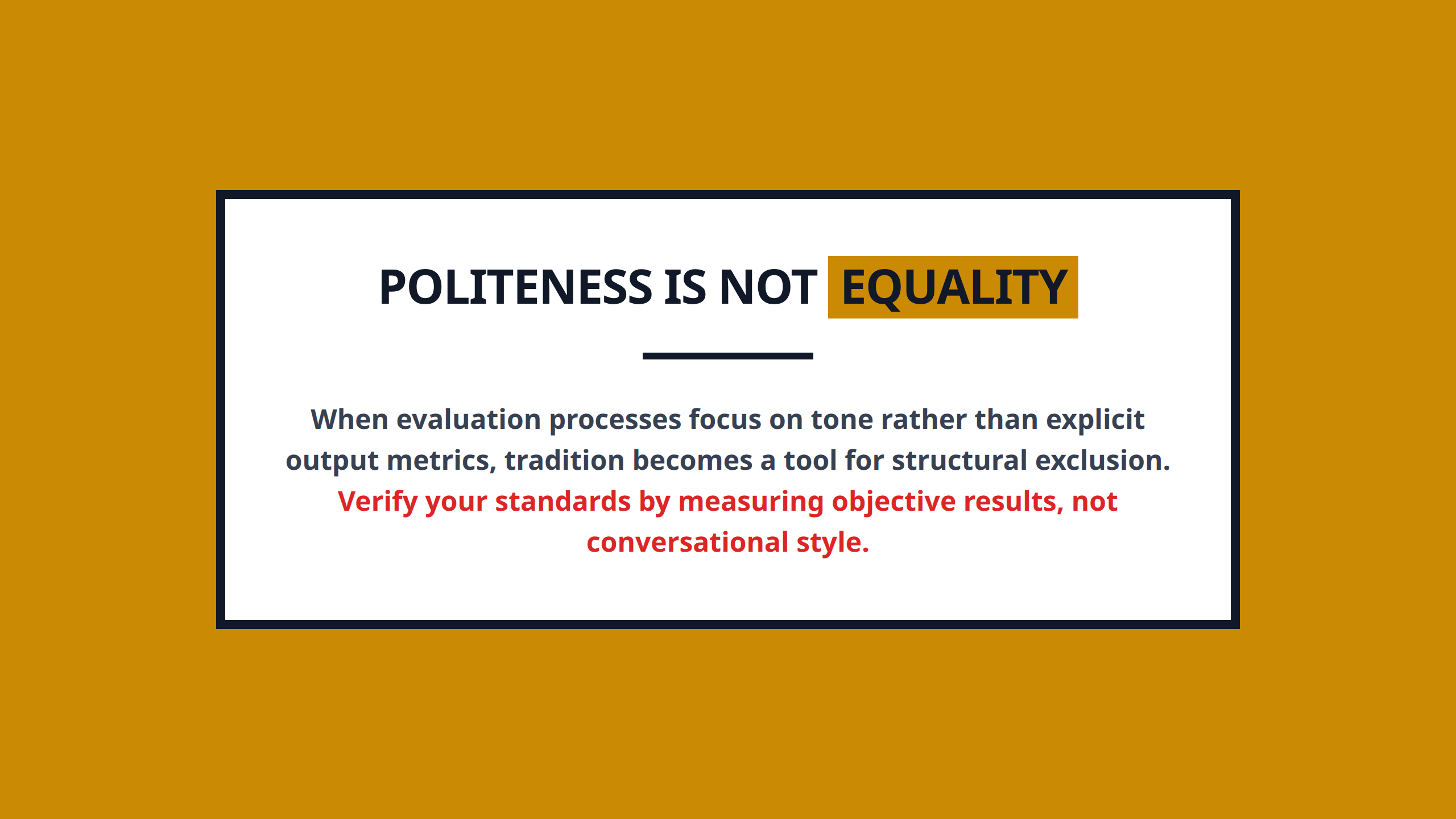
Because covert sexism rarely depends on openly discriminatory statements anymore. It survives through interpretation, tone, assumptions, and unequal thresholds for credibility.
The environments that become most psychologically draining are often not the openly hostile ones. They are the ones where every interaction remains just polite enough to stay deniable while still quietly communicating who naturally belongs in authority and who must continuously prove they deserve it.
References:
- https://www.researchgate.net/publication/403417948_Politeness_and_Indirectness_When_Sexism_Hides_Behind_Advice_in_Workplace_Statements
- https://www.emerald.com/sbm/article/15/5/549/1298318/Navigating-gendered-dynamics-in-the-workplace-a
- https://jurnal.bsi.ac.id/ejurnal/index.php/wanastra/article/download/12140/3025
- https://www.linkedin.com/posts/silvercrownllc_leadership-psychologicalsafety-leadershipdevelopment-activity-7379462651808210944-PLuH
- https://ssir.org/articles/entry/the_bias_of_professionalism_standards
- https://journals.sagepub.com/doi/10.1177/0959353519850851
- https://www.tandfonline.com/doi/full/10.1080/17482620801903291
- https://scholarworks.waldenu.edu/cgi/viewcontent.cgi
- https://www.feminuity.org/post/professionalism-belonging-workplace-bias-culture-unprofessional-stigma-expression-human
- https://spigglelaw.com/examples-of-gender-discrimination-in-the-workplace/
- https://www.discrimlaw.net/sexism-workplace/
- https://medicamondiale.org/en/violence-against-women/womens-rights-are-human-rights/sexism-discrimination-against-women-and-girls