Even high-performing teams can lose strategic effectiveness when urgent tasks constantly overshadow their unique long-term contribution. Understanding this dynamic helps leaders reclaim focus and prioritize meaningful work.
Proximity Creates Priority: How Urgency Hijacks Team Focus
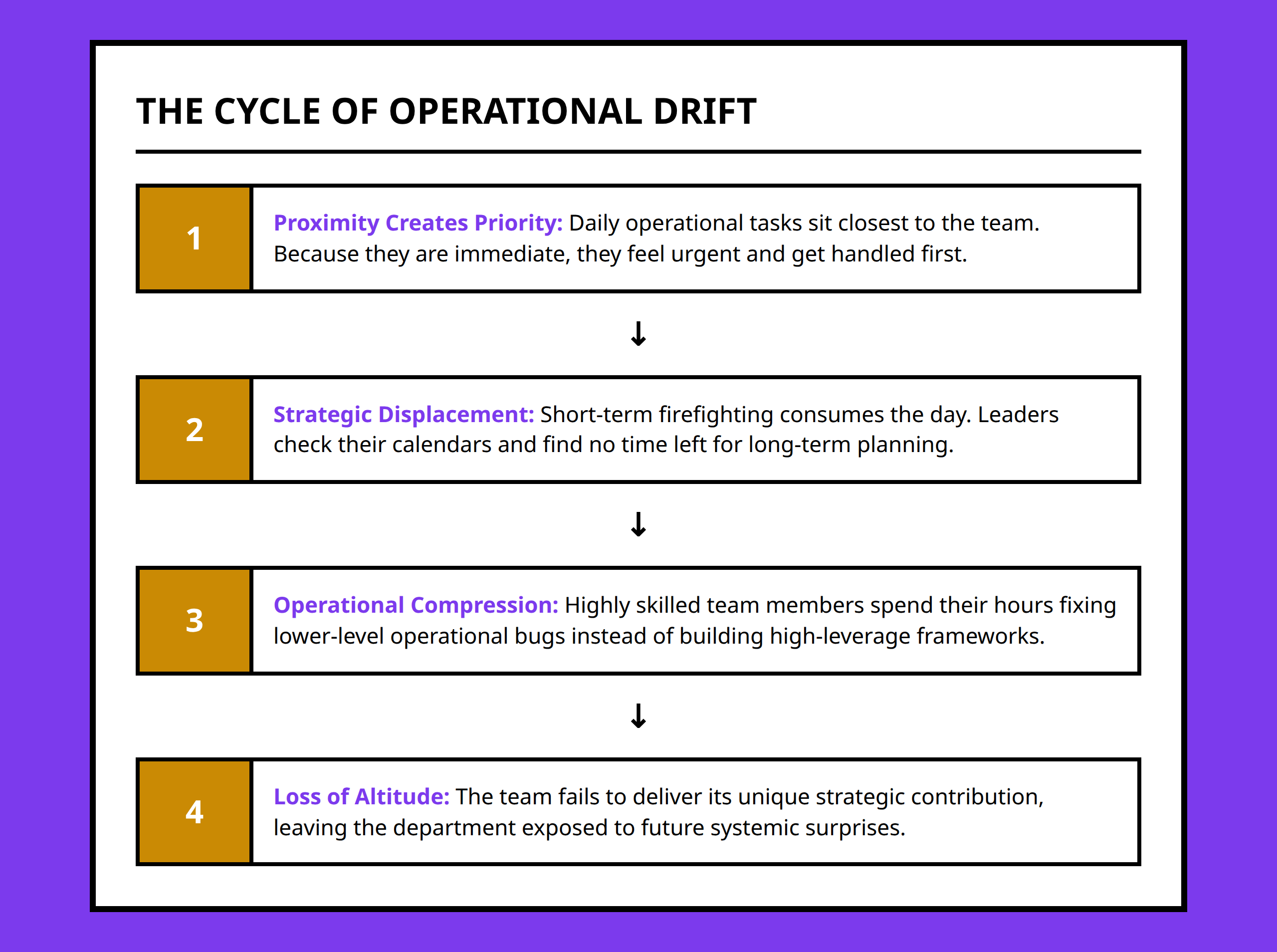
Teams often respond to the most visible or immediate problems first. The closer a task appears—whether physically, temporally, or operationally—the more attention it attracts. This natural bias toward urgency can unintentionally pull teams away from high-value, long-term initiatives. When operational fires dominate the calendar, strategic thinking is compressed into brief, often overlooked moments.
For example, a legal team at a large organization might spend the majority of their week responding to urgent contract issues, compliance inquiries, and ad hoc requests. These tasks demand immediate attention, but they leave little room for projects that could drive the company forward over months or years. Leaders may notice that while the team is busy and responsive, their capacity to create strategic value diminishes.
Compression into Lower-Level Work
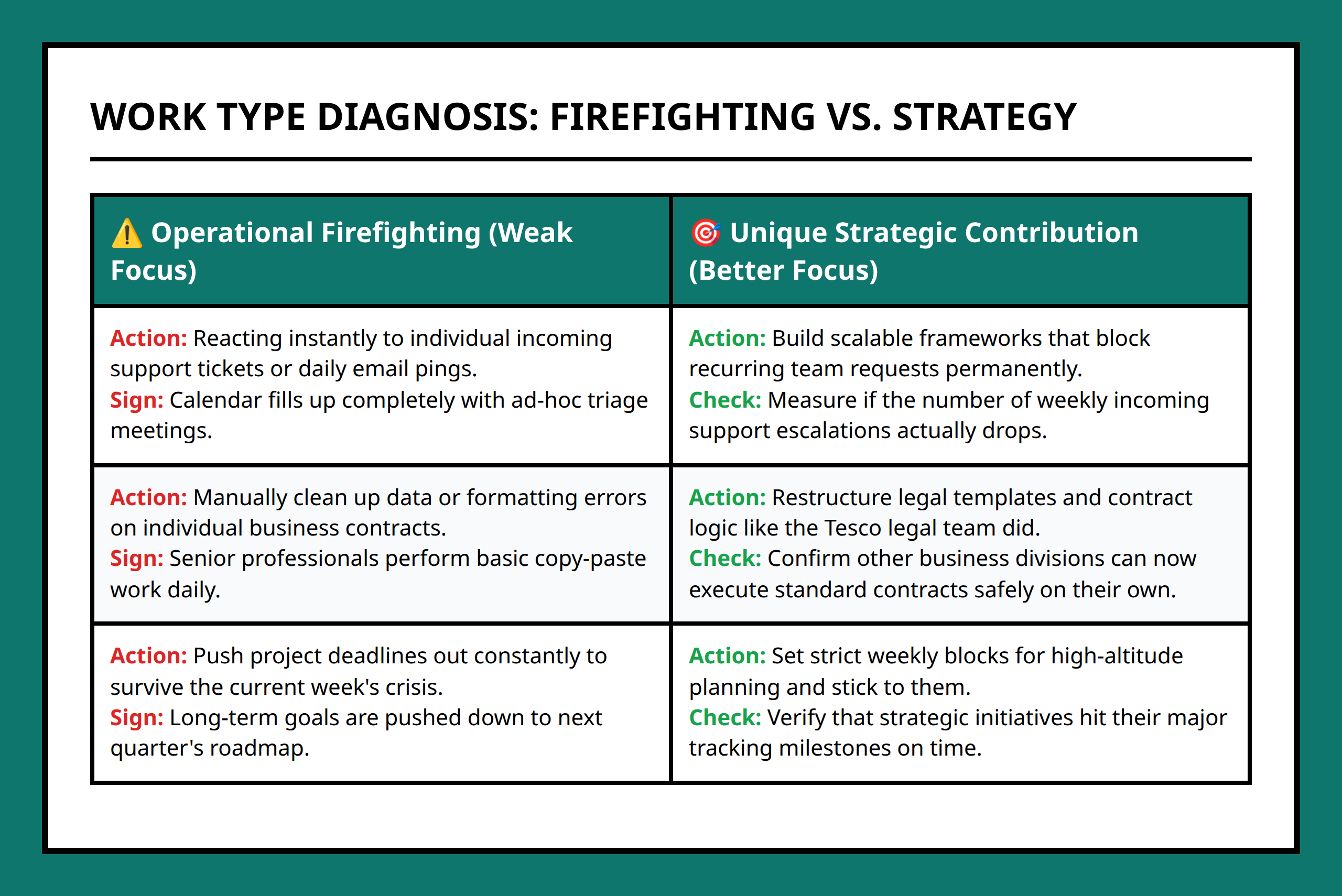
As urgent work consumes team bandwidth, higher-level strategic projects often get squeezed. Team members shift from planning and foresight to reactive problem-solving. Over time, this compression reinforces itself: the more the team reacts to immediate pressures, the less time it has to anticipate future challenges, which in turn generates more urgent tasks.
This dynamic can make teams feel constantly busy while producing less long-term impact. It also creates an operational treadmill where performance is measured by responsiveness rather than strategic contribution.
Identifying Your Team’s Unique Strategic Contribution
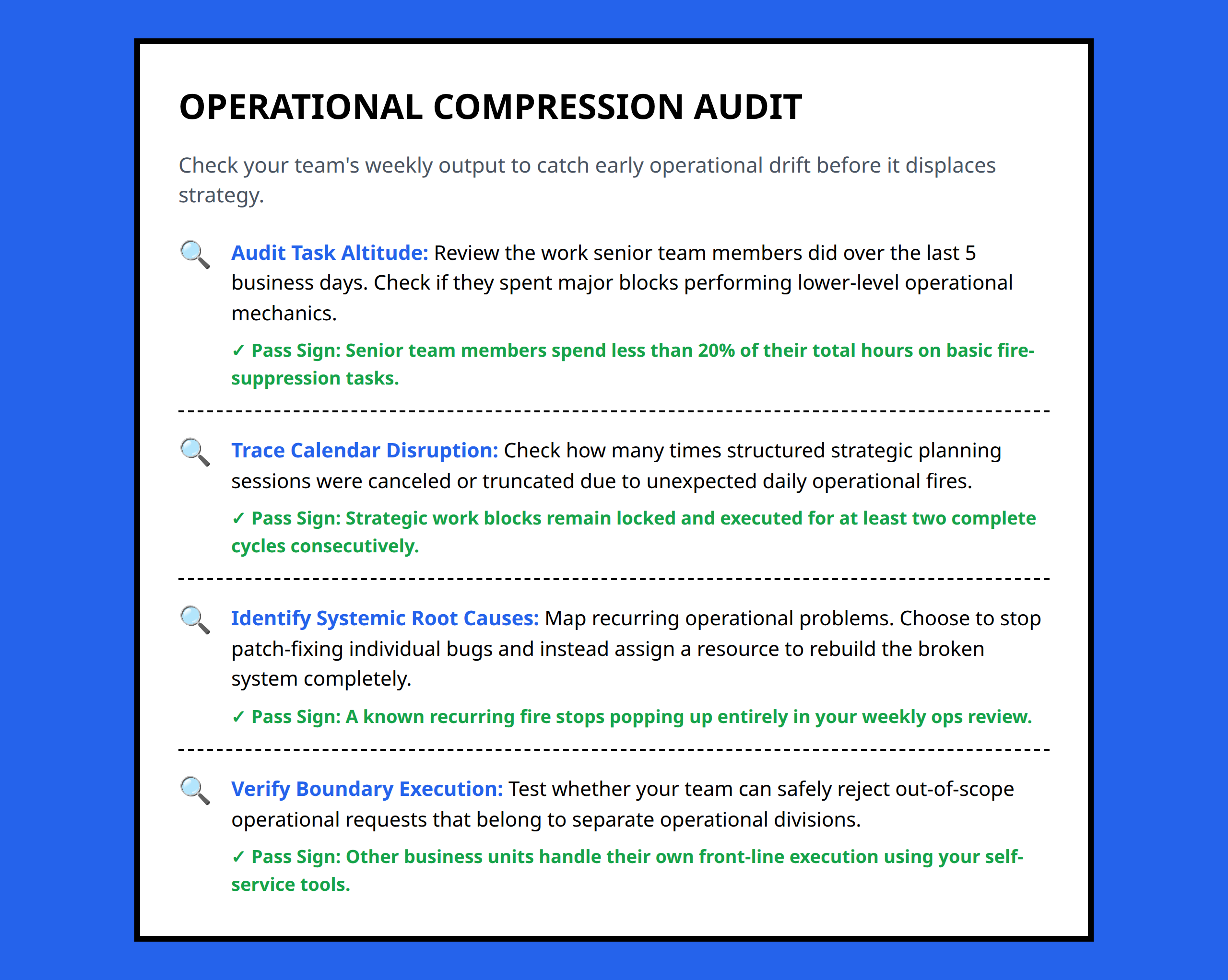
To break the cycle, leaders need clarity on what makes the team uniquely valuable. Each team has work that only it can perform effectively—tasks or decisions that other parts of the organization cannot replicate. Recognizing this unique contribution allows leaders to shield these activities from the distraction of constant urgency.
A practical way to identify this is by asking:
- Which outcomes depend specifically on this team’s expertise or mandate?
- What work could not be delegated or distributed without losing impact?
- Which tasks, if neglected, would have long-term consequences for the organization?
By answering these questions, leaders can prioritize high-value strategic work and consciously defer lower-priority operational requests.
Practical Steps to Reduce Firefighting
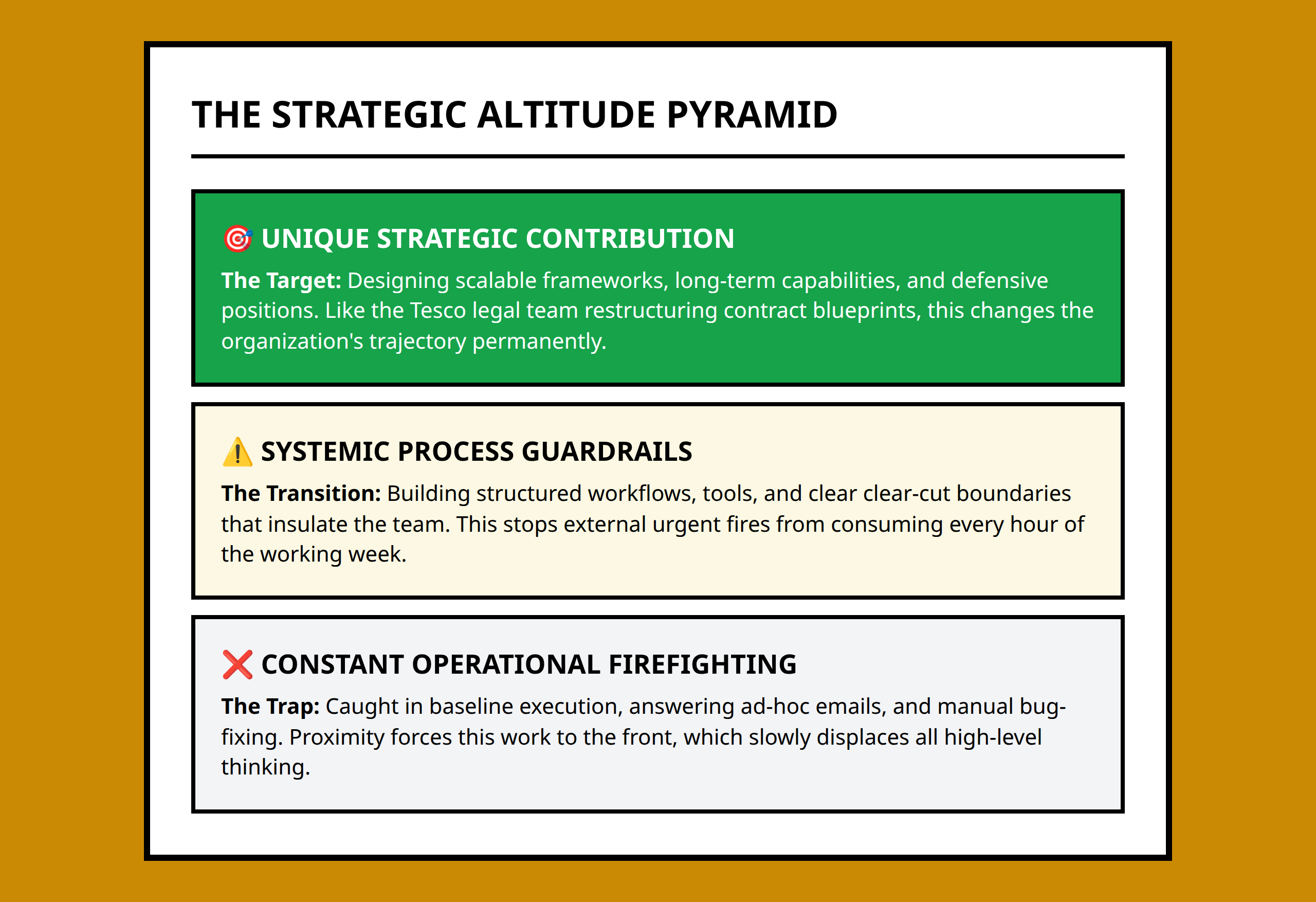
Leaders can help their teams regain strategic focus through structured interventions:
- Clarify priorities: Make the team’s unique long-term contributions explicit and communicate them widely.
- Shield strategic time: Allocate blocks in the calendar dedicated to foresight, planning, and high-level problem-solving.
- Delegate operational urgency: Redirect immediate but lower-impact tasks to other teams or processes.
- Track strategic progress: Measure performance not only by responsiveness but by milestones aligned with long-term goals.
- Review task impact: Regularly assess incoming work to determine if it aligns with the team’s unique contribution or simply demands attention.
Recognizing the Warning Signs
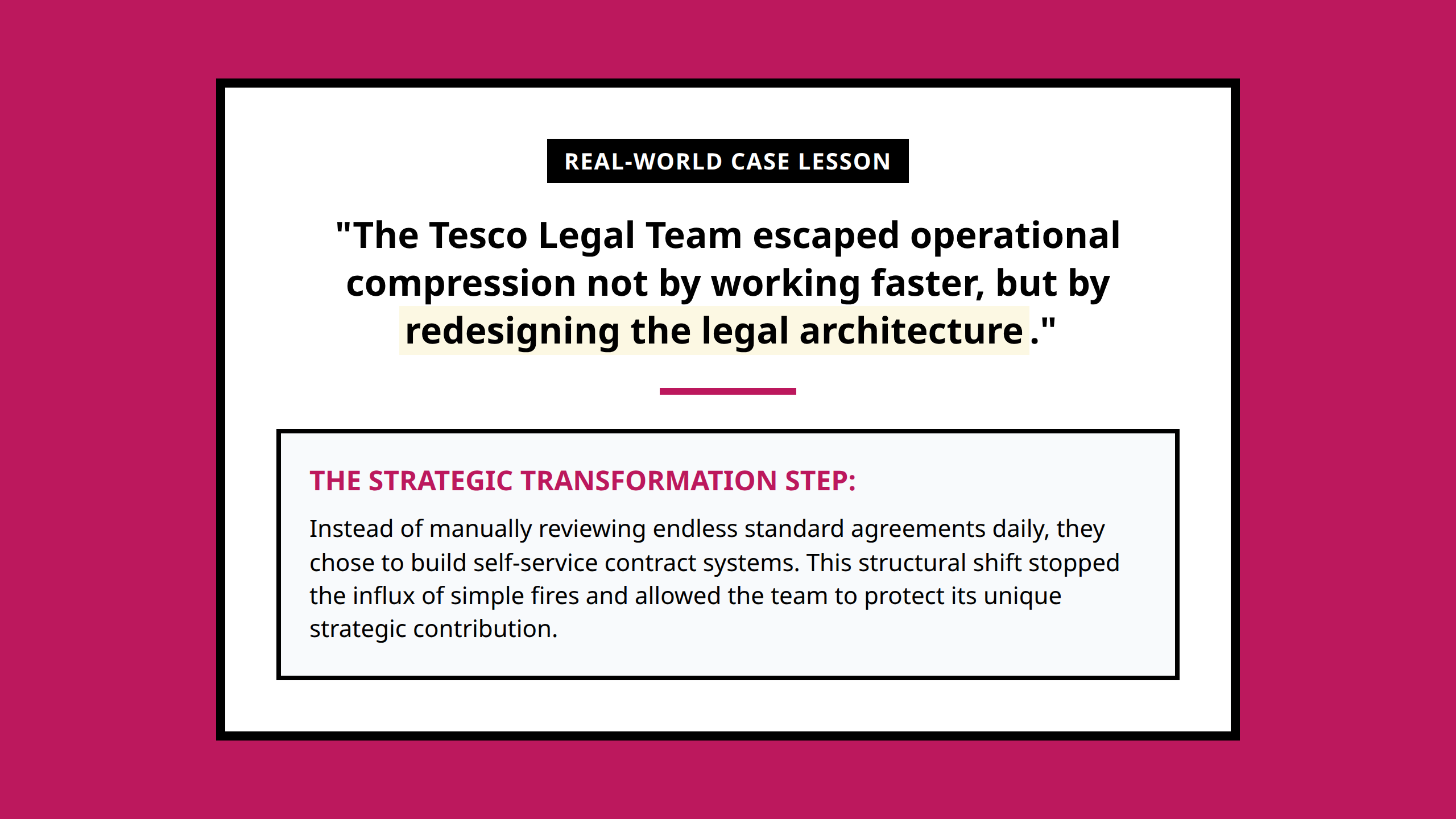
Teams trapped in reactive work often display predictable patterns:
- Constant calendar conflicts with few blocks for deep work
- High responsiveness to requests but limited progress on long-term initiatives
- Stress and fatigue among team members due to perpetual fire drills
- Difficulty in achieving measurable strategic milestones
Spotting these signs early allows leaders to intervene before operational demands erode the team’s unique contribution permanently.
Balancing Urgency with Strategic Work
Firefighting is unavoidable in complex organizations, but it should not dominate a team’s agenda. The balance comes from intentionally prioritizing high-value work while systematically managing immediate operational demands. By clarifying unique contributions, allocating dedicated strategic time, and filtering tasks by impact, leaders can ensure that their teams contribute meaningfully both in the present and over the long term.
Ultimately, the most effective teams are those that can respond to urgent needs without sacrificing their distinct strategic purpose. Recognizing and protecting that contribution is the key to sustained organizational impact.
References:
- https://www.linkedin.com/pulse/why-some-teams-always-firefighting-mode-aadesh-navade-azz1c
- https://www.linkedin.com/posts/asingh63_most-teams-are-stuck-fighting-the-same-fires-activity-7372842950877380608-s2du
- https://www.linkedin.com/posts/amespmp_why-structure-fails-firstand-what-to-do-activity-7333337380537438208-yS41
- https://www.reddit.com/r/managers/comments/1g7163b/how_to_get_out_of_perpetual_firefighting_mode/
- https://www.forbes.com/councils/forbeshumanresourcescouncil/2024/10/28/constant-firefighting-undermines-organizational-performance/
- https://fantasticit.com/why-it-firefighting-feels-productive-but-isnt/
- https://www.reddit.com/r/Leadership/comments/1qmci1l/how_does_one_turn_a_role_thats_constantly_fire/
- https://www.reddit.com/r/ITManagers/comments/1nj51n8/how_do_you_keep_your_team_motivated_when/
- https://www.reddit.com/r/sysadmin/comments/1cdsivi/trying_to_make_sense_of_the_chaos_and_stop_the/
- https://www.linkedin.com/pulse/your-team-constantly-firefighting-you-dont-have-jjx9e
- https://medium.com/@b0noi/escape-the-firefighting-trap-strategies-for-teams-to-focus-on-important-work-e5e08b5208b7
- https://farrellyscully.com/2026/05/25/the-cost-of-constant-firefighting-why-reactive-businesses-struggle-to-scale/
- https://www.inthemakingleadership.com/p/the-firefighting-trap-why-most-managers
- https://intelligence.supplyframe.com/3-ways-balance-firefighting-strategic-focus/
- https://www.reddit.com/r/managers/comments/1g7163b/how_to_get_out_of_perpetual_firefighting_mode/lsn4fsi/
- https://www.reddit.com/r/managers/comments/1g7163b/how_to_get_out_of_perpetual_firefighting_mode/lso5x75/
- https://www.reddit.com/r/managers/comments/1g7163b/how_to_get_out_of_perpetual_firefighting_mode/lso5l79/
- https://www.mindtools.com/aoonkp1/from-reactive-to-proactive-management/
- https://hct-world.com/understanding-the-demands-fueling-a-firefighter-staffing-crisis/