Many workplace meetings create the appearance of collaboration while the real decisions have already been made elsewhere. People are invited to contribute, discussions appear open, and feedback gets collected, but the outcome is often quietly predetermined before the meeting even begins.
This kind of counterfeit collaboration creates a specific type of organizational frustration. Employees spend time participating in discussions that feel strategically important, only to realize later that their input changed very little. Over time, people stop engaging honestly because they recognize that the process is designed more for alignment theater than collective thinking.
I find this distinction useful because many organizations mistake visible participation for genuine collaboration. The two are not the same thing.
What Counterfeit Collaboration Actually Looks Like
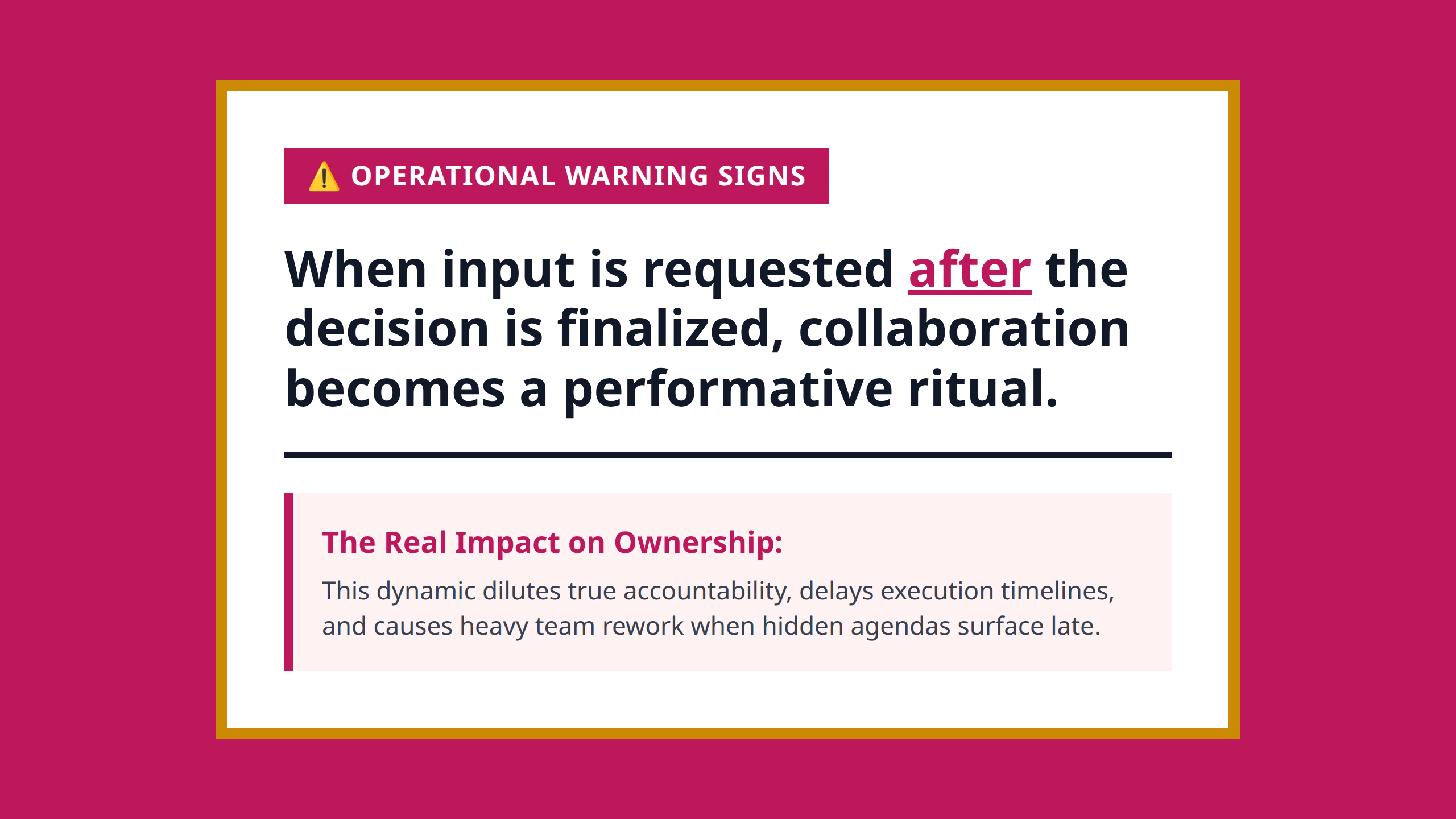
Counterfeit collaboration rarely appears openly manipulative. In most cases, people involved genuinely believe they are being collaborative. The problem is that the structure of the discussion leaves very little room for meaningful influence.
A familiar example looks something like this:
- a proposal is largely finalized before the meeting
- stakeholders are invited to “share thoughts”
- the discussion focuses on surface adjustments
- major assumptions remain untouched
- real disagreement feels socially discouraged
- the original direction proceeds mostly unchanged
Technically, collaboration occurred because people were consulted. Operationally, the decision path was already locked in.
The result is often quiet disengagement rather than open resistance.
Example: The “Feedback Session” That Changes Nothing
A leadership team presents a near-final restructuring plan to department managers and asks for input.
Managers raise operational concerns carefully, but the conversation subtly signals that the broader direction is already decided. Suggestions focus mainly on implementation details because challenging the core decision feels unrealistic.
The meeting creates inclusion optics without genuine strategic openness.
Why Organizations Drift Into Performative Collaboration
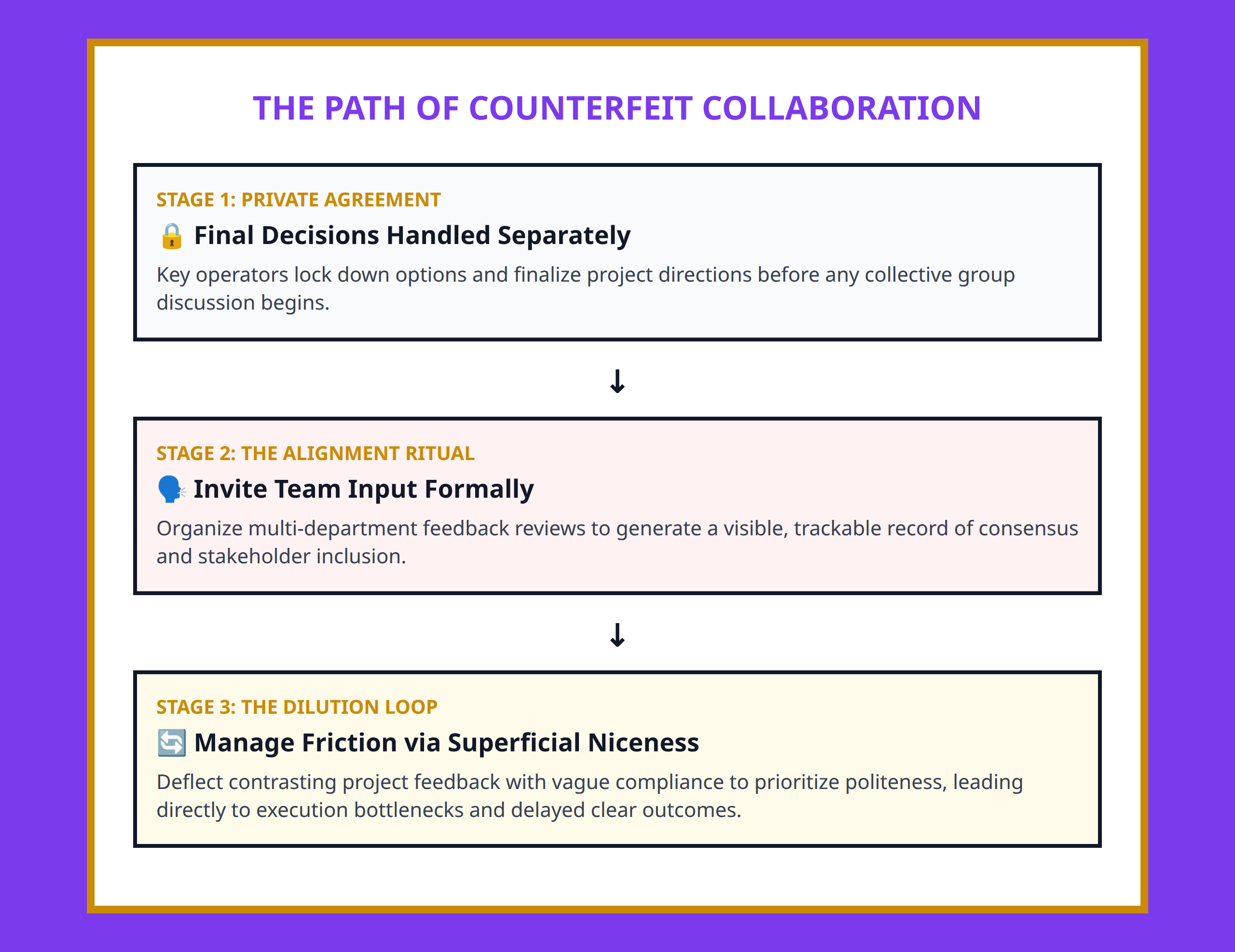
Most counterfeit collaboration grows from understandable organizational pressures rather than bad intentions.
Leaders want alignment. Teams want stakeholder buy-in. Managers want people to feel included. Organizations also fear appearing authoritarian or dismissive.
Over time, this creates a habit of involving large groups in discussions even when the core decisions are already largely settled.
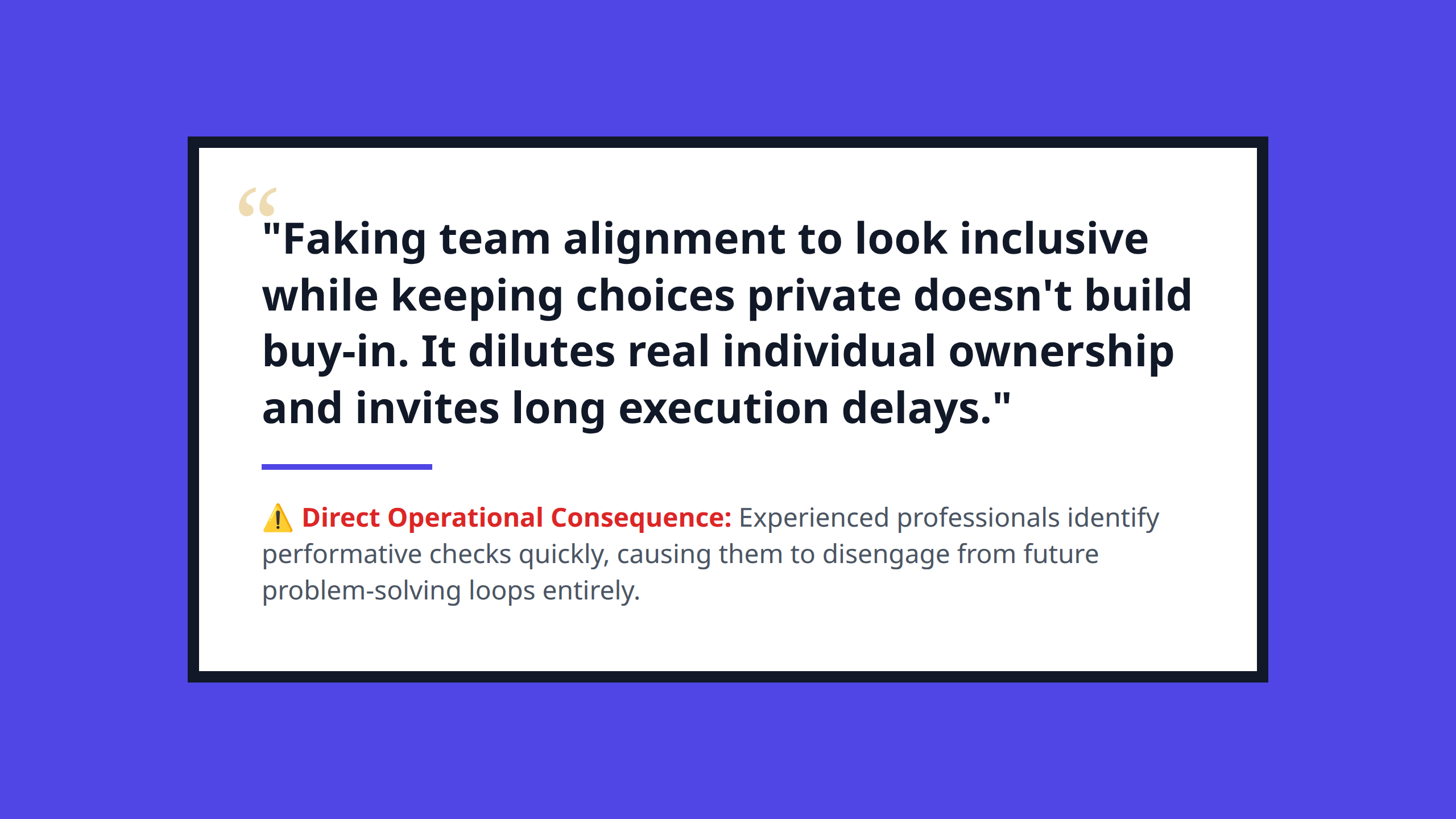
The problem is that consultation without meaningful influence creates confusion about ownership and accountability.
I would think about it this way: collaboration becomes performative when the process values participation optics more than decision openness.
That distinction matters because genuine collaboration requires some willingness to let the discussion meaningfully shape the outcome.
| Real Collaboration | Counterfeit Collaboration |
|---|---|
| Input can alter direction | Direction is mostly predetermined |
| Disagreement improves decisions | Disagreement feels disruptive |
| Shared ownership emerges | Responsibility becomes blurred |
| Tradeoffs are openly discussed | Consensus appearance is prioritized |
| People engage honestly | People manage impressions carefully |
Once teams begin prioritizing the appearance of alignment over honest exploration, collaborative quality starts declining rapidly.
Niceness Can Quietly Replace Honesty
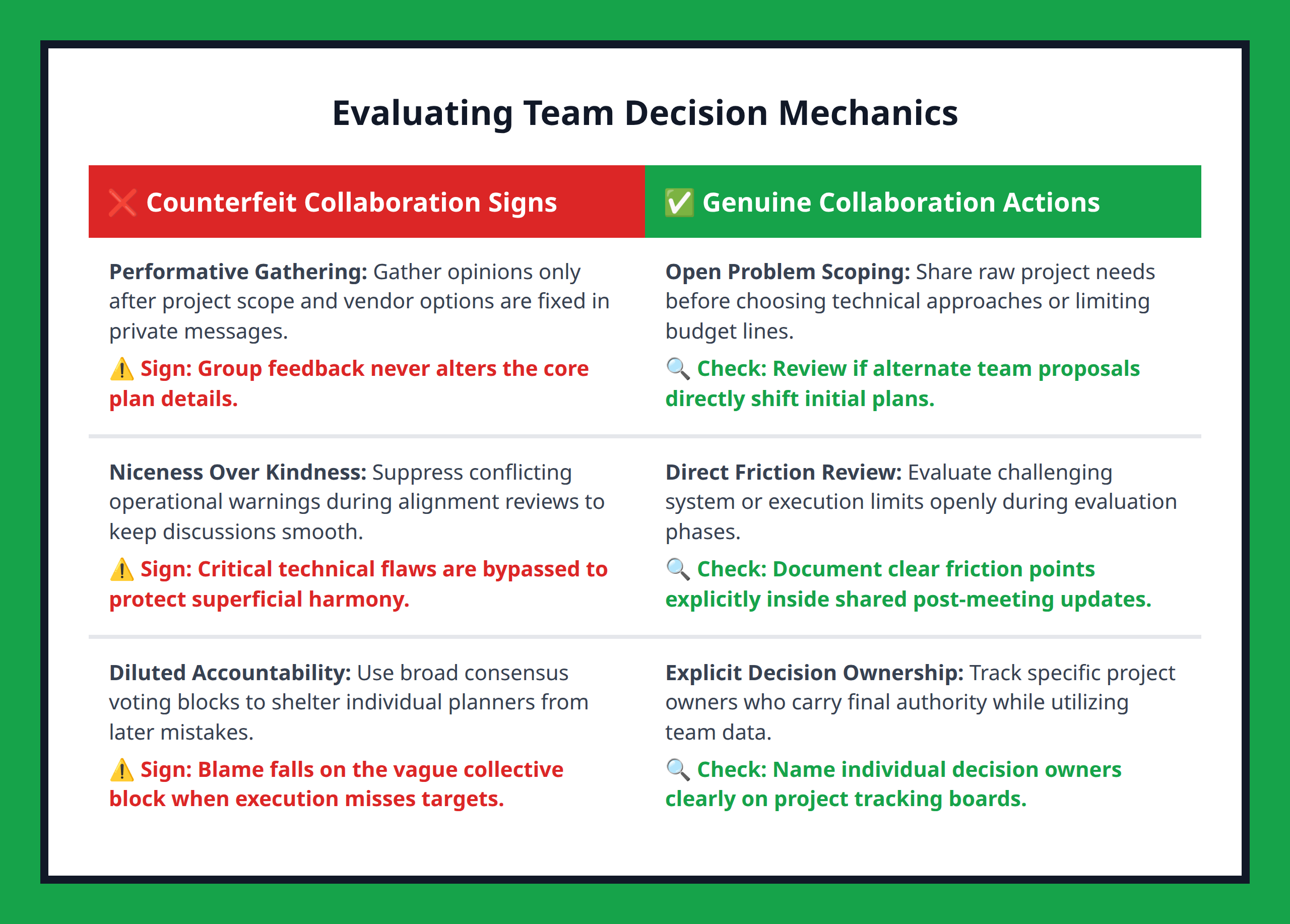
One of the more subtle dynamics inside counterfeit collaboration is the replacement of kindness with politeness.
Politeness avoids tension. Kindness sometimes requires difficult honesty.
In many organizations, employees learn that maintaining smooth group dynamics matters more than openly challenging weak assumptions. Meetings become socially comfortable but strategically shallow.
This creates several predictable behaviors:
- people soften concerns excessively
- questions become indirect
- participants avoid creating visible friction
- real objections move into private conversations later
- teams optimize for harmony rather than clarity
The mistake I would avoid here is assuming that low-conflict meetings automatically reflect healthy collaboration. In many cases, they simply indicate that people no longer believe visible disagreement is useful or safe.
Example: Consensus Language Without Real Agreement
A project meeting ends with everyone verbally aligned around a timeline, even though several participants privately believe the schedule is unrealistic.
Nobody openly challenges the plan because the meeting atmosphere subtly rewards agreement and momentum over friction.
Weeks later, delays emerge during implementation that could have been surfaced much earlier through direct discussion.
Why Fake Collaboration Weakens Accountability
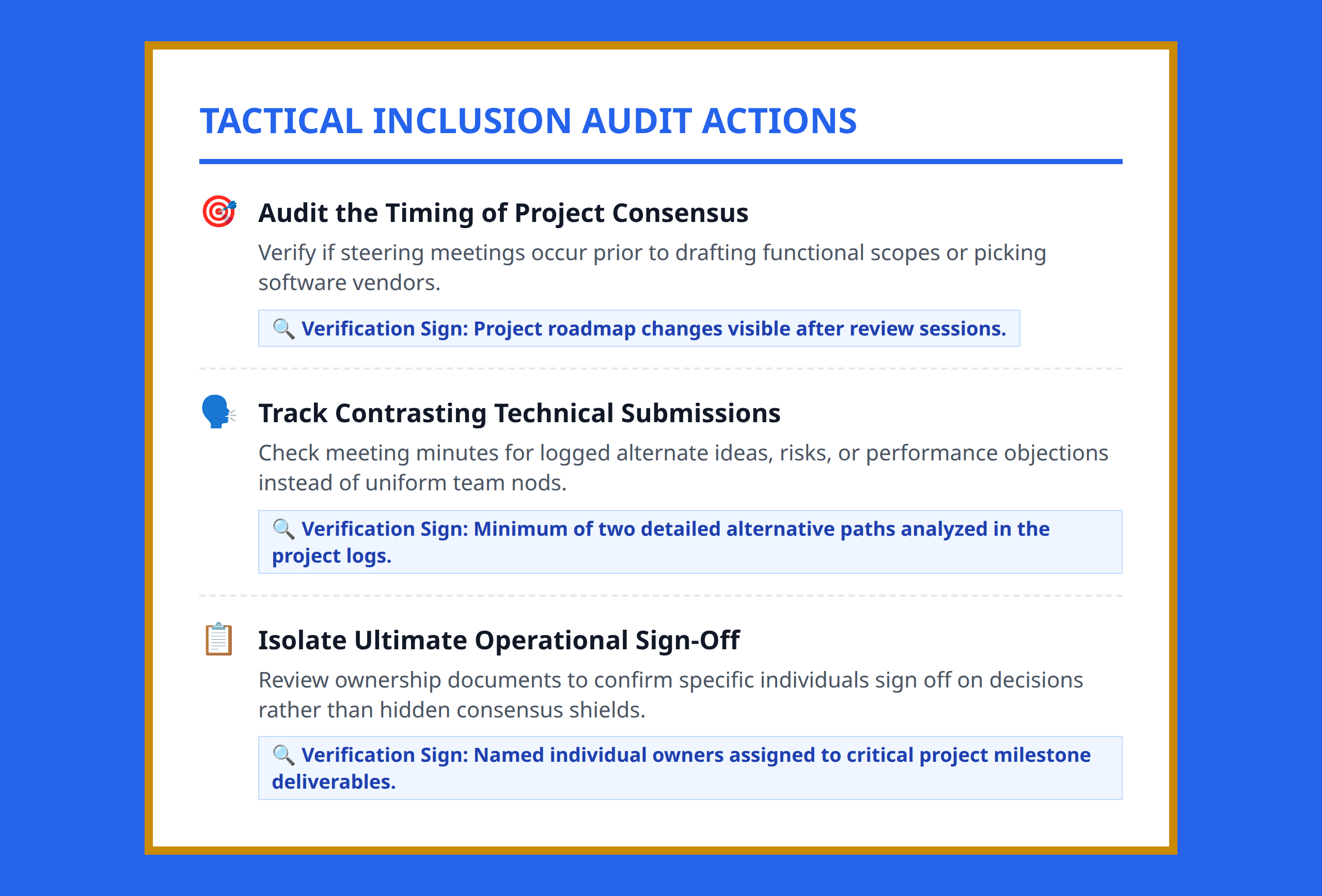
Counterfeit collaboration creates a confusing accountability structure.
When many people participate superficially in shaping a decision, ownership often becomes diluted afterward. Teams struggle to distinguish between:
- who actually decided
- who merely attended
- who approved reluctantly
- who was informed passively
- who is responsible for execution
This ambiguity slows organizations down because teams spend increasing energy managing alignment instead of solving problems directly.
One reason this becomes dangerous is that participation starts replacing responsibility. Attendance creates the feeling of involvement without necessarily creating commitment or accountability.
I find this especially important in large cross-functional projects where many stakeholders are invited into discussions primarily to avoid future objections.
The collaboration becomes defensive rather than productive.
Example: Cross-Functional Approval Loops
A product initiative requires input from legal, compliance, operations, marketing, engineering, and customer support.
Every group joins review meetings to stay informed and avoid being excluded later. But because nobody owns the collective decision directly, revisions multiply and timelines stretch.
The process feels collaborative while gradually reducing execution clarity.
How Counterfeit Collaboration Creates Organizational Delay
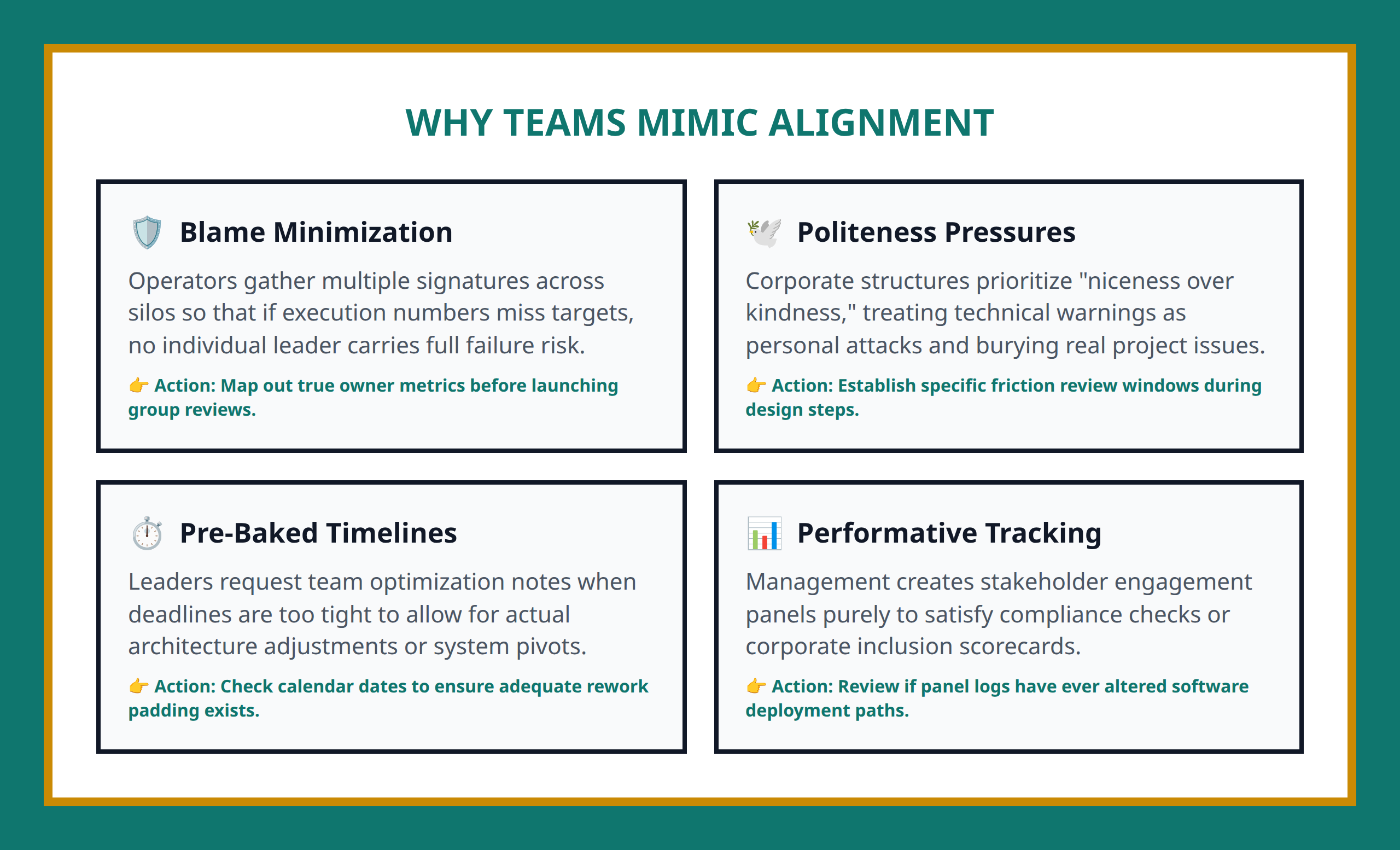
Performative collaboration often produces a hidden operational cost: delay without visible conflict.
Projects become slower not because teams are openly resisting one another, but because decisions remain trapped inside endless alignment cycles.
Several patterns usually emerge:
- meetings revisit the same issues repeatedly
- feedback loops continue long after strategic direction is clear
- stakeholder involvement expands continuously
- decisions get softened to accommodate every perspective
- execution teams wait for stronger clarity before acting
This creates what feels like organizational movement without decisive progress.
The irony is that many organizations adopt these collaborative rituals to reduce friction, yet the long-term effect is often slower execution and weaker ownership.
How to Recognize Whether Collaboration Is Genuine
A few practical questions can reveal whether a team is collaborating authentically or mainly performing alignment.
Can the discussion genuinely change the outcome?
If the strategic direction is already fixed, the meeting should probably be framed as communication rather than collaborative decision-making.
Are difficult disagreements visible?
Healthy collaboration usually includes some productive friction. If important concerns consistently appear only after meetings, the environment may be rewarding appearance management over honesty.
Is accountability clear afterward?
Strong collaboration clarifies ownership. Counterfeit collaboration often leaves people uncertain about who is actually responsible for decisions and execution.
Do people feel energized or politically cautious?
Real collaboration often increases clarity and commitment. Performative collaboration usually increases caution and meeting fatigue.
The Goal Is Not Less Collaboration, but More Honest Collaboration
The solution is not eliminating collaboration entirely. Complex organizations genuinely require collective thinking, cross-functional coordination, and shared decision-making.
The more important shift is becoming honest about what kind of interaction is actually happening.
If a decision is already made, communicate it directly instead of simulating open exploration. If feedback is genuinely desired, leave enough strategic flexibility for input to matter meaningfully.
That distinction sounds small, but it changes how people engage.
Once teams trust that collaboration is real rather than performative, conversations usually become sharper, ownership becomes clearer, and decisions move faster because people stop spending energy navigating the politics of artificial consensus. fileciteturn8file0
References:
- https://voltagecontrol.com/blog/collaboration-dont-fake-it-until-you-make-it/
- https://medium.com/psychology-of-workplaces/a-big-leadership-misstep-the-epic-post-it-note-collaboration-fail-85492625785d
- https://arbingersea.com/fake-it-till-wait-can-we-really-make-it/
- https://www.linkedin.com/pulse/sincere-teamwork-identifying-avoiding-false-laura-stack
- https://www.nature.com/nature-index/news/what-are-fake-interdisciplinary-collaborations-and-why-do-they-occur
- https://www.linkedin.com/posts/seanglaze_most-leaders-write-off-team-building-after-activity-7452702965120892928-j7Sn
- https://www.theglobeandmail.com/business/careers/management/article-beware-of-the-collaboration-illusion/
- https://collaboration.ai/collaboration-capital-tools/2005-7-25-collaboration-fake-it-til-you-make-it/
- https://labs.newrulesforwork.com/p/collaborative-drift-debt-causes-symptoms-treatments
- https://www.carlosvdapena.com/blog/teams-shared-goals-additive-collaboration-fallacy
- https://www.linkedin.com/posts/grant-herbert_these-are-my-4-pillars-of-teamwork-communication-activity-7333235558070030337-5T7G
- https://hspn.ca/wp-content/uploads/2021/03/Characteristics-of-Authentic-Collaboration.pdf